Well, for all of you drone pilots out there sick of just using traditional controllers, boy, do we have some good news for you.
This morning, Amsterdam-based startup Touchwaves announced in an exclusive interview with Tectonic that they’re teaming up with General Atomics to bring their wearable haptic tech to MQ-9 Reaper pilots.
GA also made an (unspecified) investment in Touchwaves—along with five other defense tech firms—through the Blue Magic Netherlands (BMN) venture initiative.
Other companies selected include OPT/NET (for AI-related missions including swarm management), Vaeridion (for battery packs), Vydar (for drone operations in GPS-denied environments), and Emproof (for data protection).
Internet of Things: Now, you might be sitting there thinking, “Ugh, wearables. I’m already wearing both a Whoop and an Oura ring next to my Garmin, what more do I need to know?” But just you wait. This is a very different kind of wearable tech.
Touchwaves was founded back in 2023 by Martin Romero (a serial entrepreneur with a primarily software/tech background) and Charlotte Kjellander (CEO), who used to be the head of wearables at the Netherlands Organisation for Applied Scientific Research (TNO).
- The startup is actually a spin-off from TNO, and is backed by TNO Ventures, SecFund, and others. They raised a €1.5M round led by SecFund (VC arm of the Dutch MoD) late last year, and are planning to go out for another raise later this year.
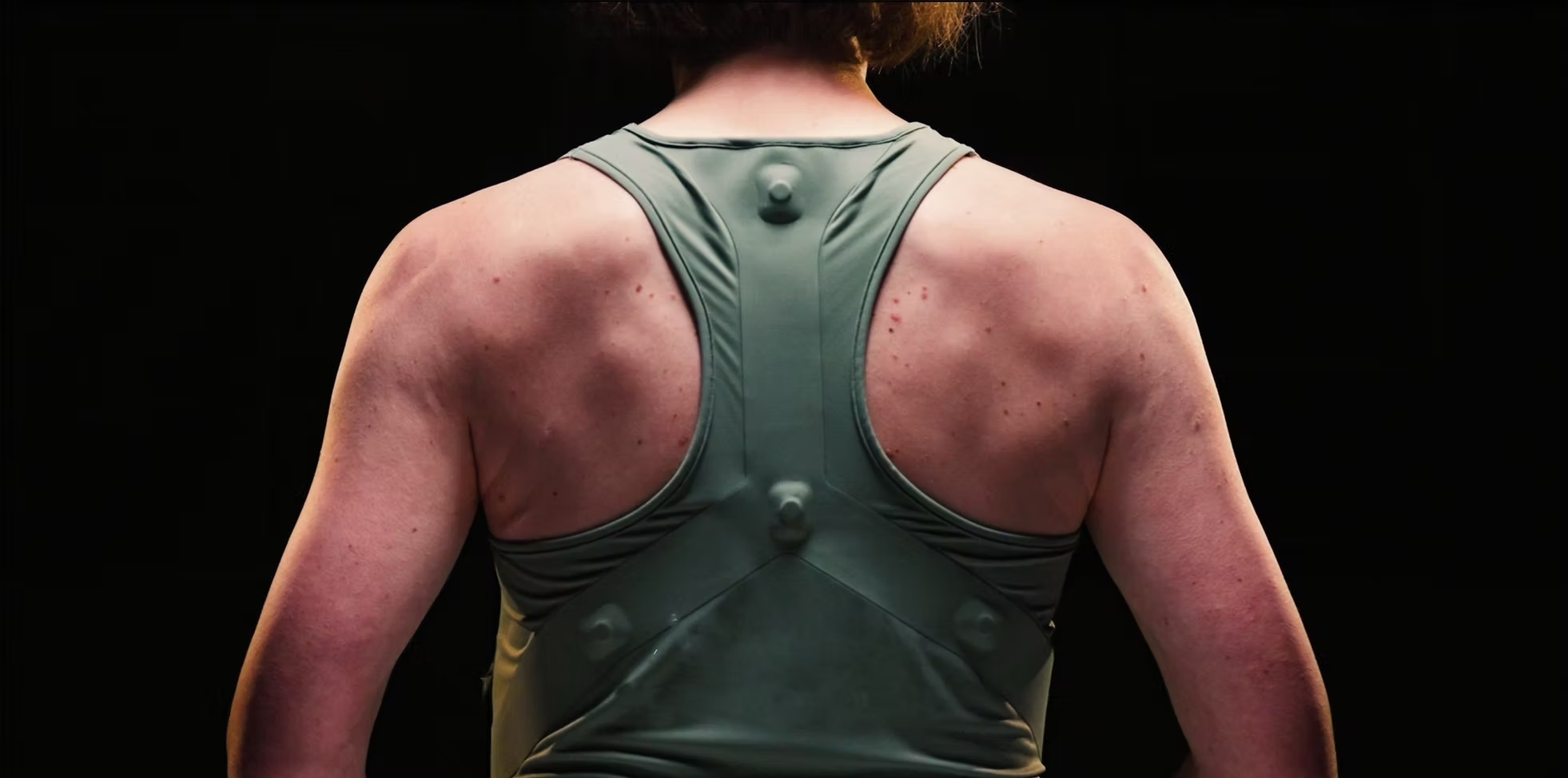
- The company builds garments—typically vests or shirts—that have embedded biosensors and haptic actuators (small vibration motors) that deliver tactile cues to the wearer.
- Basically, the idea is that the equipment can read a user’s physiological state, combine that with, say, a feed from an MQ-9, and use all that data to improve performance (both of the drone and the pilot).
- The pitch is pretty straightforward: Touchwaves—and Romero in an interview with Tectonic—argue that drone pilots (like fighter pilots) are overwhelmed with written, visual, and auditory information. It’s too much for one brain to handle—otherwise known as cognitive overload.
- Instead, their tech allows operators to feel information—like, if they’re losing oxygen, or if there is an incoming missile threat.
“[When] a fighter jet pilot, a helicopter pilot, or a drone pilot…[is] in cognitive overload, what happens is that the visual channels and auditory channels are the first to saturate. This is also known as tunnel vision,” Romero said.
By using tactile communication—in particular, below the neck—Touchwaves’ tech can still communicate with the operator, even when that operator is overwhelmed with information.
Grim Reaper: Romero gave us an example.
“Let’s say that they are flying the Reaper. If there is an interceptor approaching the Reaper, [today] they will see a signal or a blink on their screen, but they have no idea where it is coming from,” he said. “With haptic communication…[we can] give the pilot a touch, depending on where the interceptor is coming from…[so they can] maneuver to the opposite side.”
And this ain’t just talk—Romero said they’re already researching and prototyping (for F35 pilots, helicopter pilots, drone operators, and special forces) with the Dutch military and “other NATO forces” (though he couldn’t say who).
BFFs: The partnership with GA will run through the end of the year and will mostly cover Touchwaves’ research with Reaper pilots to figure out how their tech could be most helpful.
- Romero said the company employs a “pilot-first” approach that involves talking to a lot of operators before deploying anything. “We are going to focus as much as possible in making something usable and very beneficial for the pilots,” he said.
- They’ll spend most of their time “testing [their] current system with the pilots and understanding what’s the best way to implement the haptics,” Romero added.
- The deliverable at the end of the partnership will basically be a plan for integration—how Touchwaves could be most helpful to Reaper pilots. From there, GA will decide how to move forward with the integration.
Simultaneously, the company will keep working with operators on a range of “different tools for cognitive overload management and situational awareness…for pilots and ground forces.” That’s those special forces, F-35, and helicopter-type projects we mentioned earlier.
Is it just us, or is it starting to feel a whole lot like the future around here?