
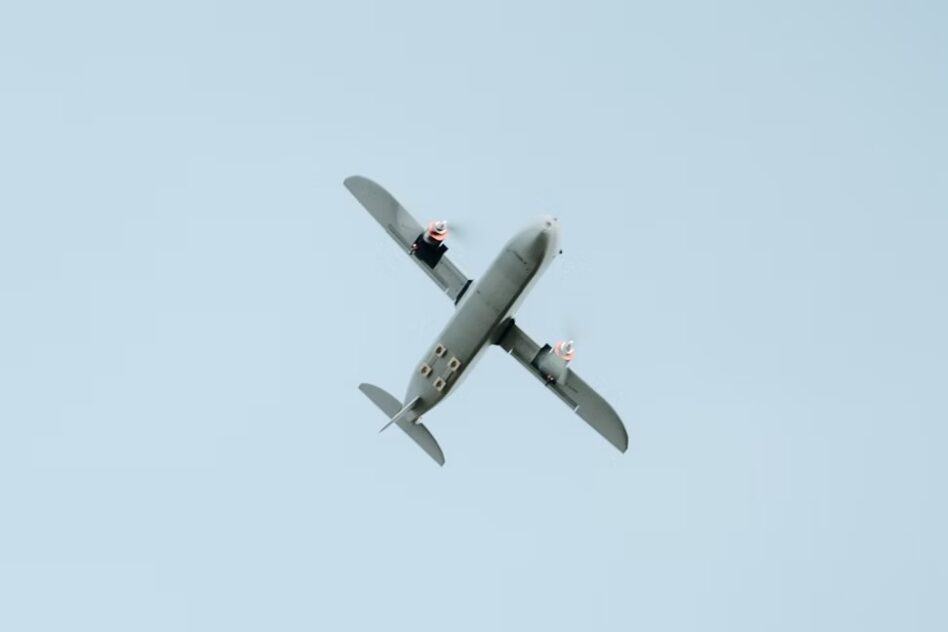
Interceptors are so hot right now.
Yesterday, Munich-based mini-autonomous-missile company TYTAN Technologies announced that it’s opened up a new facility in Bavaria and inked a partnership with German sensor giant HENSOLDT, all with the aim of producing 3,000 Group 3 interceptor drones a month by the end of 2026.
The company—which tests its drones on the ground in Ukraine—says that the goal is to “[turn] Europe’s counter UAS capability into industrial reality,” and that the partnership with HENSOLDT “combines cost-effective interceptor drones with sensor and command and control expertise to deliver an immediately deployable solution for European drone defence.”
In other words: Interceptor drones plus new shiny sensors plus new facility equals lots more deadly mini-missiles.
Group project: TYTAN was founded in 2023 by now-CEO Balazs Nagy and now-CTO Batuhan Yumurtaci. The idea—spun out of a student project at the Technical University of Munich—was to build cheap, attritable, interceptor drones that were a better match for the kinds of cheap drones that have proliferated on the battlefield in Ukraine. No one likes wasting a Patriot on a Shahed, after all.
The company’s interceptors are 3D-printed, about three feet long, and have a takeoff weight of about 5 kg.
- The missile-drone can travel at speeds up to 250 km/h and has a range of up to 15 km.
- It can carry a payload (like a go-boom warhead) of about 1kg.
- The system runs on AI-powered software that makes the interceptor “fully autonomous” and can plug into other C2 and operating systems.
- The drone is designed to be cheap—like in the single thousands of dollars cheap. That’s a good match for the Shahed, which can cost less than $30K.
The interceptors are also jamming and EW-resistant because, as Nagy told Tectonic last year, “The first thing you learn in Ukraine, you are there [without GPS and comms] and you’re fucked…so this is the first problem you have to solve.”
Cash money: The company has raised over €15M ($18M) from backers, including Lakestar, and has reportedly signed a massive “multi-hundred-million euro” contract with the German government to supply interceptors to Ukraine.
- Last fall, the company partnered with Dedrone by Axon to integrate the cUAS giant’s sensors and detection tech onto TYTAN’s interceptors.
- The company has also partnered with BRAVE1 for testing and deployment in Ukraine.