
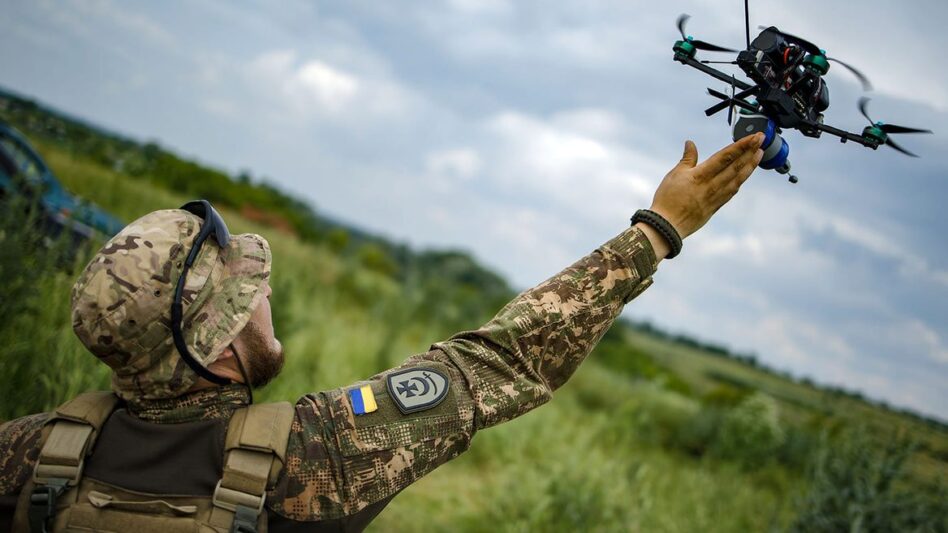
Ukraine’s anti-corruption watchdogs just got their bite back, and they’re starting with drones.
Last weekend, Ukraine’s anti-corruption agencies, SAPO and NABU, announced an investigation into a “large-scale corruption scheme” in UAVs and electronic warfare equipment procurement, involving drone company owners, lawmakers, and military officials.
Revenge tour: If the National Anti‑Corruption Bureau (NABU) and Specialized Anti‑Corruption Prosecutor’s Office (SAPO) sound familiar, it’s because this corruption investigation came just two days after President Zelenskyy and the Ukrainian parliament backed down on a push to strip the offices of their independence following mass protests in Kyiv and some choice words from European neighbors.
According to a joint NABU and SAPO statement on Telegram, the procurement corruption investigation zeroed in on contracts for:
- Electronic warfare systems, which were purchased at a “knowingly inflated price” to give the participants “illegal benefits in the amount of 30% of the contract.”
- FPV drones, which were part of a contract worth around $240,000 with “an enterprise that supplied products at a cost that was overstated by about USD 80,000.”
Drone doghouse: After the contracts were completed, the “enterprise’s officials handed over their ‘kickback’ to the members of the criminal group,” according to the agencies, referring to the group of individuals who benefited from the scheme.
So far, four participants have been arrested and six have been charged—including a member of parliament (who conveniently voted to strip the agencies of their independence); the owner and director of Akopters, a Ukrainian drone company; the head of a regional military administration; and the commander of a National Guard Unit.
Previously not too hot on the agencies, Zelenskyy called the bribery scheme “absolutely immoral” and “thanked the heads of the anti-corruption agencies for their work…NABU and SAPO have every opportunity to operate effectively.”
Speed over oversight: Franz-Stefan Gady, an adjunct senior fellow in CNAS’ Defense Program, told Tectonic that “the innovative decentralized procurement approach in Ukraine has resulted in a number of unintended consequences.”
“Based on discussions with military personnel, there are indications of uncoordinated purchasing decisions,” he added. “These issues highlight the need for a more coordinated and strategic procurement process that balances lower-level autonomy with centralized oversight and long-term planning.”
While the investigation raises a few questions about how Ukraine’s drone industry is going to integrate into the broader European market and comply with the continent’s famous bureaucracy, some foreign companies that operate in Ukraine say the corruption case is more of an exception than the rule.
“I think it’s an isolated case,” the CEO of an EU-based UAV company working in Ukraine told Tectonic. “Ukrainians are actually very strict on applying anti-corruption mechanisms in contract negotiations, from our perspective at least.”
“But it’s great that such stories come out,” he added. “It’s important to show the example and to name and shame people involved in such a scheme.”
Still, given that Ukraine ranked 117th out of 180 countries in the Corruption Perceptions Index (CPI) in 2020 and the amount of cash flooding the country’s drone industry, we could see some more under-the-table drone dealings as the anti-corruption agencies kick off their post-reinstatement revenge tour.