So, the fun thing about defense tech is that no matter how shiny, or fast, or go-boom it is, it doesn’t mean a whole lot if it doesn’t work hand in hand with everything else on the battlefield.
Luckily, at least one service seems to be tackling the whole “make sure this stuff works when it matters” problem head-on.
Late last week, the US Army kicked off the “Right to Integrate” hackathon (also known as Operation Jailbreak) at Fort Carson in Colorado with companies including Anduril, Boeing, General Dynamics, L3Harris, Leidos, Lockheed Martin, Northrop Grumman, Palantir, Perennial Autonomy, and RTX.
The idea of the exercise—a “sprint” that will continue over the next month, per Army CTO Alex Miller—is to “ensure offensive and defensive weapon systems, and business systems across the Army, can collectively integrate, share data and communicate with each other.”
“What we’ve seen during the global war on terror and, in the last couple years of watching Ukraine and Russia, and now watching operations in CENTCOM, is that…the inability for us to integrate sensors into our network or integrate new counter-UAS systems into our network, is eventually going to start costing lives, and that’s just unacceptable,” Miller told Tectonic.
Frenemies: Here’s the problem: For decades, the Army has paid oodles and oodles of money for exquisite systems that a lot of the time can’t really speak to each other.
- These big ol’ systems require “additional costs, time, and field service engineers to manually integrate the information or systems,” the Army wrote in a statement. “These manual integrations were often bespoke and frequently failed.”
- Poor integration isn’t just a “whoopsie” tech snafu—it has deadly consequences. If a sensor, let’s say, isn’t properly calibrated with an interceptor system, things like drones and missiles can make their way past air defenses.
- Companies like Picogrid have made a name for themselves as integrators for all the tech y’all build, but with this hackathon, the Army is making sure that they can actually, like, do it themselves.
Cue, Operation Jailbreak. Here’s how the whole thing will work:
- Companies—the big ones named, plus some new entrants, per Miller, have converged on Ft Carson. “We’ve now got drone companies that are coming. We’ve got loitering munition companies that are showing up. We’ve got lots of sensor folks. And then we’ve got some of the traditionals that have been along on the journey with us for a long time,” Miller said.
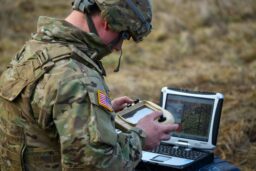
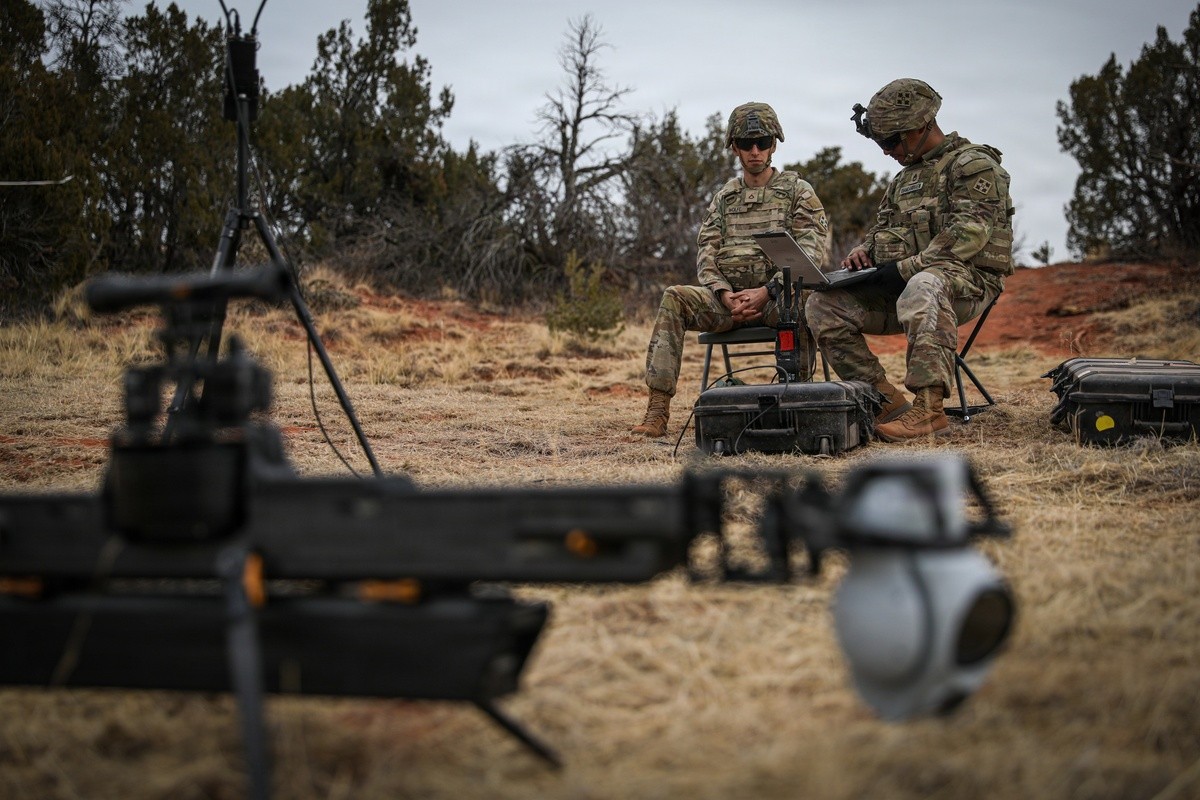
- The Army is basically asking those companies to show ‘em what they’ve got. “[We’re bringing] all of the equipment, all of the different sensors, all of the vehicles, all of the shooters, all of the effectors, into one place and [sitting] all of the engineers down in a big room in the motor pool on the range and asking the companies to expose or build those interfaces, give us the documentation…and make sure that we can really rapidly integrate all those new things into our systems,” Miller added.
- They’ll have a software zone—for the coding and integrating bit—and an operations zone for the plugging things in and making sure they work together in the real world bit. “We’re gonna let the vendors sort of party with each other and come up with some interesting test cases,” Miller said.
- The OS underlying the whole exercise will be Anduril’s Lattice, but Miller was careful to emphasize that it’s not a Lattice exercise. “This is a validation,” he said. “This is not about locking vendors into Anduril’s Lattice.”
Whole new world: We asked Miller whether there was a specific contract that would come out of the exercise. He said it was more about demonstrating that this is how the Army wants to do things.
“The goal is that [this] just becomes the way that we do business from here on out, where we can validate that, yes, you have an open architecture. Yes, we can treat your system as a module, so that it is modular and we can move it around,” he said.
And, what happens if a company’s tech, like, really doesn’t play well with others?
“The only way that anybody fails here is [they] quit,” he said. “Nothing’s going to be perfect. That’s not real. But we will work with you to make sure that everyone has an equal opportunity to do this….It’s not the Army versus industry. It’s the American industrial base and the US Army working together to say, here’s a new way of doing business.”