
Voyager ($VOYG) is best known for its work in space, but the Air Force wants to bring it closer to Earth.
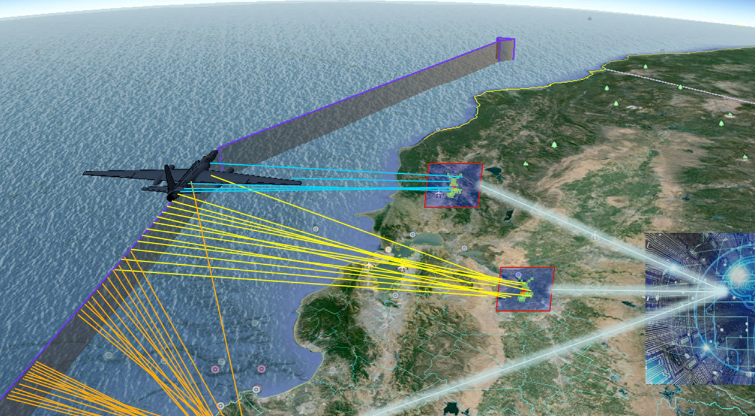
On Wednesday, the publicly traded space company announced a $21M contract with the Air Force Research Lab (AFRL) to develop AI-powered intelligence, surveillance, and reconnaissance (ISR) systems that “scale seamlessly from tactical small Unmanned Aircraft Systems to high-altitude platforms,” according to a company announcement.
Bon voyage: Voyager, which was founded in 2019 and went public in June, has become a major player in the space scene.
- The company helped build Starlab, a commercial space station developed through a joint venture with Airbus, Mitsubishi, and MDA Space.
- They’ve also made a big push into the defense industry, focusing on solid rockets, satellite payloads, and ISR. They snapped up radar analytics and AI company ElectroMagnetic Systems in August to shore up their multi-domain ISR capabilities.
- Their defense and national security business unit now generates a big chunk of their revenue—up 31 percent year-over-year to $28.5M in Q3 of this year.
Eyes up here: Under the $21M AFRL contract, Voyager will develop GPU-based surveillance systems and digital signal processing tools, with a focus on supporting “irregular warfare in near-peer engagements.”
- Put simply, these systems will fuse signals intelligence (SIGINT), Synthetic Aperture Radar (SAR) sensing tech, and AI capabilities (like signal classification) to create a clear, single picture for operators.
- The company says that the system is currently at initial operating capacity and will be completed in the next year.
- When completed, the ISR system will be “platform agnostic and interoperable with a variety of airborne and ground platforms,” a company spokesperson told Tectonic.
“By combining next-generation sensor architectures with open designs and built-in AI, we’re creating agile surveillance solutions ready for platforms across ground, air, surface, space, and cyber,” Matt Magaña, the head of Voyager’s defense and national security business, said in a statement. “Today’s threats change fast, so our systems must adapt faster than the threats they counter.”