Look out, world. The defense tech bros are teaming up across the Atlantic.
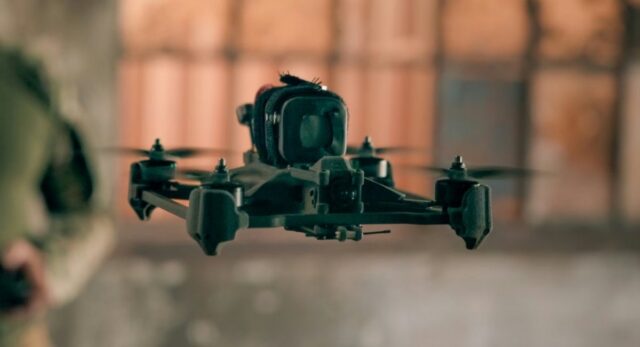
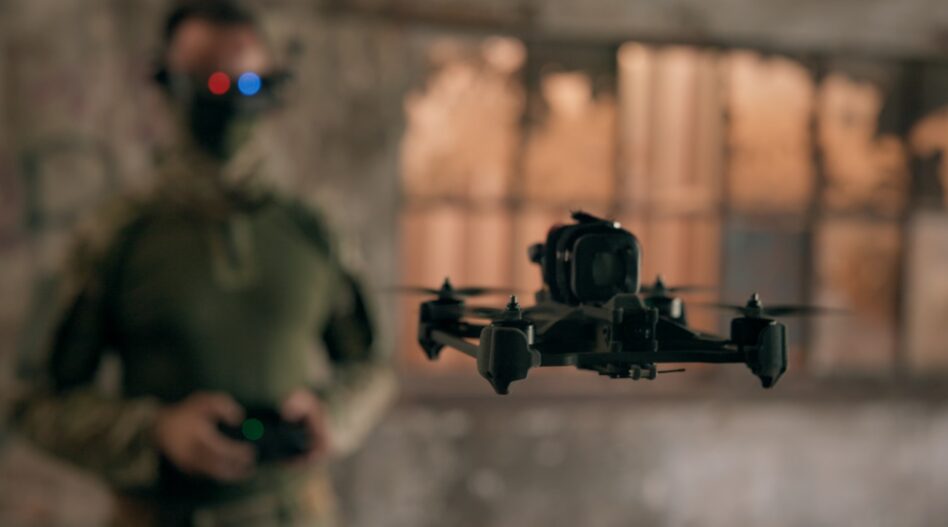
Yesterday, Croatian drone wunderkind and California-based drone and additive manufacturing company Firestorm announced that they’re officially teaming up to 3D print Orqa’s teeny-tiny FPVs for frontline operators.
According to Firestorm CEO Dan Magy and Orqa CEO Srdjan Kovacevic, both companies and customers get the best of both worlds—Firestorm’s frontline printing capabilities with Orqa’s like, very battle-proven drones.
Their collab-produced, 3D-printed FPV will be called the Firestorm Squall.
“We’re really excited to pair battlefield-tested technologies with our advanced manufacturing capabilities. What we’ve seen is that the ability to build a prototype and repair these FPV quad frames in the field is of the utmost importance across DoW,” Dan Magy, CEO of Firestorm, told Tectonic. “It’s actually one of the most requested things we have when we take the xCell to bases and deploy it in the field.”
Kovacevic is thinking even bigger. “We want to be enablers of the Western drone ecosystem,” he told Tectonic. “I think partnership with Firestorm is a perfect example of, like, how that can result in something great…[by mixing] our ingredients together, we can make magic happen in a completely different way.”
Gotta admit—the man’s got a way with words.
Pew-pew: First, a bit about Orqa (drones go first, duh).
The company was founded back in 2017 in Croatia and, since then, has quietly become a global giant in the small drone/FPV game.
- The company says it can now produce 280,000 NDAA-compliant, Chinese-component-free FPV drones a year out of its headquarters in Osijek, Croatia.
- Through its partnership program (where it basically shares its FPV design with manufacturing partners around the world), the company says it aims to produce up to a million a year.
- Orqa isn’t churning out Reapers—their bread and butter is the kind of small FPV drone that’s been a game-changer on the battlefield in Ukraine.
- Orqa has three FPV drones on offer: The MRM1-5 training drone, the NDAA-compliant and EW-resilient MRM2-10, and the more commercially marketed Dream X.
- They also produce all the auxiliary kit to go with and in the drones— goggles, flight controllers, and all the motors, cameras, and circuit boards that make the drones tick. No Chinese parts here.
Mr. Worldwide: And all this ain’t just talk—last year, the company delivered 100,000 products (drones, accessories, and components) to customers across more than 50 countries. They’ve also scored contracts with the Croatian armed forces, and their kit is reportedly being used around the world—from Ukraine to the US.
That global reach and proven efficacy were a huge part of what drew Firestorm to Orqa, according to Magy.
“They’ve kicked ass in Ukraine. They have the ability to scale and meet demand, and they’ve been very proactive in trying new and different ways to manufacture their products to align with warfighter demands,” he said. “That’s, unfortunately, not something we’ve seen from other companies in the space.”
Build up: Firestorm, if you’ve been paying attention, has made a hard pivot from pure drones to manufacturing in the past year. Initially, the company set out to sell “drones-in-a-box”—an end-to-end production that could churn out 3D printed drones fast—and in the middle of nowhere.
Magy and his team then realized that the edge-focused 3D printing itself was a huge draw for customers—they could build parts for other people, too, out of their shipping container production units (called xCell).
That’s at the core of this new partnership. Basically, Orqa is sharing its FPV design so Firestorm can do its thing with it, and Firestorm is giving Orqa the ability to both print drones and drone parts in the field—fast.
“I think it’s a perfect match,” Kovacevic said. “Together we’re able to offer something new that each of us individually, either would not be able to offer…because the technological bar is too high.”
The two companies have already optimized Squall to be 3D-printable, have started co-producing, and are testing it with end-users (specifics TBA) to try and tweak it to meet demand. The cool thing about using Firestorm’s on-site production facilities, both CEOs said, is that the drones can be tweaked by operators themselves to do exactly what they need.
“You’re cutting out the middle man,” Kovacevic said. “You’re giving the warfighter…close to the battlefield the technical capabilities to do a certain degree of evolution of this system.”
That’s Orqa’s whole philosophy with regards to drones, he added. As with Firestorm, he liked to share the “secret sauce” and let people tweak it to their needs—that’s what creates effective capabilities.
“We’re enabling partners [to meet] an emerging need that, in this short period of time, none of us individually could actually fulfill,” he said.