The engine biz is getting buzzy, and the Pentagon is taking notice.
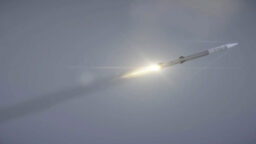
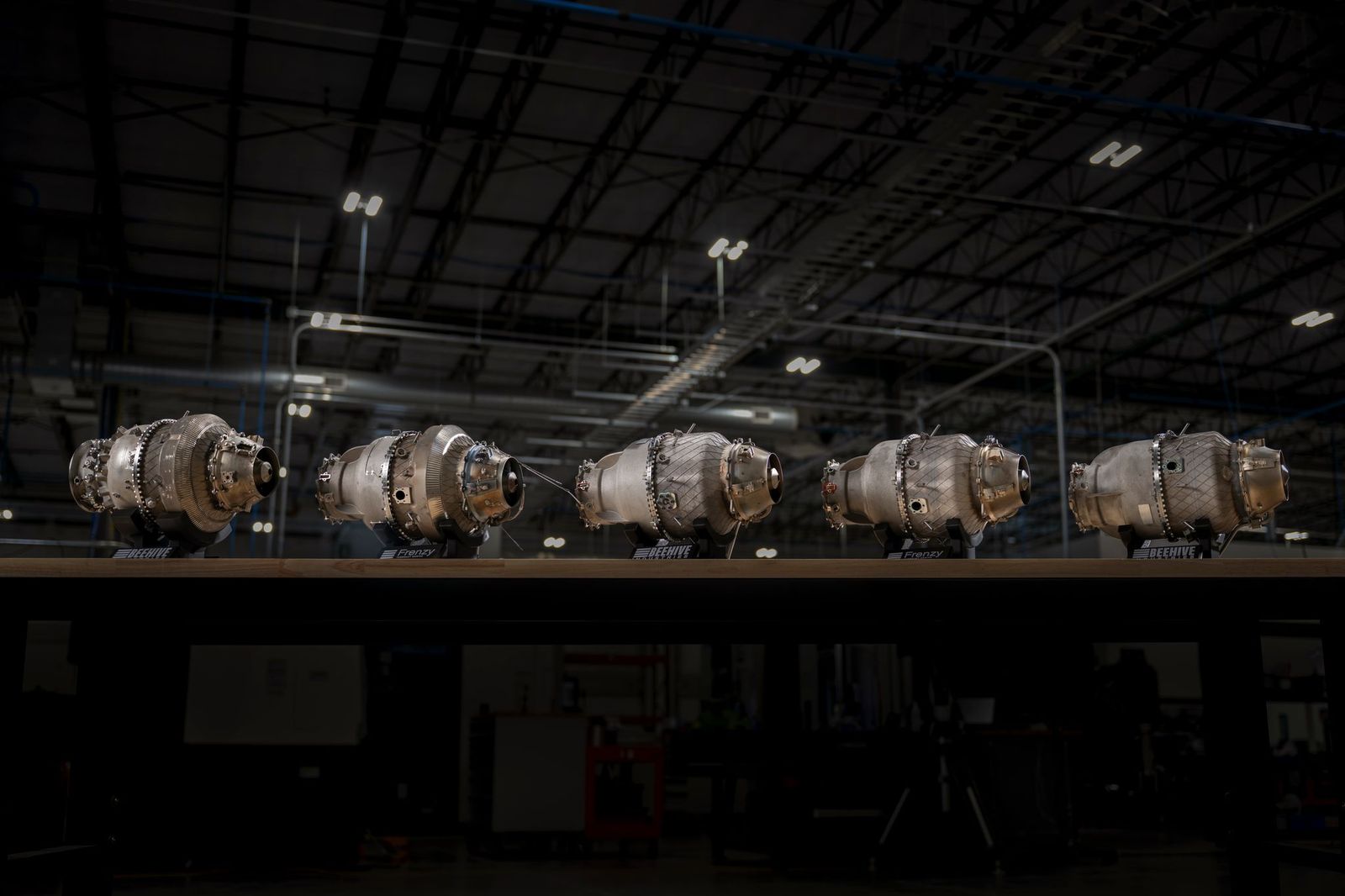
Beehive Industries, a Colorado-based 3D-printed jet engine startup, snagged a $29.7M Air Force contract yesterday to complete vehicle integration and flight testing, and qualification of their Frenzy 8 engine—designed as a lower-cost alternative for small cruise missiles and loitering munitions—and accelerate development of their smaller Frenzy 6 jet engine.
Hive hype: Beehive, founded in 2020, has moved at a, well, frenzied pace since launching their Frenzy family of 3D-printed jet engines back in December 2024. The Frenzy 8, which packs in 200 pounds-force (lbf) of thrust, is furthest along in the development process, but they have a few different versions in the works:
- The Frenzy 8 is designed for the Air Force’s Extended Range Attack Munition (ERAM), developed by CoAspire and Zone 5 Technologies, and Family of Affordable Mass Missiles (FAMM) programs, the latter of which the service requested a cool $973M in R&D and procurement funding for in the FY2027 budget.
- It completed high-altitude testing in a chamber simulating the environment at ~35,000 feet last December, clearing it for vehicle integration and flight testing.
- The company is also developing a 100 lbf thrust-class Frenzy 6 engine for smaller munitions and UAS, a 700lb engine for cruise missiles, and a 1,000lb-thrust engine for the Collaborative Combat Aircraft program.
- Beehive’s biggest and baddest Frenzy was one of four engines—along with Pratt & Whitney, Honeywell, and a GE Aerospace and Kratos team—awarded contracts in February as options for the CCA program. Good company.
Big buzz: Under the nearly $30M contract with the Air Force, Beehive will work with ERAM and FAMM missile-makers to integrate the Frenzy 8 on the vehicles and complete flight testing. Beehive’s Chief Product Officer Gordie Follin wouldn’t name names, but told Tectonic they’re “working with all the ERAM and FAMM suppliers.”
Ramping up: On top of the integration contract, the company also has “some production contracts in hand,” Follin said. “So in parallel to that testing, we are starting to ramp up production right now.”
- He said Beehive is kicking off production of the Frenzy 8 in “the second half of the year, and we’ll be getting on the order of 1,000 this year, and then on the order of 4,000 to 6,000 next year.”
- The company has the space to make “10,000-plus engines at our facilities, and we’ve actually acquired a machining supplier [since December] that gave us even more machining capacity,” he added.
- Beehive says they can make “thousands of Frenzy engines” each year at 60 percent lower cost than traditional systems.”
Little Frenzy: The contract also includes funding—a roughly “half and half” split of the $29.7M total—to manufacture a test-ready version of the Frenzy 6. Follin said the first test is slated for July, after which Beehive will conduct high-altitude testing, followed by integration and flight testing early next year and full-rate production in mid-2027.
According to Follin, the Frenzy 6—designed for “ground-launched counter-UAS systems and small swarming munitions and cruise missiles”—could see “even bigger total demand than the Frenzy 8, in the 5,000 to 10,000 [range].”
That’s all good news for a very, very busy and munition- and drone-frenzied Pentagon looking to shore up its weapons stockpiles.
“Leveraging additive manufacturing unlocks capability that hasn’t existed previously in these engines—you get better performance, lower cost, and better scalability,” Follin said. “Every day, there are reports that the US consumed X number of Tomahawks or X number of that, which equates to multiple years of production. [Additive manufacturing] is a really excellent way to help solve that problem.”
Time to turn those 3D printers into money printers.