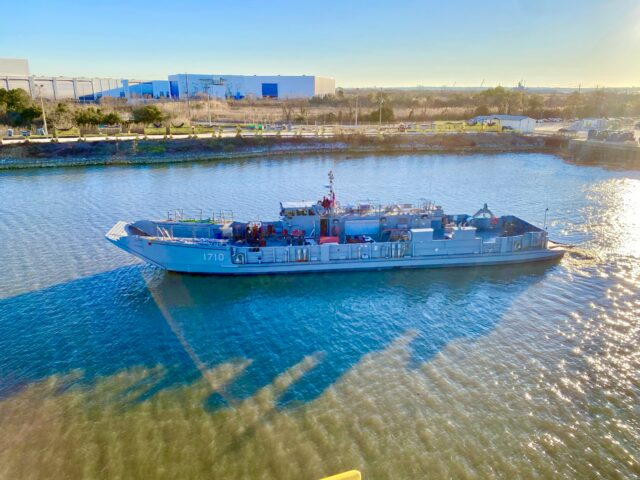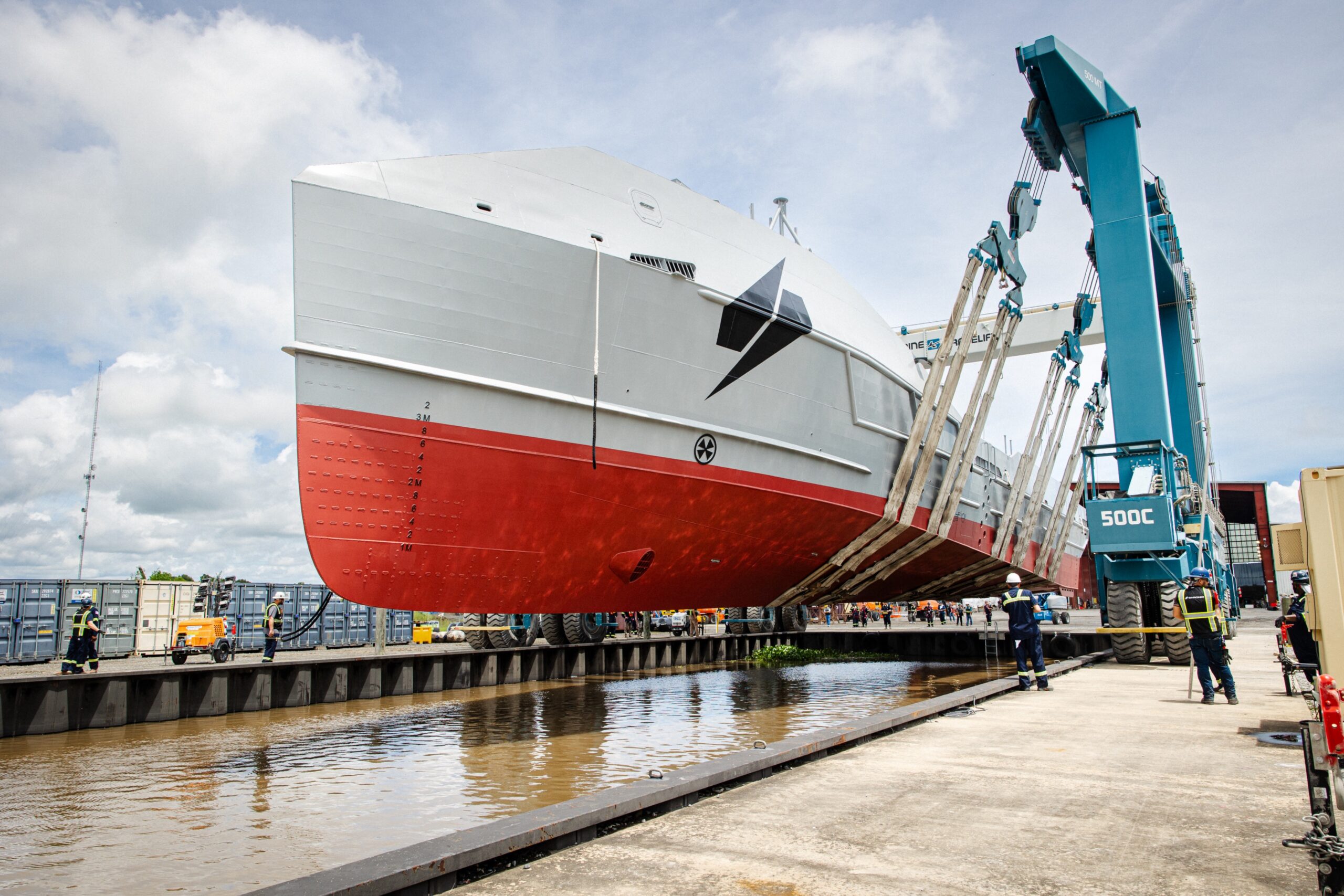
It’s no secret that the Navy wants drone boats, and they want them fast. Well, now we know who’s (probably) going to be building them.
Over the weekend, the service named the seven companies—including Saronic, HavocAI (through PacMar Technologies), and Sea Machines—selected to advance to the prototype stage of the medium unmanned surface vessel (MUSV) marketplace.
The seven companies’ vessels will be tested at sea starting next month, and whoever performs well will get a cool $15M from the Navy and will be “eligible for follow-on production.”
May the best drone boats win.
MASC off: As a quick refresher, the MUSV marketplace replaced the Modular Attack Surface Craft (MASC) program in March.
The goal, according to the Navy’s Program Acquisition Executive for Robotic and Autonomous Systems (PAE RAS) Rebecca Gassler, was to accelerate the fielding of MUSVs already on the market and mature enough without MASC’s prototyping push.
- “It’s our new approach to accelerate this autonomous capability to the fleet as part of the Golden Fleet,” Gassler told reporters at the time. “Our goal is to create a regular and recurring marketplace, not just for the MUSV, but for other classes of vessels as well.”
That decision—and some changes to the requirements—was rather contentious, especially for the startups that have spent the better part of the past year developing MUSVs for MASC. The new solicitation requested MUSVs capable of:
- Traveling 2,500 nautical miles at 25 knots while carrying a 25-ton load on the payload deck in sea state 4, an 11-ton payload reduction from the MASC requirement.
- Fully autonomous day and night operation through different weather conditions in sea state 5 “and survivable through sea state 7.”
- Restricting “all Radio Frequency (RF) emissions when commanded while continuing to autonomously operate” and having a “passive mode with no RF emissions.”
According to a Navy spokesperson, more than two dozen designs were submitted for the MUSV marketplace. The seven that made the cut were:
- Sea Machines, which introduced the STEAMRACER-class autonomous surface ship for the MASC (and then MUSV) program in February.
- Leidos, which has a few operational MUSV options on the table, including the 132-foot-long Sea Hunter and the 135-foot Seahawk.
- PacMar Technologies, a Hawaii-based R&D firm that developed a 100-foot MUSV powered by HavocAI’s autonomy software (Havoc’s also building an even bigger 200-foot USV with Hanwha).
- Saronic, the VC fan favorite in the drone boat world and maker of the Marauder MUSV. Saronic announced that the Marauder entered sea trials over the weekend (very timely). CEO Dino Mavrookas told Tectonic late last year that the company would be able to build 20 of them by 2027.
- Huntington Ingalls Industries (HII), the shipbuilding giant behind everything from the Navy’s aircraft carriers to, for MUSV purposes, the family of Romulus USVs, including the ROMULUS 190. That vessel is (you guessed it) 190 feet long and powered by HII’s Odyssey Autonomous Control System (ACS) software.
- Birdon, a shipbuilding company that’s developing an MUSV powered by Mythos AI’s autonomy software.
- Galliano Marine Services, which does business as the better-known shipbuilder Edison Chouest Offshore (ECO). ECO partnered with Anduril (which is also building MUSVs with HD Hyundai Heavy Industries in Korea) in April to build USVs domestically.
Sea legs: At-sea testing should wrap up by October, according to the Navy, at which point winning companies will get those $15M cash prizes. After the sea trials, the Navy “plans to work with industry to have vessels available for Navy leasing or procurement in fiscal year 2027,” a spokesperson said.
Given that the MUSV marketplace is funded by roughly $2.1B set aside for the vessels in the “One Big Beautiful Bill,” winners are likely to see a whole hell of a lot more cash money headed their way before too long.
Hybrid fleet, here we come.