Looks like the clankers (robots, for the non-internet people among us) are here to stay.
Yesterday, ground autonomy startup Overland AI announced that they’ve been awarded a $20M production contract through the APFIT program to deliver autonomous ground vehicles for the Marine Corps Marine Air Defense Integrated System (MADIS). For the uninitiated, that’s the Corps’ new mobile short-range air defense system.
According to Overland, they’re the first startup to win a production contract to build their own autonomous vehicles for the government, which they called “a huge milestone for both the company and the broader defense market.” Rise of the robots, indeed.
No driver, no problem: We’ve covered Overland before, but as a quick refresher, the Seattle-based company has had its robo-foot on the gas since its founding team of University of Washington researchers spun it out of DARPA’s vehicle autonomy program in 2022. They’ve since rolled out a few offerings on the ground autonomy front:
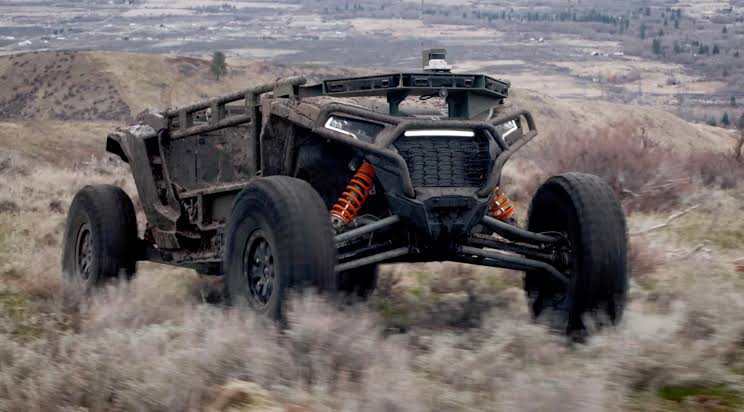
- ULTRA: A fully autonomous tactical UGV that can carry a range of payloads (last fall, they teamed up with Anduril to stick on some sensors and cUAS).
- OverDrive: The autonomy brain behind the “look ma, no hands” vehicles. The stack perceives and maps terrain with active and passive on-board sensors without relying on GPS or pre-mapped routes.
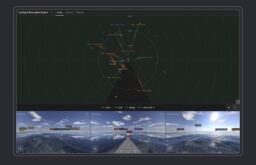
- OverWatch: A command-and-control interface designed to let operators coordinate fleets of autonomous ground systems, plan optimized routes, re-task vehicles to counter threats, and deploy payloads.
OverDrive and OverWatch are included in the MADIS deal, but on a call with reporters yesterday, Overland CEO Byron Boots couldn’t confirm whether ULTRA is the AGV they’re delivering under the MADIS contract, beyond that it’s a “light ground vehicle” with multi-payload capacity that they’ve designed and built in-house. (So far, ULTRA is the only vehicle they have that fits that description, at least publicly.)
- “We’ll have more to say about our lineup and the specific vehicle when we’re ready to announce it,” he added, hinting that there could be a new member of the Overland AGV family in the works.
Mad Dog MADIS: MADIS, the program the Marine Corps is snapping up these AGVs for, is a mobile, short-range, ground-based air defense system designed to protect dispersed Marine units from UAVs, low-flying, high-speed fixed-winged aircraft, and helicopters.
- It’s built around a pair of Joint Light Tactical Vehicles (JLTVs), one focused on neutralizing fixed and rotary-wing aircraft (the Mk1) and the other (Mk2) on providing detection and C2 for the duo.
- The Mk1 packs a punch with a turret-launched Stinger missile pod, EW capabilities, and a 30mm cannon on a remote weapons station, while the Mk2 houses the C2 suite, more EW tech, and a 360-degree radar for UAS detection.
- The Marine Corps also has the Light MADIS (LMADIS), which hosts the radar and EW suite on a Polaris lightweight tactical vehicle as an interim c-UAS stopgap solution before the full solution is fielded (the first full MADIS delivery took place in Japan last week).
- The FY26 budget allocated $231M for MADIS Family of Systems procurement, and in FY27, the Marine Corps/Navy requested 42 MADIS pairs as part of a broader $6.3B ground procurement request.
Rise of the robots: Under Overland’s $20M contract, the company’s AGVs will be “providing a resupply capability for the other vehicles, which are part of the [MADIS] system,” rather than replacing the JLTVs, Boots said. “We may build on it from there, but that’s how the program is starting.”
- The AGVs won’t house c-UAS tech or effectors themselves—at least to start—but they can serve a number of uses once the Marines integrate them into the MADIS architecture, including as an exportable power source (which Overland has “done for a number of customers with respect to the MADIS program”), carrying ISR payloads, and as an FPV mothership.
- Boots couldn’t disclose how many AGVs Overland will be delivering under the deal, but said it’ll be “more than a dozen” and that they’re expecting to get them in the Marines’ hands within “nine months after award.”
“We’ve used our autonomous ground vehicles for a wide variety of different mission sets—everything from resupply to ISR to breaching—so there are many different use cases for this particular program,” he added. “We’ll see what MADIS and ground-based air defense come up with.”
But beyond all that, this win is big for Overland because, according to the company, it represents that “first step toward integrating fully autonomous ground vehicles at scale in USMC programs of record,” rather than tele-operated and remote-controlled vehicles.
It’s also big because they’re “not integrating software onto another prime’s vehicle—we’re priming the contract, and we’re delivering the entire system, [both] software and hardware,” Boots said. “That’s what we’re most excited about here.”