Valinor launched last year with a focus on building the unsexy but important tech for modern conflict that no one else is, and it doesn’t get much more picks-and-shovels-y than drone docking stations. Looks like that bet is paying off.
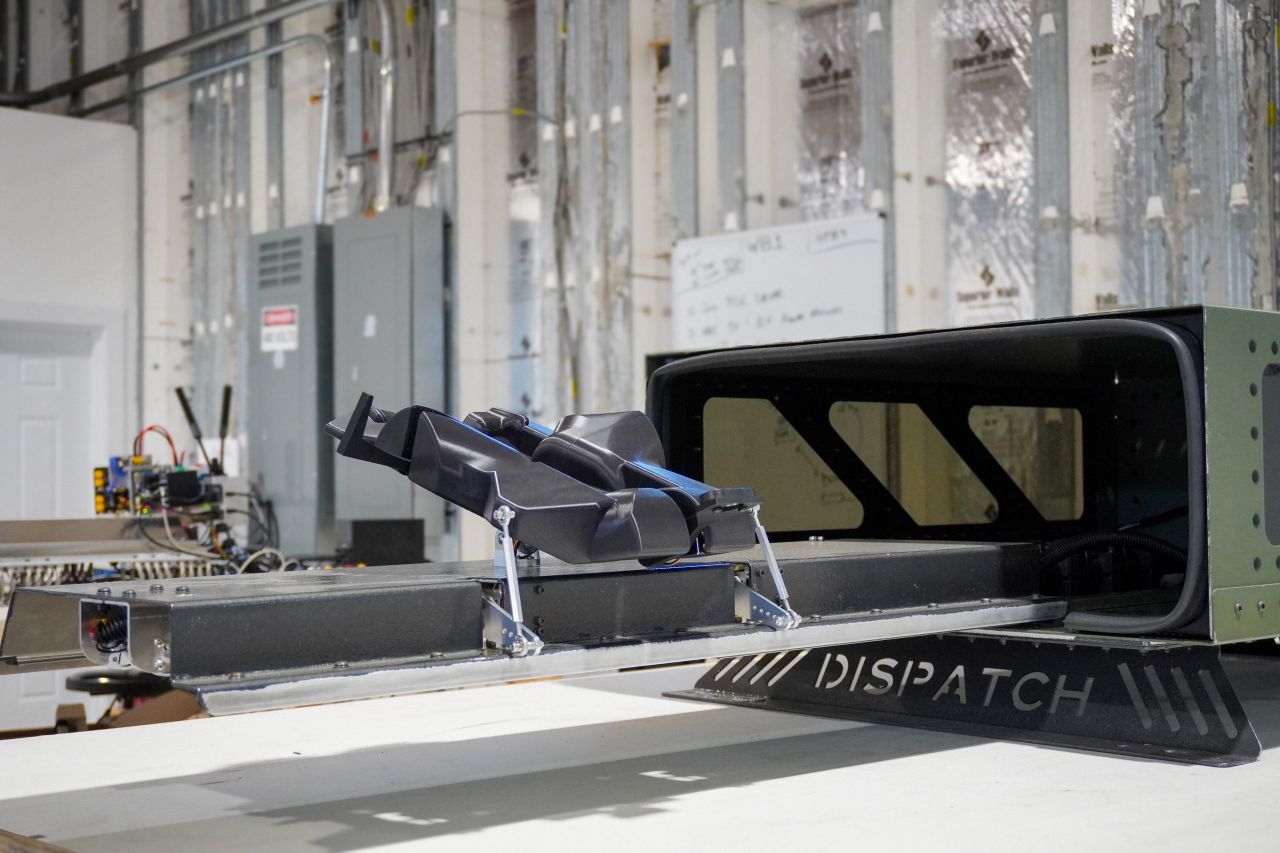
Earlier this week, the new-age defense tech holding company Valinor announced its Dispatch product-company—a modular drone-docking and charging station—was tapped by the DIU for the Containerized Autonomous Drone Delivery System (CADDS) project, which is pretty much what it sounds like.
Hubs and spokes: If you’re thinking, “Hey, isn’t Valinor making containerized field hospital units?” or “isn’t that the air-launched mini-strike drone company?” you’d be right, but there’s a method to this madness.
The company is set up as an “operational holding company” with a central “hub” that provides go-to-market, financing, prototyping infrastructure, and legal help to its “spokes,” the subsidiary companies focused on individual products.
- The subsidiary product companies, in turn, have more autonomy over the engineering and product development, allowing them to focus on building the technologies, leaving the boring stuff to the hub.
Dock O’Clock: Dispatch, based in Tennessee, is one of those semi-autonomous product companies.
- It’s a modular docking and charging station that enables the rapid and remote launch, recovery, and contactless recharging of small drones, especially all the FPV quadcopters the Army and Marines are rushing to get their hands on.
- It’s built to be modular, with the ability to be fitted onto a vehicle (think JLTV, Infantry Squad Vehicle, or Humvee) or scaled up into multiple Dispatch units for larger swarms, drawing from different power sources (like a large battery or a generator).
- Dispatch also comes with an in-house C2 software platform that allows the operator to manage and monitor the fleet of drones, launch and recover them for charging and storage from an ATAK or other devices, whether they’re operating from inside a vehicle or from afar.
“When you look at scaling autonomy programs, there’s still a requirement to recharge the drones with a human in the loop, and it was the one piece that continued to be the bottleneck in going from one-to-many and enabling one person to truly unlock autonomy,” Valinor Chief Growth Officer Kurt Freshley told Tectonic. “So, we started focusing on the power infrastructure at the edge to scale these drones.”
“There are other drone docking stations out there, but they’re traditionally paired with [specific] vendors and built to meet that specific drone,” he added. “We focus, first and foremost, on something that can be drone agnostic and enable the Department of War to procure whatever drone that they want to use and continue to unlock autonomy throughout that process.”
Turns out that’s just what the DIU was looking for.
Let ‘em fly: The DIU’s CADDS project launched in February seeking a system that enables “the storage, rapid deployment, and management of multi-agent systems to provide either persistent UAS coverage over extended periods or massed effects within a single geographic region and time,” according to the solicitation. In other words, the DIU wants a big ‘ole containerized drone-launching box that allows a single operator to store, deploy, and recover swarms.
Dispatch is going to be scaled up into a whole bunch of docks inside, effectively, a “shipping container that fits dozens of drones,” Freshley said. “We also have vehicle-mounted solutions elsewhere that are one-to-two quantity deliveries, but the big difference here is the large quantity of vehicles.”
- The Dispatch team is also working with the Army’s Transforming in Contact (TiC) initiative, but that’s mainly focused on “vehicle-mounted solutions and deploying drones on vehicle operations,” he added.
Now, many drones rely on battery packs rather than contactless charging, so the Dispatch team is working with a range of drone manufacturers to integrate contactless charging. If that gets widely adopted, life gets easier for everyone, since operators won’t have to carry around a bunch of batteries to keep drones flying. For CADDS, it allows swarms of drones to be stored, charged, launched, and recovered remotely by one operator.
“You don’t need to have troops out there launching a drone swarm,” Freshley said. “This lets them get behind the next line of cover, or even countries away, if they wanted, to launch them, so it helps ensure that you’re able to protect the operator.”
Seems like a good idea to us.