The interceptor game really is so hot right now.
In case you missed it—earlier this week, interceptor startup Furientis announced that it’s raised a $25M seed round led by Benchmark and scored an OTA with the Pentagon to develop its 100-mile-range interceptor vehicle.
- The company specifically calls it an “interceptor missile” and says it’s intended for homeland defense.
- Worth noting—this is Benchmark’s first investment in a straight-up defense company.
- Furientis did not reveal the size of the contract.
“Furientis exists to resupply our critical deficiency in defensive munitions,” Furientis Co-Founder and CEO Brody Franzen said in a statement. “Recent events have shown these threats are not theoretical, and the U.S. is genuinely running low on the systems that protect the American people. That is fundamentally a production and manufacturing problem, and it’s the one we built this company to solve.”
Fresh faces: Now, Furientis is firmly in the new-kids-on-the-block interceptor cohort. The company was founded in 2025 (yes, last year) by Franzen and Aris Simsarian (head of propulsion) and set out to address the rather thorny problem of low-cost interception.
- As we hope you’ve learned from this newsletter by now, the explosion of lower-cost drones (especially the fast and deadly ones like Shaheds) has created a bit of an economics problem for air defense.
- A Shahed or Geran (even the 4s and 5s) costs less than $150K. A Patriot PAC-3 interceptor missile costs between $4-5M. That’s a pretty big loss.
- Plus, the US (and its allies) have a bit of a supply problem—especially with the war against Iran, the Pentagon is burning through these pricey interceptors at record rates, and there simply isn’t enough of a stockpile (or production capacity) to keep up.
Cheap and cheerful: That’s where Furientis comes in. The idea is to build interceptors that are capable enough to take down advanced threats, without being so expensive as to be, well, silly.
- Furientis is targeting a price of less than $250K per interceptor, with an eventual production goal of 1,000 missiles per factory per year.
- Per the company, their secret is that they have “inverted the standard defense model.” Instead of spending ages on in-factory R&D, they test their prototypes “in the field on a biweekly cadence.”
- Furientis says that every design decision is weighed against two design decisions: Whether something (down to the part level) can be manufactured at that 1000 units per year per factory scale, and whether it enables a missile to be assembled in less than an hour. The ultimate goal is sub-30-minute assembly times.
- Per Franzen, every single component was designed around mass-producibility. “What we’ve done is not only architect our bill of materials around low-cost things or cost-effective things, but do that at a cadence that overall shortens the development cycle,” he told Tectonic.
“Our thesis from the start was that this is not a cost problem, necessarily, but a production problem,” he added. “Fundamentally, what we were seeing was these very insufficient production rates from the legacy primes…that’s why we started the business. Not explicitly to build something that is cost-effective, but to build something that is capable of production rates in the 1000s per year.”
Swedish meatballs: In interviews, Franzen has said his company is trying to build missiles like IKEA furniture. Here’s how they’re doing it:
- Cheaper airframes: Furientis uses automotive-grade metal extrusions instead of expensive aerospace alloys, cutting component costs from thousands to hundreds of dollars.
- IKEA-style assembly: Missile sections are bolted together rather than joined through more complex processes, making assembly faster and less labor-intensive.
- Off-the-shelf electronics: The company uses commercially available computers and components wherever possible, rather than expensive, custom-built military hardware.
- A focus on software: Furientis relies on software and cheaper commercial electronics for guidance, reducing the need for expensive, specialized sensors.
- In-house rocket motors: Critically, the company manufactures its own solid rocket motors and has developed proprietary propellant chemistry to simplify production and reduce the whole propulsion bottleneck thing.
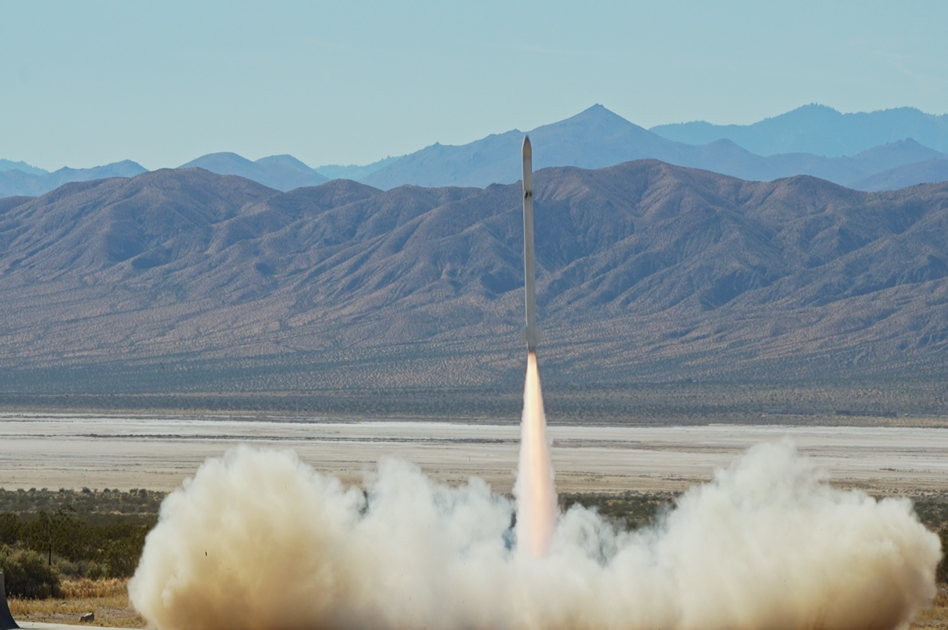
And it’s, like, actually working. Franzen said they “are flight testing every few weeks at [their] range, and [that they’ve] already demonstrated some intercepts.” He added that they just completed a successful low-cost interceptor (LCI) test at White Sands in New Mexico.
Scale up: From here—especially with this OTA—the goal is to take all this and scale it all the way up into a fielded capability.
- Over the course of the contract, Furientis says it will “demonstrate the flight vehicle’s performance against Department requirements.”
- The company will also use the funding to “continue investing in its vertically integrated manufacturing, expanding flight test operations, and scaling the team across engineering and manufacturing roles in their Los Angeles office.”
Rise of the mini-missiles, here we come.