
If there is one VC fund you know in the defense tech world, it’s probably Andreesen Horowitz—or a16z, as the cool kids say.
The firm—which just raised a casual $15B, including $1.176B for its “national interest” (defense and deep tech) focused American Dynamism fund—has backed some of the biggest names in the game, including Anduril, Shield AI, Castelion, Hadrian, and Saronic.
Plus, the firm’s founders and leaders (Marc Andreesen, Ben Horowitz, Katherine Boyle, and David Ulevitch, among them) have been some of the loudest voices pushing for acquisition reform—and it seems to be working.
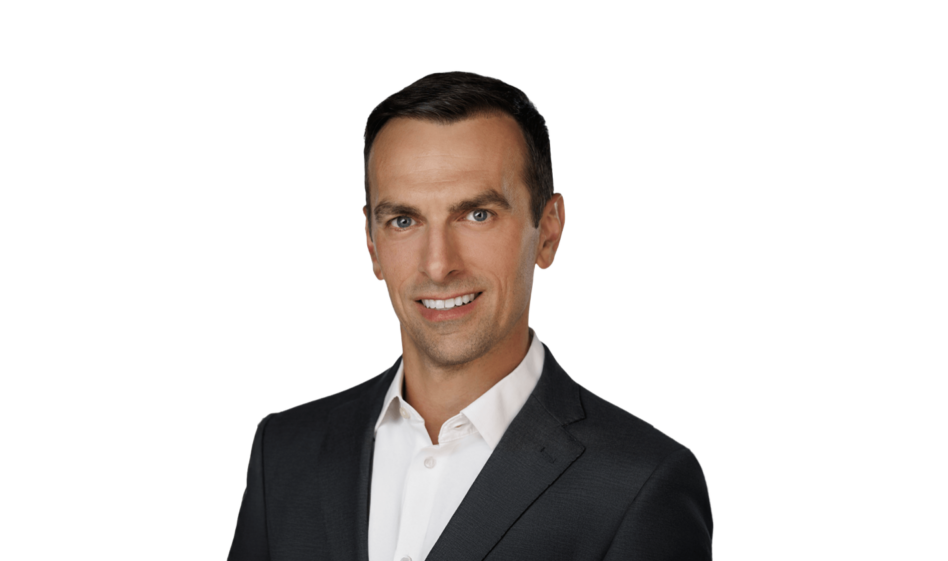
One of the people driving this charge on DC and into the Pentagon is Matt Cronin, a16z’s senior national security advisor. Tectonic sat down with Cronin earlier this month to talk about his role at the firm, how a16z advises its portfolio companies vis-à-vis the Pentagon, acquisition reform, and all things defense spending.
Note: This interview has been edited for length and clarity.
Tectonic: Matt, tell us what you do.
Matt Cronin: I am the senior national security advisor at the venture capital firm Andreessen Horowitz. It is a legal and policy role. For purposes of this conversation, I kind of split up what I do into two large buckets.
First, a substantial portion of my work involves working alongside our incredible founders in the American Dynamism portfolio, helping them to navigate complex strategic concerns. Most of these founders and their companies are dealing with cutting-edge issues at the absolute edge of both technological problems, but also national needs. The latter means that they’re oftentimes interacting with the federal government or other regulators, and so helping them to understand how best to align their goals with the current regulatory landscape and how best to meet the needs of the moment in the United States.
That’s one part of what I do. The other part is identifying areas where our companies should be succeeding on the merits, but due to statutory or regulatory issues—like the potential creation of regulatory moats for incumbents—they are shut out of the process. So in those cases, we’re not really focused on making sure that a specific portfolio company wins a contract. That’s always wonderful, but rather to ensure that our companies have the best opportunity to succeed based upon their raw capabilities and on the merits.
What is Andreessen Horowitz’s thesis apropos the government and the Pentagon? How do you figure out what the government needs, and therefore where you’re going to put your money?
I’d say for us, one of the things that we always look for is a strategic disruptor.
So you can see something that is a status quo for decades, and then it’s this technology that disrupts it. You have to have product-market fit, best-in-class founders, and incredible technological innovation capabilities. Those are kind of table stakes.
But you also want to see something where, if this company succeeds, if this thesis is correct, that would lead to a profound disruption—not only for an industry, but in some cases for entire theories of manufacturing, of military use of logistics. And that’s where we oftentimes will focus our efforts.
How do you figure out what people in the Pentagon, people on the Hill, really want?
A lot of that is having a deep understanding of the strategic needs of the United States. You gain that by speaking to people on the Hill and elsewhere—other decision-makers—but beyond that, from years of work within the federal government and outside of it, tackling deep, challenging problems.
For Andreessen Horowitz, our outlook is very different than almost any other firm in the private sector. As a venture capital firm, we’re not going to see any returns on our investments, in many cases, for ten-plus years. That means that we’re uniquely positioned to care about resolving long-term structural problems and strategic issues, rather than getting an earmark in a specific bill that leads to a quarterly profit. We don’t really focus on that.
Mark and Ben have noted that, as a market leader in this area, and as a firm that is reliant on the United States for our success—the legal structure that exists, the protection that we have, the deep financial institutions available to us—the United States helps us to succeed. So we have an obligation to create a legal landscape that maximizes the best outcomes, not only for portfolio companies, but for the American people over the long run. And we see when we do that, that’s where we succeed.
We accomplish that by identifying strategic reforms in defense or defense-adjacent spaces—like aerospace, manufacturing, logistics, and energy. You want to look at reforms that, if implemented, would maximize (1) transparency, so it becomes clear why the government makes certain decisions, either at a broader level or for specific contracts; maximize (2) efficiency, by addressing certain processes that serve no purpose beyond creating regulatory moats that benefit incumbents; and then (3) ensure selection based on merit. As I noted before, companies are chosen [by a16z] because they’re the best, not because they’ve engaged in regulatory capture over the course of years. So that’s our real focus.
If we achieve that, then we will be able to ensure that we consistently make—as we have thus far—the best investments and that our portfolio companies have the greatest chance to succeed on the merits.
Can we call that the lobbying part of your job?
I wouldn’t say it’s lobbying. There is a government affairs group that does that. We provide assistance when asked about different types of statutes or regulations, look at how we can help, and we interface with different departments and agencies that are experiencing certain challenges. That’s more of my role at the firm.
One of the things that really drew me to venture capital generally, and Andreessen Horowitz specifically, is learning while I was in the federal government—particularly at the White House—how technology and the private sector’s development of technology is an absolute requirement for the United States to solve incredibly important problems we’re facing.
This is true for both Republican and Democratic administrations. You would be surprised how often people come to experts in the field—whether it’s academia, industry, or otherwise—to try to understand these problems and get to the right solutions. That’s more of the role that we play.
I want to talk about the NDAA, the Big Beautiful Bill, and the legislation and executive orders the Trump administration has passed and issued in the last year. What do these tell you about what the federal government needs in terms of technology from the private sector?
What we are in the midst of is really a transformational series of reforms that will bring defense acquisition to where it was pre–World War II through the early parts of the Cold War.
What happened is that, starting in the early 1960s, we began introducing principles of scientific management. Essentially, McNamara, in particular, took philosophies and principles that were effectively Soviet in origin—command-economy style thinking, central planning—and we adopted them because, at the time, we thought the Soviets knew more than us due to the Sputnik moment.
We introduced those approaches into certain industries and then into the Pentagon. Everybody else stopped doing that because it was clearly a massive mistake, but the Pentagon didn’t. And so we’ve slowly diminished the breadth of the defense industrial base and reduced our capabilities. We now have all the wrong incentives.
Now, we’re at a point where, as publicly reported, we will run out of critical munitions within one to two weeks of a major conflict. That is unacceptable. We spend record levels on defense, and yet we cannot defend ourselves. That has to change.
That’s why you’ve seen urgency. I’ll say that the current administration is focused on this and is doing a great job recognizing the urgency of the moment. This urgency has been increasing over the course of years. During the Biden administration, you similarly had committees, including those run by Mayor Bloomberg and others, noting the urgency of the moment and why we absolutely need these critical reforms.
So that’s led to this moment. And now, what are the reforms, and why are they so important?
The reforms help bring us back to a point where the default position is commercial procurement of commercial solutions. Commercial procurement means you don’t have to go through a million hoops before you can interact with the Pentagon. In many cases, the current system isolates the majority of the dynamic American economy from the Pentagon, even though the majority of research and innovation is occurring [in the commercial sector] right now—unlike in the 1940s, 50s, and 60s.
Second, it makes it so that many solutions can be commercial or dual-use in nature. You don’t need a custom-crafted pistol, even though one service infamously pursued that and spent millions and millions of dollars doing so. You don’t need a radar or radio system that costs hundreds of millions of dollars when it’s completely unnecessary.
Another reform increases the flexibility and autonomy of procurement officials to go after problem sets rather than just specific programs. You’re not the person who buys this widget for a certain number of years. You’re part of a team that solves a broader problem—counter-UAS is an example. That allows money to move dynamically. If one company isn’t succeeding, you stop funding it. If another is doing a good job, more money goes to them. And that allows for a great amount of dynamism and access to the broader commercial economy.
Does this mean the so-called Valley of Death is actually closing? Is this change sustainable, or is it more short-term?
I don’t have a crystal ball. I can’t look into the future, but I can look at the fundamentals right now.
You have an adversary engaged in the largest military buildup since the eve of World War II, openly talking about engaging in military activity in the Western Pacific. We have a defense industrial base that lacks the means to arm and reconstitute rapidly if that conflict were to occur.
The fact that we cannot reconstitute increases the probability of conflict. Every decision-maker recognizes that. And that means all of the incentives point to the need for long-term, sustained reform. The defense industrial base has to fundamentally change.
President Trump has spoken about this. Secretary Hegseth spoke about this in his November address, and you see this reflected in executive orders changing incentive structures. I don’t see the underlying fundamentals changing, which means the need for reform isn’t going away. By necessity, this is a longer-term trend.
But let’s say, in a beautiful rainbows-and-sunshine world, there’s a diplomatic off-ramp to tensions with China, and that threat goes away. Does this revamp continue, or does it slide back to the status quo?
So, putting aside the idiosyncrasies of the Chinese Communist Party for a moment and pretending it’s kumbaya for everybody. We would still need a military.
In that scenario, you’d run into institutional inertia and regulatory capture pushing back against reform. But if you talk to anyone—whether it’s someone in a prime contractor, a startup, a veteran bureaucrat in the Pentagon, or a political appointee—everyone who has studied the problem will tell you, publicly or privately, that the system is fundamentally wrong.
It is a waste of taxpayer dollars. It is an absurdity. We’ve effectively made ourselves less safe while spending top dollar to do it.
Now, at the same time, the present incentives and structures of some larger corporations mean that, at least in the short term, they’re incentivized to keep the status quo—even though I would submit it’s better for them in the long run. They would be more profitable, more dynamic, and happier in their day-to-day work because they’d actually be benefiting the country.
Some corporate officers would like to keep things the way they are. Not all—some primes are actually very eager for these reforms in certain parts of their organizations.
Without necessity, reform may become less likely. But that does not change the underlying truth: the system is broken, it wastes taxpayer dollars, and it makes us less safe. The difference now, compared to ten years ago, is that everyone recognizes we must change it as a matter of national security and safety.
It’s still early days, but have you seen these reforms make a difference for Andreessen Horowitz portfolio companies?
It is too early to say. I would say we are very excited by these initiatives, and we have heard from our portfolio companies about increased interest in what they have to offer.
Keep in mind, these founders are risking their livelihoods. They’re putting their professional careers on the line to make these technologies a reality. They’re not doing that to make a widget one percent better. What they’re offering is truly transformational—hypersonic capabilities that cost hundreds of times less than the nearest competitor and can be made much faster.
As layers of bureaucracy and inertia are removed, it allows these companies—whose solutions are clearly superior on the merits—to be identified by people at the Pentagon and for senior officials to start pulling them through the bureaucratic morass to give them a chance to succeed.
Let me give you an example. I won’t go into specifics to preserve anonymity. We have portfolio companies that cannot engage in non-commercial contracts because the regulatory, auditing, and accounting burden would bankrupt them, even though that burden has no real purpose under modern accounting principles.
The Pentagon may go to them and say, “We desperately need your solution. Can you bid on this contract?” The company agrees. [The contract solicitation] then goes through the bureaucracy and comes out the other side as a cost-plus, non-commercial contract—the very thing that would bankrupt them. So the company has to walk away.
Then a senior military official—someone with decades of experience—says, “I don’t know what to do,” because the bureaucracy itself prevents the solution from reaching the warfighter. That’s what Secretary Hegseth has been talking about. We’re seeing less of that problem, though it still exists.
What do you think are the most critical changes that have been implemented, and what’s still left wanting?
The most critical reforms are the portfolio acquisition system, broadening the definition of past performance beyond prior Pentagon work—because that, by definition, favors incumbents—and the commercial-first reforms that have gone through.
The one thing that’s missing is the provision that was in the Senate version of the NDAA that would switch the default from “may procure commercially” to “shall procure commercially,” unless you can determine that there is no real commercial solution.
Technically, the military does this now, but entrenched bureaucrats can simply say there’s no commercial solution without doing the work and bypass it. Changing that default would really shift the incentives and allow more commercial-oriented, non–cost-plus companies to enter and offer more price-competitive solutions.
How has the National Security Strategy—and in particular the focus on the Western Hemisphere—changed the work that you do and the way that you advise companies?
I don’t think it has materially changed the work that we do. If you look at the National Security Strategy, it says we have to increase our focus on the Western Hemisphere. But if you read it in its totality, and in some cases read between the lines, you’ll see that it’s saying we need to secure the Western Hemisphere because of larger global peer-competitor threats.
It’s not like a game of Risk where we’re grabbing the Western Hemisphere for the sake of it. It’s an initial step as part of a larger grand strategy to preserve and secure the United States. So the fundamentals—dealing with a peer adversary, which many of our portfolio companies are focused on—are still 100 percent true.
What did you see inside the government that pushed you to go into the VC world?
I did not see the government as fundamentally broken. There are amazing people who do truly important work there, and many of them are still there.
What I identified is that government, by the nature of how our society is organized, can often only be part of the solution. That means you need to bring in the best and brightest from the private sector.
To give you an anecdote: While I was working at the White House, I came out of a meeting dealing with serious national security problems for which the federal government did not have ready solutions. By chance, I then went to a public event with Andreessen Horowitz portfolio companies and spoke with several of them.
Out of a dozen or so companies, two had exact solutions to problems we had just discussed in that senior meeting. That blew me away. It wasn’t surprising that the private sector had solutions, but how exact they were to problems we had absolutely no answer for.
Without explaining why, I connected those companies with the right people to see if they should prevail on the merits. That led me to start looking into startups, venture capital, and ultimately American Dynamism to see whether this was a one-off experience or whether these companies consistently provide solutions that government, by design, is not always able or willing to provide. And I found that it is, in fact, the case.
What is the biggest threat facing the United States?
The biggest threat facing the United States is twofold.
Internally, there is a lack of recognition in the broader population about the nature of the threats we face. That can lead to complacency, and in turn, a lack of time to prepare for the threats we face. As I noted at the start of our interview, many of the reforms you’re seeing are driven by people who understand the threat and the risks—and who realize we have to move heaven and earth now to ensure we’re in a stable, secure position to deter conflict later. As General MacArthur famously said, the history of failure in war can almost always be summed up in two words: “too late.”
We want to make sure we’re not too late with any of the reforms we make, any of the acquisitions we pursue, or any of the strategic decisions we take. That’s what worries me. There are people who are on the game—doing incredible work across the federal government, the private sector, and beyond—but I don’t know how much the general public really understands. I think people intuitively sense that there’s a huge problem on the horizon. They get that. But the details, if they were fully aware of them, would be terrifying.
The second concern—and this one is even more targeted—is the Chinese Communist Party. They’ve made it clear, both in their public statements and even more so through their actions, that they are fully committed to ending U.S. primacy and creating a new, authoritarian-friendly world order with Beijing at its center.
As a result, they engage in dangerous, provocative behavior—whether in the Himalayas, the South China Sea, the Taiwan Strait, or now around Japan. They are arming and funding adversaries around the globe and threatening the territorial integrity of our allies. All of this points to a clear commitment to upending the global political and economic order for their benefit and to the detriment of the rest of the world.
And given the peculiarities of their institutions, I don’t see them changing course anytime soon. I think too often people view them as just another government, or just another threat—without fully appreciating how fundamentally different they are, both in their capabilities and in their intentions.
What keeps you up at night?
Nothing really keeps me up at night, because I do think that at the end of the day, the United States has the best hand and the best people. As long as we commit to a course of action that leads to success, God willing, we will get there.
If anything were to keep me up at night, it would be complacency—the idea that someone else will handle it, that it’s too challenging, or that it can wait. That leads to us losing necessary time to solve these problems.
Is defense tech a bubble?
It’s not a bubble, for a couple of reasons. First, as I’ve noted throughout this interview—hopefully not too often—it addresses a critical need that we have right now. Second, traditional contractors operate inside a massive regulatory moat, and many of them have become incumbents that are extraordinarily complacent in their business practices and in their approach to innovation.
By contrast, these startups are best-in-class—some of the best in the world—at innovation and at creating and delivering new capabilities. They’re hungry, and they’re willing to do the work. And once they get inside that moat—which, thank God, more and more of them are, to the benefit of the United States—they can so thoroughly outcompete the established incumbents that it becomes a completely different ball game.
Because of those fundamentals, it really can’t be a bubble.
You said up top that Andreessen Horowitz is looking long-term and not necessarily for immediate profit. What is the return structure? Where are the wins here?
Yeah, so I guess the win would be that these companies—again, we focus on defense, but American Dynamism is extraordinarily broad—are companies that serve a national interest: manufacturing, logistics, even education, energy.
These companies have an opportunity to succeed on the merits, and because we’ve chosen the right companies along the way, they, more often than not, will extraordinarily succeed, and that leads to what’s called the power law.
When that happens, they will become so capable and so profitable in their field that we will have an outsized return in comparison to our original investments. The way it works in venture capital, you don’t need every company to 2x. We won’t have every company succeed in our portfolio.
You need just a relatively small amount to become transformative game-changers, and that is 100x, 200x, etc. So, again, we are betting on all of our companies to profoundly succeed. We think that’s actually an entirely probable outcome, but at the end of the day, the outsized returns are only required for a certain number to actually hit that power law curve.