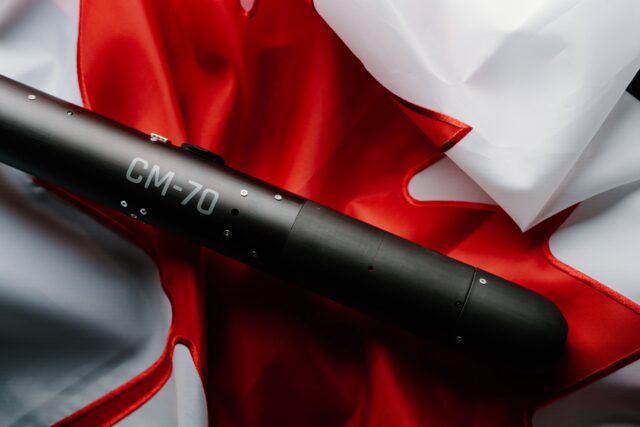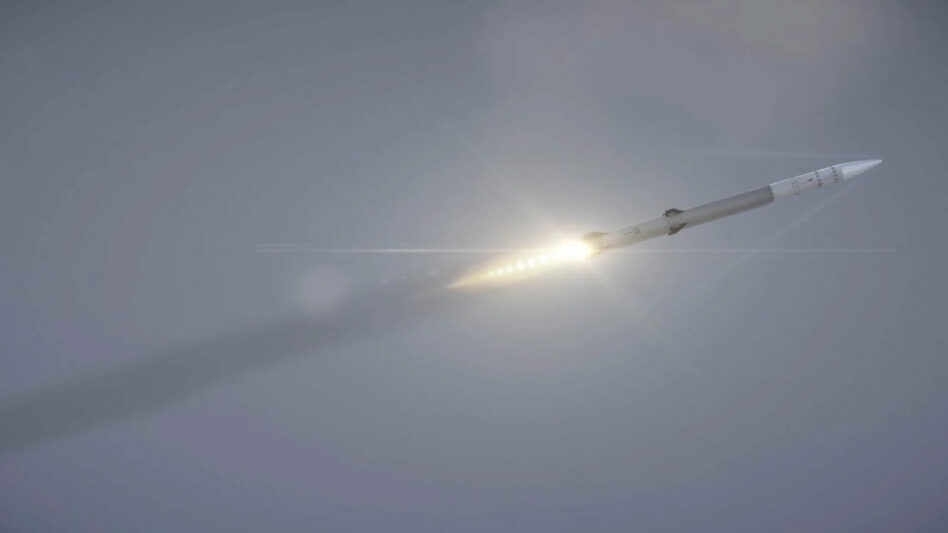
Dare we say the primes and the neoprimes might be…making friends?
Yesterday, everyone’s favorite defense tech company announced that it’s been selected (along with Boeing) to “advance to the next phase of competition for Integrated Fires Protection Capability (IFPC) Increment 2 Second Interceptor.”
- That’s the Army’s effort to develop a new, mass-producible midrange air-defense missile to protect bases and troops from cruise missiles, drones, and other aerial threats.
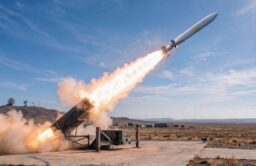
Anduril says the interceptor is powered by an SRM built out of its Mississippi Solid Rocket Motor Complex—plus Boeing’s seeker technology and compact airframe.
This win pushes the interceptor into the next phase of competition, which includes “detailed design, system development, integration, and demonstration, culminating in a competitive capability demonstration against Army requirements.”
Intercepted: Now, the IFPC falls directly in the whole “we need to figure out better ways of intercepting new, faster aerial threats” bucket.
- The current program was launched in 2021 to build the Army’s middle layer of air defense—protecting bases and troops from drones, cruise missiles, rockets and other aerial threats.
- Today’s system uses the Enduring Shield launcher (selected in 2021, built by Leidos’ Dynetics) and fires the AIM-9X SIDEWINDER interceptor (built by RTX).
- But the problem is AIM-9X isn’t designed to handle the full range of newer threats, particularly faster and more capable cruise missiles.
- So, in 2023, the Army launched the “Second Interceptor” effort to add a new, longer-range, more capable missile to IFPC.
Holding hands: Boeing and Anduril started working together to build their Second Interceptor back in 2024 (and officially announced the team-up in 2025).
- We don’t know tons about their model, but we do know it’s aiming for substantially more reach and performance than AIM-9X without becoming as large, expensive, or magazine-limiting as higher-end interceptors.
- Per Anduril, the design “targets an engagement radius covering the mid-range band, between short-range point defense and long-range systems reserved for the highest-value targets.”
- Magazine depth is a big driver here—the Army wants something small-ish, but that can pack a major punch.
- Other teams in Phase 1 of the IFPC competition include Lockheed Martin + AeroVironment (AV) and Rafael Systems Global Sustainment (the US branch of Rafael, which builds the interceptors for Israel’s Iron Dome).
Boeing and Anduril are the first teams to publicly announce their selection for Phase 2; the Army has not disclosed whether other competitors also advanced.