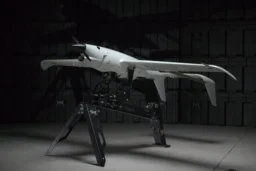
So long, unsexy side of defense. The whole supply chain thing is getting sexier and sexier by the day.
This morning, a new startup called Atlas Motion emerged from stealth with $11.5M in funding led by Greycroft to build motors and actuators for drones, robotics, and other defense platforms.
- Other funds on the cap table include Also Capital, Enea Capital, Mana Ventures, Sunflower, and Ravelin.
- Defense tech angel investors including Scott Sanders of Forterra and Jai Malik of AMCA also jumped into the round.
If you’re sitting there like, okay, snooze, here’s the interesting bit: The company is designing its kit in Long Beach, CA, but building the motors and actuators “at scale” out of a facility in the Philippines.
“We chose [to start] in the Philippines because when you’re talking global scale, setting up a motor and actuating facility out of an American location is just inherently difficult to be cost competitive in,” CEO and Co-Founder Christian Mochen told Tectonic. “[The country] has a super robust pre-existing manufacturing infrastructure… there’s a plethora of talent.”
“We’re not really afraid to go international and test the waters in other parts of the world,” co-founder Tom Baron added. “We determined when we started the company that it made most sense to go to Southeast Asia alongside all of the best manufacturers in the world.”
Forward motion: Now, in case you didn’t know, all the drones and robots and fun unmanned systems we know and love need motors and actuators (the thing that combines the motor with a gearbox, sensors, bearings, and control electronics) to, like, work. An autonomy stack is great and all, but if a platform can’t move, it’s pretty useless.
- Drones need motors to spin propellers and actuators for control surfaces
- Ground robots need actuators for steering, suspension, robotic arms, and locomotion
- Maritime drones use them for rudders, propulsion, and sensor positioning
- Missiles and loitering munitions rely on compact actuators to steer in flight
The problem is—a lot of companies, to date, have relied on China or Chinese-linked supply chains for these parts. But as of next year—2027—that’s a no-go for the Pentagon. That’s part of why Atlas is building out of the Philippines, a pretty staunch US ally.
- The two countries have a Mutual Defense Treaty and a Defense Cooperation Agreement, both of which stretch back over half a century.
Coming up empty: All three co-founders—Mochen, Baron, and Carlo Dela Rosa (COO)—experienced the difficulties in procuring motors (and fast) firsthand.
- Mochen and Dela Rosa met at Shield AI, then met Baron at Mach Industries.
- Mochen said that “no matter where [they] were, [they] were always hamstrung by our ability to procure critical components.”
“We had to find alternative sources [to China],” he added. “Every time we were leading a build effort, we’d always run into delays because we can’t get the components we need.”
Do the work: So, they decided to start building those components themselves.
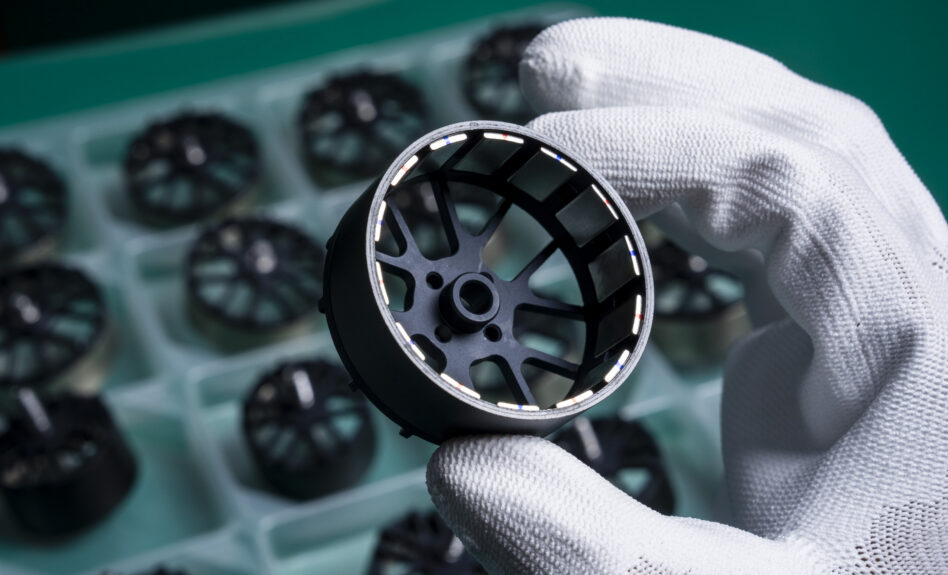
The kind of motor that Atlas Motion is building is called a Brushless DC (BLDC) motor, which is (put simply) an electrical motor that develops rotational force. They’re lighter, more efficient, more durable, and require less maintenance than brushed motors, which makes them good for things like drones.
Per Atlas, their motors and actuators:
- Provide higher power density than industry standard, which means lighter platforms and more room for payloads
- Enable precision motion—like, for example, fine control for robotic arms or munitions handling.
- Have been “engineered for volume production rather than bespoke prototypes.” No custom builds here—these are motors en masse.
Worth noting that when asked where they got their magnets from (building a motor means a magnet is involved), Mochen said that for the “lowest level of requirement we use Chinese magnets (largely for global customers). Everything else we source from the US or Japan.”
Selling like hotcakes: Despite being, like, newborn-age, the company’s already got some pretty serious traction—Baron said they have 14 customers, are in the “six figures of revenue,” and can produce 10,000 motors a month.
- He added that they’ll hit seven figures next month, and can scale capacity to 40,000 a month “pretty quickly.”
- The majority of their early customers have been drone companies. They couldn’t get into specifics, but Baron said they’re “the folks who are participating in the drone dominance program…one-way attack drones, surveillance, delivery drones. We’re either in qualification with delivering to all of those people at this point.”
Big ups: From here—as is often the case with raises—the plan is to scale.
- The team plans to open a second facility in the Philippines and scale to 50-60 people.
- They’re also hoping to open a production facility in the US for US-only customers—the facility in Long Beach is currently mostly prototyping and design.
- Right now, the Philippines factory is a pretty traditional motor factory. With this money, they’ll work to build out AI orchestration for the production line (using a system they call Vector) to modernize. That orchestration will be prototyped in California, then deployed in the Philippines.
Ultimately, Baron said, the goal isn’t to be a “manufacture abroad company.”
“We’re not anti-reindustrialize or anti-US manufacturing at all,” he added. “It’s about recognizing why the United States lost its manufacturing base, regaining that technical skill set, and then creating the conditions for us to be successful anywhere in the world.”