The Aussies are coming, y’all.
This morning, Arkeus, an Australian defense startup building AI-powered sensing systems for drones, raised $18M in a Series A led by Aussie VC QIC Ventures to expand its global footprint, including in the US.
- New investors R+VC, Folkore Ventures, and DYNE Ventures also participated in the round, alongside existing backers Main Sequence Ventures, Salus Ventures, and Beaten Zone.
“We are a little bit under the radar, if you can excuse the pun for a moment, but Arkeus is all about building the eyes and brain of autonomy,” co-founder and CEO Simon Olsen told Tectonic.
Don’t sleep on the defense tech scene down under—it ain’t all kangaroos, scary spiders, and shrimp on the barbie.
Sixth sense: Historically, military drones have pretty much been remotely piloted aircraft. As drones have gotten smaller and software, especially AI, keeps getting better, platforms still rely on miniaturized versions of the same radars and optical cameras used in the old school drones and designed for human operators.
The problem with that is “the software is only as good as the data coming back from the sensors,” according to Olsen. “In other words, the software can’t find what the sensors can’t see.”
No limits: Founded in 2020, Arkeus is betting that by feeding AI software sensor data designed to speak its language rather than the human operator’s, autonomous systems can get past the perception limitations and get a clearer picture of super-complex operating environments, including across the electromagnetic spectrum, from ultraviolet to infrared.
The company’s tech includes:
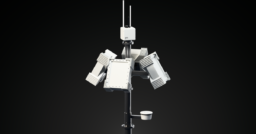
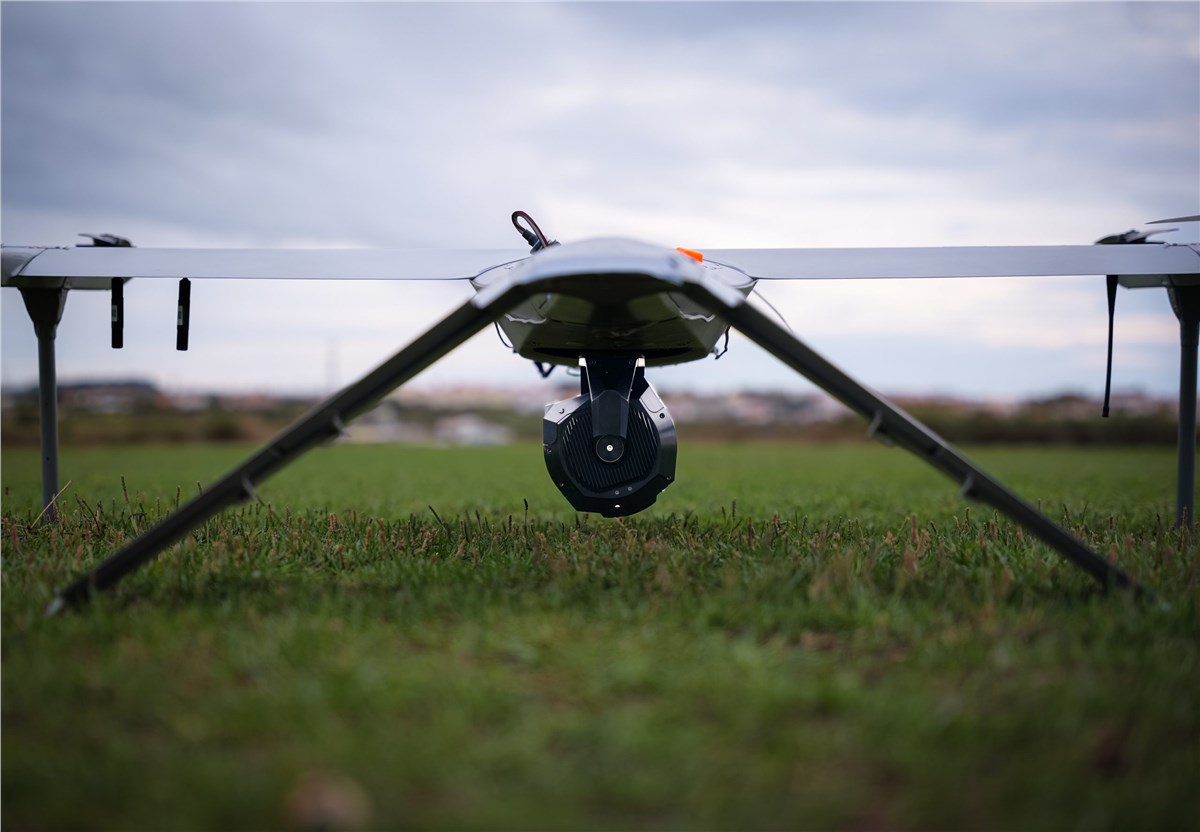
- A Hyperspectral Optical Radar (HSOR), which Arkeus says is “the world’s first real-time, wide-area, hyperspectral airborne ISR sensor.” They also have a smaller variant, called Warden, for tactical drones.
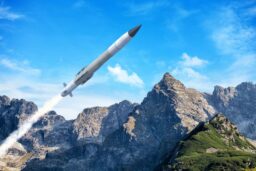
- Optical Terminal Guidance (OTG) seeker system designed to provide autonomous “search, detect, identify, and seek” functions to loitering or autonomous munitions.
- ARK, the company’s onboard AI orchestration and data fusion engine that ingests and feeds the onboard computer a whole bunch of hyperspectral data that helps the system “cut through the fog of war” and “see through dust, smoke, haze, and humidity,” Olsen said.
“We enable the artificial intelligence operating on board the drone to be able to see, contextualize, and act in the most challenging operational environments our operators need to function,” he added. “It’s a fundamental difference from every other sensing system on the planet today.”
Decoy dodger: That’s helpful in a whole bunch of degraded optical environments, but it’s also pretty handy for detecting decoys—a subject that’s gotten a lot of attention with US strikes in Iran.
“A standard camera with machine learning can’t tell the difference [with a decoy], because it looks exactly the same, but its spectral signature is vastly different,” Olsen said. “It helps us gain a depth of understanding about the environment in which the drone is operating and empower that system to be able to understand and then act in real time.”
Hot commodity: That capability has proven pretty popular, and they’ve quickly made inroads with both military customers in their home country and, increasingly, in the US.
- In November, Arkeus won the Australian Army Wide Area Airborne Surveillance Program and integrated its hyperspectral sensing tech across the Australian Army’s tactical UAS fleet.
- They’ve won several US DoD contracts and have put their sensors on drones (primarily ISR and Group 3) from AV (fka AeroVironment), Textron, Tekever, and Boeing-owned Insitu.
- Arkeus won several US DoD contracts after “competitive evaluations against US incumbents” showed that their sensing tech “could detect targets up to eight times further than existing optical systems in degraded visual conditions.”
- Now, roughly 80 percent of Arkeus’ revenue comes from US customers, with the remainder from Australia.
With a fresh $18M in hand, the Aussies at Arkeus are looking to capitalize on that booming demand stateside.
“We have a US-based entity and team already established, but we don’t yet have US-based manufacturing, so that’s a key part of this current raise,” Olsen said. “We’re focused on expanding our US commercial footprint and really supercharging our ability to manufacture, support, and sustain systems in the United States for the US warfighter.”
As we said, the Aussies are coming.