Remember when raising over a billion dollars was, like, a once-in-a-blue-moon, never-gonna-happen-again kind of thing?
Yeah. Those days are long gone.
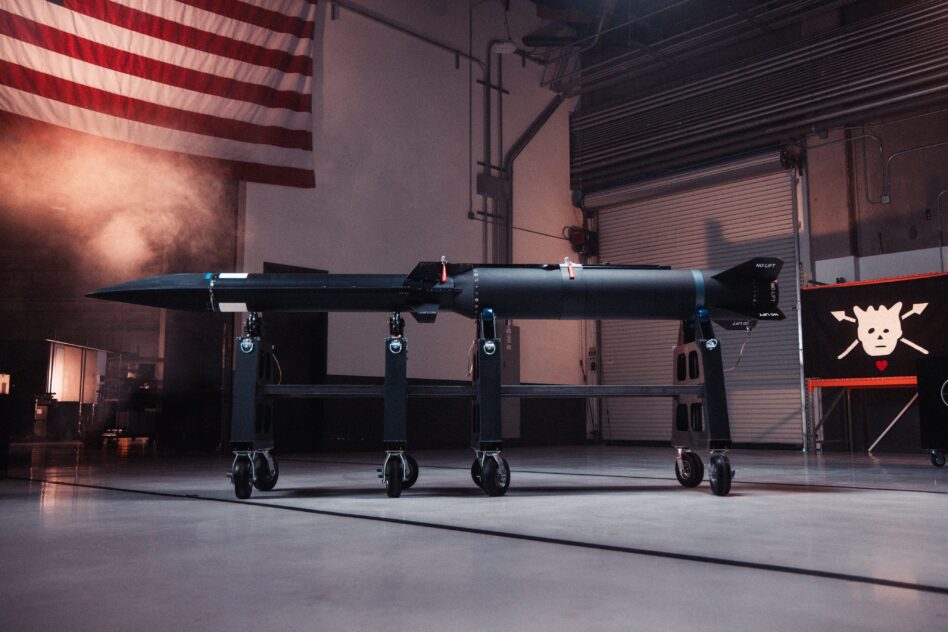
Late last night, everyone’s favorite hypersonic missile company (Castelion) announced that it’s raised a $1B (yes, with a B) Series C co-led by JPMorganChase’s Strategic Investment Group (under the firm’s $1.5T Security and Resilience Initiative), Andreessen Horowitz, and funds managed by Carlyle.
- The round is “a combination of $800 million in equity financing and $250 million in committed financing for a revolving credit facility” and values Castelion at $13B. Again, yes, with a B.
- Existing investors Lightspeed Venture Partners, Lavrock Ventures, Altimeter, General Catalyst, and Interlagos also participated, along with new investor T. Rowe Price Associates, Inc. (Sounds a lot like a Tectonic summit lineup, just saying.)
“Deterrence depends on unapologetic American strength; highly capable weapon systems that adversaries fear produced in quantities they can’t imagine at a price taxpayers can afford,” Bryon Hargis, co-founder and CEO of Castelion, said in a statement. “There’s a manufacturing renaissance underway and this round turbocharges American production of Blackbeard.”
Beyond scaling up production, the company says it will also use this cash money to develop longer-range and defensive capabilities.
We love to see a still relatively young but now extremely rich dog learn new tricks.
Speedy quick: Now we won’t bore you with too many details, because if you’re even remotely interested in defense tech, you know Castelion.
- The company was founded by three SpaceX alums—Bryon Hargis (CEO), Sean Pitt (COO), and Andrew Kreitz (CFO)—in El Segundo back in 2022.
- They set out to build lower-cost, mass-producible hypersonic weapons—an ever-more pressing need as adversaries like China and Russia develop and (reportedly) field their own versions.
- Their flagship missile is called Blackbeard—a more affordable version of something like Lockheed Martin’s “Dark Eagle” Long Range Hypersonic Weapon (LRHW), which costs about $41M. Pitt told Tectonic last November that Blackbeard runs into the “hundreds of thousands of dollars.”
- If you break down some of Castelion’s contracts, back-of-the-napkin math brings Blackbeard to about $440K a pop. That’s a lot less than $41M.
And the Pentagon (and defense tech’s biggest investors) are, like, seriously picking up what the company is putting down.
- Last year, the company won “multiple awards” to integrate Blackbeard onto operational US Army and Navy platforms. The Army variant is ground-launched (focused on the High Mobility Artillery Rocket System, or HIMARS), and the Navy’s is air-launched.
- To note: The Army put a Blackbeard-specific $25M carveout in its FY26 budget to develop that Blackbeard HIMARS variant. Always good when you’re literally being called out, by name, as a line item.
- Back in April, they also won a $105M Navy Contract for F/A-18 Integration (prior to that, they were on a $50M prototyping contract). That’s all for the air-launched Navy version.
- Per the company, they’ve “secured more than $500 million in U.S. military contracts over the past 18 months and took Blackbeard from a clean sheet to program of record in under four years, with fielding targeted for 2027.” Hell of a clip—fitting for a hypersonic missile company.
- They’re also a prime contractor for the Navy’s Multi-Mission Affordable Capacity Effector (MACE) program ($294.5M requested for FY27) and have a multi-year production agreement with the Pentagon for at least “500 missiles per year once testing and validation is complete, with a pathway to purchase thousands of additional missiles.”
And they ain’t just using government dollars—they’ve raised a total of over $1.5B in funding, most recently a $350M Series B last December.
Inside the dome: As is generally the case when you rake in a pile of cash equivalent to the GDPs of some small island nations, the name of the game for Castelion in the coming months is scale.
The company says the funding will go towards three main priorities:
- Increasing Blackbeard production “at and beyond the company’s Project Ranger site in Sandoval County, New Mexico.” The company has already committed $250M in spend to the 1,000-acre site, and plans to spend “hundreds of millions more.”
- Developing a longer-range strike system “which has been in development at Castelion for several years.” The weapon will use bits from Blackbeard but be optimized for longer-range strike, providing a cheaper option than “large, exquisite systems.” Bets on which long-dead pirate they name it after?
- Developing defensive systems “that [build] on the technologies, manufacturing methods, and rapid iteration model developed for Blackbeard.” In a moment where air and missile defense systems are in critically low supply, sounds like a good idea.
“The longer-range strike system and the defensive systems are exciting because they prove this model extends beyond Blackbeard,” Lavrock Ventures Partner Alex Poulin, who led the deal, told Tectonic. “The same manufacturing discipline that built Blackbeard can now apply to defense as well as offense, and that’s exactly the kind of scalable deterrence the country needs right now.”