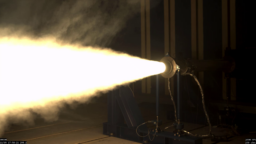
Now, we know they say when it rains it pours and all that, but, gosh, Castelion is really testing the limits of the phrase.
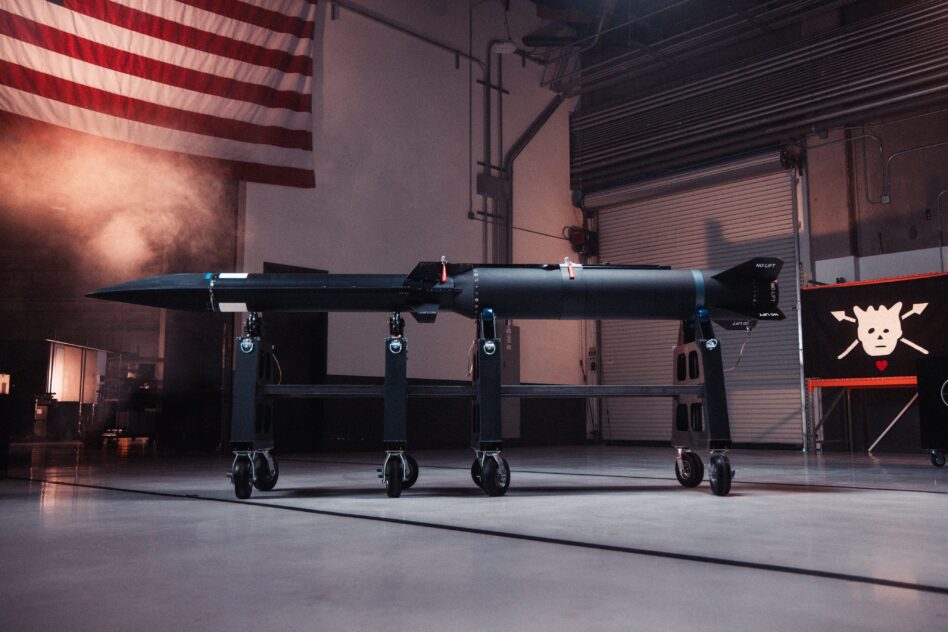
Late yesterday, the US Navy announced that it’s awarded the Torrance, CA-based company an additional $89.99M against its service-wide basic ordering agreement to “provide engineering, technical, logistics, and manufacturing services to advance the Blackbeard Hypersonic Weapon system to an Early Operational Capability (EOC).”
The money will also fund design modifications to prep Blackbeard for export—yes, we’re sending hypersonic weapons abroad, y’all—and formally transitions Castelion onto a US Navy Program of Record.
“One of the critical elements [here] for the company and for the country generally is that you’re moving in the direction of potentially exporting this weapon, which is extremely meaningful for total volume of weapons that Castelion will be able to support our allies with around the world,” Castelion Co-Founder and COO Sean Pitt told Tectonic.
New kids on the block: Plus, there’s the whole new-age-startup-bagging-a-PoR-thing.
“It’s quite unusual for such a young company to be able to be awarded a program of record for a major weapons program,” he added. ”These types of programs are traditionally only going to the primes…but the success that Castelion is seeing with the Blackbeard weapon is that it is enabling a capability that does not exist in the U.S. inventory today to complement some of the more exquisite weapons that the country has.”
Pitt said that the Navy has now awarded the company more than $250M in “firm contracts” (not IDIQs) in 2026 alone.
This, plus a $1B raise, all in a week—not a bad way to end the summer.
Speedy-quick: We just covered Castelion and their monster round last week (yes, $1B at a $13B valuation), so we’ll keep it light on the background. Don’t want to bore you, after all.
- The company was founded by three SpaceX alums—Bryon Hargis (CEO), Sean Pitt (COO), and Andrew Kreitz (CFO)—in 2022 and set out to build lower-cost, mass-producible hypersonic weapons.
- Their flagship missile is called Blackbeard—a more affordable version of something like Lockheed Martin’s “Dark Eagle” Long Range Hypersonic Weapon (LRHW), which costs about $41M. Some back-of-the-napkin math puts Blackbeard at about $450K a pop. Slight difference.
- They’re now also working on a longer-range strike system (basically an evolution of Blackbeard) and air defense systems. Might as well use all that cash money, after all.
- And they’re also building out capacity, like, super fast—they’ve got a facility in New Mexico they’re calling Project Ranger that, at full capacity, will be able to produce thousands of Blackbeards annually. Good news when you’re printing contracts.
Racks on racks: And to say the company has been a hit with the Pentagon would be the understatement of the century.
- Castelion won “multiple awards” to integrate Blackbeard onto operational US Army and Navy platforms last year. The Army variant is ground-launched (focused on the High Mobility Artillery Rocket System, or HIMARS), and the Navy’s is air-launched.
- Back in April, they also won a $105M Navy Contract for F/A-18 Integration. They also won $23.4M for 50 missiles from the Navy in June, and a $49.99M SBIR Phase III in February. Hell of a year.
- They’re also a prime contractor for the Navy’s Multi-Mission Affordable Capacity Effector (MACE) program ($294.5M requested for FY27) and have a multi-year production agreement with the Pentagon for at least “500 missiles per year once testing and validation is complete, with a pathway to purchase thousands of additional missiles.”
According to the company’s raise announcement last week, they’ve “secured more than $500 million in U.S. military contracts over the past 18 months” and “fielding [is] targeted for 2027.” Jeez.
“This is a fundamental shift in the way the country is thinking about how to engage in current and future conflicts, [which] is prioritizing affordability and speed to fielding,” Pitt said. “These are two of the core tenets of Castilian’s development approach, and certainly Blackbeard’s.”