Remember, like, a year ago when people spent a lot of time talking about whether Europe would be able to catch up to the US in terms of defense tech funding?
Yeah, well. Fret not. Looks like our friends across the pond sorted it out.
This morning, European early-stage deep tech VC Plural announced that it’s raised a €1B ($1.1B) third fund to make investments that “have GDP-level impact on Europe.”
- This is nearly quadruple its €260M first fund in 2022, and double its €500M second fund in 2024.
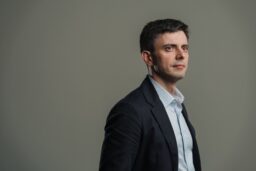
- Plural says it will invest in “early-stage, non-obvious companies taking on the hardest problems,” including in energy, AI infrastructure, robotics, and defense, Plural partner Khaled Helioui told Tectonic.
“Something significant has shifted among Europe’s startups,” he said in a statement. “When we started Plural, someone building a fusion reactor or a space exploration company from Europe was treated as too risky to back. Now they’re among the most sought-after founders in the world.”
“That’s a generational shift,” he added. “We’re convinced these frontier founders are capable of building Europe’s first trillion-dollar company, and we want to be backing them from day one.”
Heavy hitters: Now, even if you haven’t heard of Plural (you probably should have), you’ve definitely heard of the companies the fund has backed.
The fund—founded by Helioui (former Bigpoint CEO), Taavet Hinrikus (co-founder of Wise), Sten Tamkivi (Teleport co-founder), and Ian Hogarth (Songkick co-founder)—was formed around the idea that early-stage European companies needed VCs who had a bunch of operational experience building companies. Hence that lineup.
“We only started four years ago, and we’ve taken a pretty different approach to venture…from the European standard,” Helioui said. “[Our thesis was] that you needed people that had been in the trenches before, had built companies before, [and] had more to lend to founders than just the capital. That could really step in and help them fill some of the blind spots they might have.”
- Fund I (unveiled in 2022) was less defense-flavored (there was a lot of AI, climate tech, and consumer tech), but the founders were well and truly plugged in—Hogarth personally invested in Helsing’s pre-seed round, and Helioui personally joined at seed, by way of example.
- Fund II (2024) is where the fund made the hardcore deep tech shift. The company invested in Helsing’s €450M Series C in July 2024, then led Labrys’ $20M Series A in June 2025.
- Since then, they’ve also backed Hypersonica (European hypersonic deep-strike missiles) and Frankenburg Technologies (more affordable interceptors).
- They’ve also brought two more partners on board—HelixNano co-founder Carina Namih and former Uber executive Pierre-Dimitri Gore-Coty.
A billi, a billi: With this new billi (sorry), each partner will lead a “small number of new investments a year.” But they’ll also be able to double down on their existing portcos “as they scale and mature”—about a third of the fund will be allocated to these follow-on investments.
“Part of what we realized over the last couple of years is that the level of execution and momentum of our portfolio was such that…the pace and the intensity of follow-on rounds were well ahead of our expectations,” Helioui said. “We felt we were leaving some money on the table.”
- And, to be fair, their portcos are scaling and maturing pretty dang well. Per Plural, their companies have raised €3B in follow-on funding in the last twelve months, and Helioui said that 10 percent of their companies raised $100M+ rounds this year.
- Helsing, in case you haven’t been paying attention, is now valued at $18B after raising a $1.8B Series E this summer.
- Hypersonica raised a €100M Series B earlier this month (after, like, casually pulling off a hypersonic test flight in Norway earlier this year).
- And Frankenburg is reportedly already headed out for a €100M raise to build an anti-ballistic missile system after raising €30M (led by Plural) earlier this year.
- Helioui told Tectonic that they’ve already made another defense investment out of Fund III, but he couldn’t say who just yet.
“I think you can really see that the ecosystem maturity and pace of development [in Europe] is really well ahead of people’s expectations,” Helioui said. “[When] push comes to shove, when people have to decide who they want to work with, I think the lens migrates much more towards Europe right now than a lot of other places for some of these really important fields.”
“There’s a clear realization that there’s plenty of value to create and extract from Europe,” he added.