
If you’re a regular Tectonic reader, you’ll know there are a whole lot of drones, drone boats, drone submarines, and whatever other autonomous thingamajigs you can think of coming onto the market.
What all these autonomous systems are missing is a playcaller that turns them into a cohesive multi-domain, multi-platform force. NODA AI is building that orchestrator, and in an exclusive release to Tectonic this morning, the Austin-based startup announced it raised a $25M Series A led by Bessemer Venture Partners at a $125M post-money valuation to scale it.
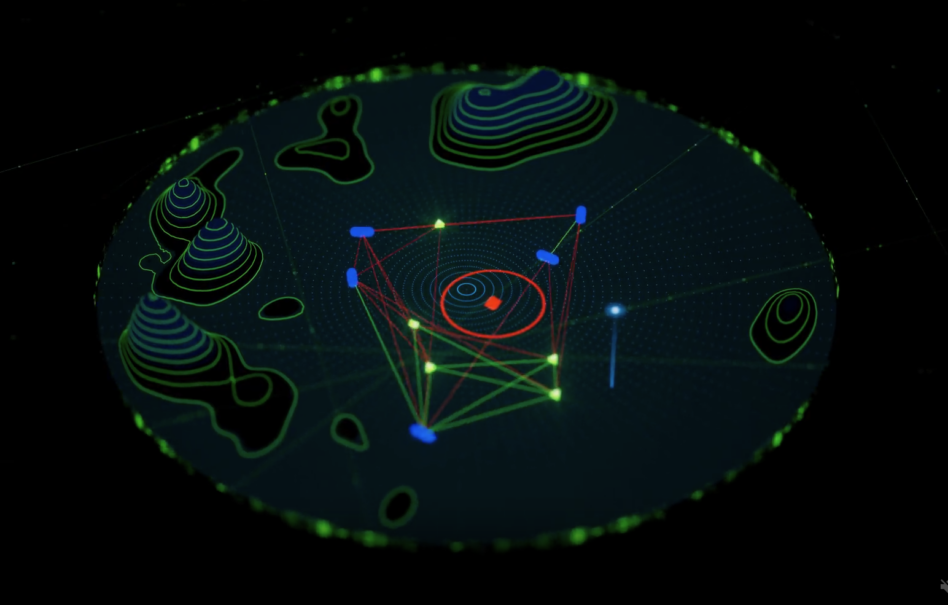
Chess not checkers: NODA AI isn’t trying to build hardware. They want to be the “chess player,” as CEO Philong Duong explained to Tectonic, for all of the unmanned “chesspieces” that everyone else is building, regardless of what they are or who makes them. They want users to be able to manage effects across domains instead of at the individual system level.
That idea got them $4M in a pre-seed round nine months ago, and they’ve moved quickly to build out the software—and their integration network—since.
Here’s the gist of it:
- Instead of vertically integrating hardware and autonomy software, NODA’s orchestration software sits atop its partners’ platforms and command-and-control systems as a decision engine with programmed playbooks.
- During onboarding, NODA programs an autonomous system’s capabilities and limitations into its synthetic environment and runs simulations to understand how the platform fits into its ecosystem and operates in different mission sets and threat environments.
- NODA’s orchestration layer then allows the user to draw up plays with that mixed fleet of systems and respond to targets and threats on the fly based on each platform’s respective capabilities and a target’s vulnerabilities, also programmed into the playbook.
- The net result, Duong said, is that their partners can go to the government as a conglomerate saying, “Hey, I’m part of the NODA network—you’re buying the mixed effects of Vendor A doing this on the water, Vendor B doing this in the stratosphere, and Vendor C doing this underwater.”
At a demo last year for the OUSW R&E, for example, NODA’s software was integrated onto ten platforms across domains to “orchestrate a play across all of them,” Duong said. “If [platforms] fail or break, our reasoning engine can deploy a new play to continue and complete the mission.”
Team up: If getting autonomous underwater vehicles, satellites, and aerial drones to operate as a cohesive team sounds far-fetched, NODA’s partner list suggests otherwise:
- According to Duong, they’ve “already built over 30 integrations at this point, from subsurface up to space,” including shipbuilding giant Huntington Ingalls, Viasat, AUV startup Vatn Systems, USV company Accelint, and drone-maker Darkhive.
- On the government side, they’re working as an orchestration layer for several Pentagon unmanned systems programs, including the LUCAS reverse-engineered Shahed kamikaze drone initiative and an undisclosed “multidomain collaborative autonomy program,” along with contracts with the UK Ministry of Defence.
Big names, big bucks: NODA’s quick traction with both prime and startup partners and, more importantly, US and allied militaries caught the attention of some of the biggest names in defense tech VC.
Bessemer—which has a bit of a thing for collaborative autonomy startups, having led Auterion’s $130M Series B last year and Breaker’s $6M seed round last week—led the $25M Series A, but Booz Allen Ventures, Draper Associates, Bloomberg Beta, and Alumni Ventures tagged along to add some serious firepower to NODA’s cap table, and existing investors Outlander VC and Crosslink Ventures doubled down in the round.
Into the future: A $25M check helps, but Duong is confident that orchestration algorithms for multi-domain unmanned systems will be central to the prosecution of future wars, and especially where NODA fits into all that.
“In our mind, the key differential in future conflict is not going to be what the best Group 3 UAV is,” he said. “It’s going to be whoever is building the best decision models and executing the right algorithms, at the right time, at the most relevant speeds. After the nuclear weapon, the next strongest deterrence model is going to be the person who builds the best orchestrator.”