The rise of the robots is truly upon us.
Yesterday, Rhode Island-based autonomy darling HavocAI (known primarily for its USVs) announced that it’s raised a $100M Series A led by Cobalt Capital, which the company says it will use to push further into multi-domain robotics. Single-domain is soooo 2025.
“We captured the maritime space already,” CEO Paul Lwin told Tectonic in an interview. “We intend to do the same on the ground and air.”
The $100M Series A comes hot on the heels of an $85M raise in October and brings HavocAI’s total funding to roughly $200M since its founding in 2024.
- In the company’s latest round, they welcomed new investors Cobalt Capital, CCM Capital Markets, Clear Street, Boardman Bay Capital Management, Meet Perry, Mute Ventures, Soren Ventures, SAIC, and JA Green to the cap table.
- Existing investors Outlander VC, Scout VC, B Capital, Lockheed Martin, Taiwania Capital, UP.Partners, The Veteran Fund, and Vanderbilt University’s endowment also doubled down.
When Scout AI raised $100M in the largest defense tech Series A in US history last month, we could’ve guessed it was only a matter of weeks before someone evened the score. Welcome to the age of autonomy.
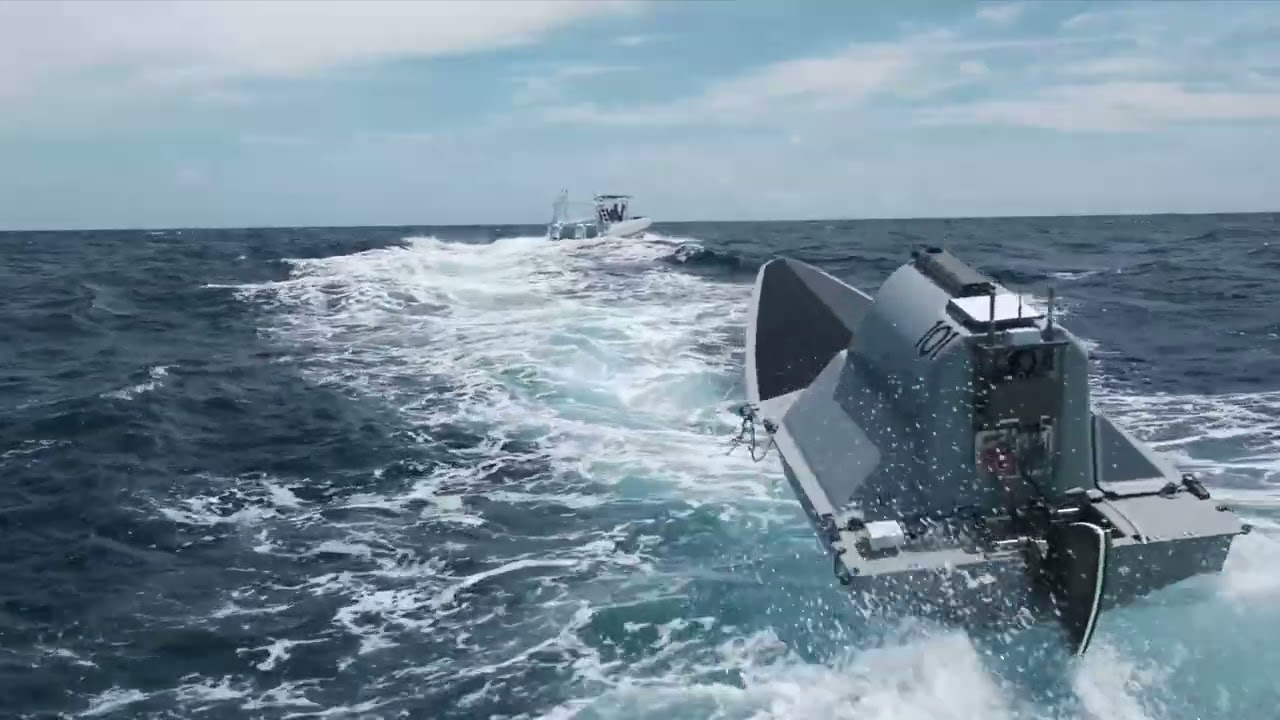
Wreaking havoc: If you’re a regular reader of Tectonic (or came to our summit in Austin), you’ll know about HavocAI. The company’s first and flagship product is its 14-foot Rampage drone-boat, but it has since moved toward putting its autonomy software stack on larger vessels with the help of some friends in high places.
- Last July, they signed a partnership with Lockheed Martin (also an investor) to build a medium-sized unmanned vessel.
- Last November, they inked a deal with SAIC to integrate the defense software giant’s multi-domain comms and data system with Havoc’s USV fleet.
- In January, HavocAI teamed up with the US subsidiary of the Korean defense giant Hanwha to build a 200-foot-long drone boat.
- And last month, they announced a deal with Leidos to integrate its autonomy software with Leidos’ Autonomous Vessel Architecture (LAVA) on a range of platforms, starting with the prime’s Sea Archer USV.
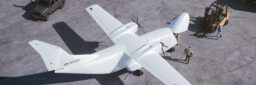
Multi-domain moves: That’s a lot of boats, but a pivot into multi-domain autonomy was always the plan. Back in March, they kicked that off by snapping up heavy-lift drone-maker Mavrik and industrial vehicle autonomy startup Teleo, as first reported by Tectonic.
Joint force: Those acquisitions weren’t intended to operate in a silo. According to Lwin, “90 percent” of Havoc’s software “doesn’t care what it’s running on,” and, importantly, it allows operators to control fleets of USVs, unmanned ground vehicles, and aerial drones on the same platform.
“Whether you’re talking about the sea or air or ground, it’s the joint force, so things are always multi-domain and operating together,” he said. “But if you look at the autonomy space, it’s the opposite of what these guys are building—aircraft, ground vehicles, and surface vessels that don’t really work together, which, as a former operator, is useless, because the nature of the market is joint.”
Up and out: With a fresh $100M on hand, Havoc’s focused on scaling up into those multi-domain operations, starting by building out their engineering team. “There are a lot of very sophisticated things that we want to do, and we need to hire the right talent, build the right things, and then test them, just like we do with boats,” Lwin said.
The amount of money going into autonomy is pretty eye-watering these days, but Havoc’s betting that their multi-domain pitch will be a key selling point for a certain autonomy-hungry customer.
“Look at next year’s [defense] budget—$54B for the Defense Autonomous Warfare Group,” Lwin said. “That program doesn’t really care about [specific] platforms, and we provide the capabilities that DAWG is going to push for over the next two years. The amount of money that’s out there is a signal to investors that the market exists.”