Is it just us, or is the stuff we’re covering (looking at you, haptic controllers) getting more and more niche?
This morning, Australian aerospace tech company MAKO (formerly known as MicroTau) announced that it’s raised AU$28M (US$20M) to scale up production of its—wait for it—“drag-reducing shark skin-inspired adhesive film for aviation,” known as Flightfilm.
- The round was led by Virescent Ventures with participation from International Airlines Group (IAG) (through its venture arm), Zero Infinity Partners, Grok Ventures, Skip Capital, IP Group, and TreeArc.
The film—a “precision-engineered drag reduction film inspired by the microscopic skin texture of fast-swimming sharks,” per the company—is designed to “reduce friction drag and deliver fuel savings, lower emissions, and reduced operating costs.”
“If it moves through the air, we can make it more efficient, whether improving on mission capability (increasing range, endurance, or speed) or simply reducing the amount of fuel burned,” Founder and CEO Henry Bilinsky told Tectonic via email.
The company also plans to push further into defense—in particular, with the US Air Force—with this raise.
Baby shark: Now, we’ve covered some pretty out-there stuff here at Tectonic, but MAKO (at least at first glance) might just take the cake.
- The company was founded by Bilinsky back in 2015 in Sydney, Australia.
- MAKO (then MicroTau) set out to solve a thorny problem—aviation burns enormous amounts of fuel because of aerodynamic drag, and even tiny improvements in efficiency can save airlines and militaries millions of dollars.
- The company developed FlightFilm (initially known as the Riblet Modification Package). The idea was to build a product that could immediately reduce fuel burn, be retrofitted onto existing aircraft, and could be installed as part of routine maintenance—for both commercial and military aircraft.
Just keep swimming: Now, here’s why the film works.
- Sharks may look all sleek and slippery, but their skin isn’t actually smooth—it’s covered in teeny tiny tooth-like scales called dermal denticles, which create microscopic grooves known as riblets (hence that initial product name). These reduce turbulent flow next to the surface, decreasing drag.
- Researchers have long looked at these riblets as a way of improving efficiency, but creating them was always seen as expensive and laborious.
- MAKO stepped in and switched it up. The company developed a process known as Direct Contactless Microfabrication (DCM) that basically creates the microscopic giblet pattern without a mold touching the material. That means they can create continuous sheets of the film, with high precision, at scale.
- The company says that the film can increase fuel efficiency by up to 4 percent, depending on aircraft and conditions. Basically, per MAKO, it’s “comparable to a new-generation engine upgrade at a fraction of the cost.”
Shark Week: And some of the biggest aircraft operators in the world—military and commercial—have taken notice.
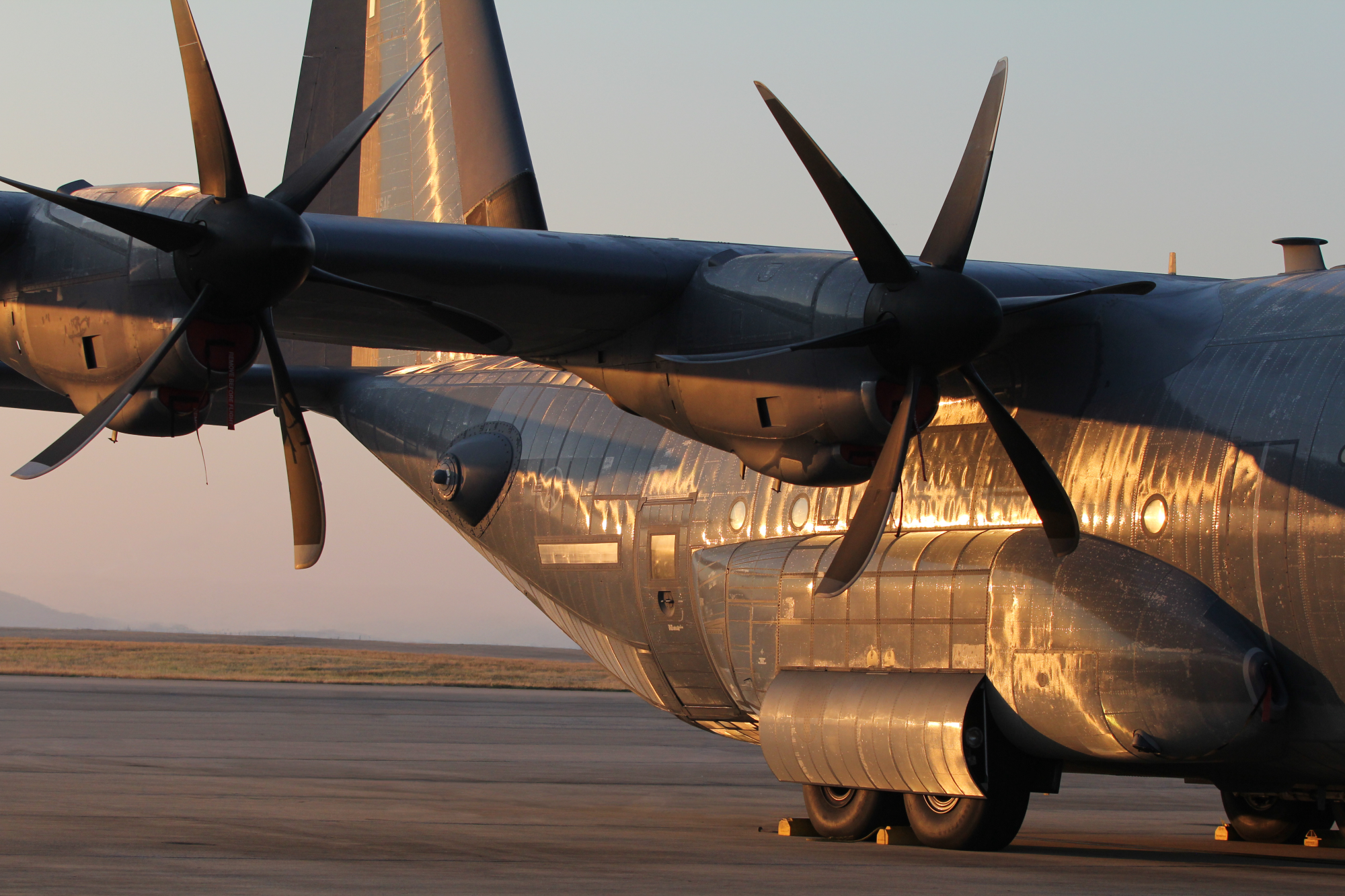
- The company was selected as part of a US Air Force program looking at solutions to increase fuel efficiency back in 2015. They’ve done flight testing with USAF—including on a Lockheed Martin C-130J Super Hercules operated by AFSOC.
- They’re also under contract with USAF for C-17 operational trials of Flightfilm to improve the efficiency of the existing fleet, per the company. Initially, they’re targeting transport aircraft—both cargo and tankers—per Bilinsky.
- On the commercial side, they’ve partnered with Delta Airlines (as part of its Sustainable Skies Lab program) to flight-test Flightfilm on its Boeing 767 fleet.
- The company says it also has “upcoming trials with major carriers in the Asia Pacific region” and “International Airlines Group…will be conducting a pilot of Flightfilm with one of its airlines later this year.”
Sunken treasure: With this new cash money, MAKO says it will ramp up production so that it can retrofit about 200 commercial airliners a year.
- A lot of this money will go towards building a “certified manufacturing facility” that can deliver for commercial and defense.
- They are also planning to work more with USAF under (as-yet-undisclosed) contracts—part of a broader push into defense alongside the commercial business.
- They’re currently working to certify Flightfilm on the Airbus A320—they expect that certification within the year.
- They’re also going to expand their team (and customer base) across “APAC, North American and European markets.”
“There are wide-ranging applications both in defense and civil aviation,” Bilinsky said. “What we can do is turn every asset flying today into a more capable machine that is more efficient, burns less fuel, and as a result produces less carbon…Whether it’s cutting emissions, increasing mission capability, or saving on an airline’s biggest operating cost—efficiency never goes out of style.”