When the Department of Energy launched the Reactor Pilot Program last June, it set a July 4, 2026, target for startups to switch on their microreactors and hit criticality—when a nuclear fission chain reaction becomes self-sustaining.
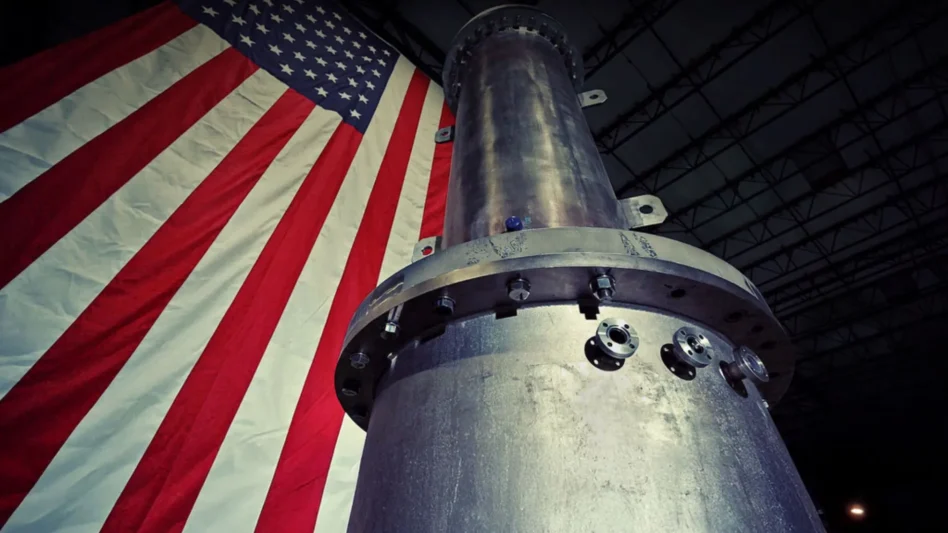
Antares, an LA-based space and defense-focused nuclear startup, beat that deadline by a month. Yesterday, the company reached initial criticality with its Mark-0 microreactor during a demonstration at the DOE’s Idaho National Laboratory.
Going nuclear: That makes Antares the first of the ten companies in the pilot program to hit the milestone and the “first novel reactor design to undergo a fuel test in over 50 years,” CEO Jordan Bramble said in a video statement.
- The Reactor Pilot Program is designed to fast-track the R&D and regulatory timeline for nuclear firms building small modular reactors, with the goal of having at least three of them hit criticality before July 4.
- Other companies in the running are Radiant, Oklo, Valar Atomics, Deep Fission, Last Energy, Aalo Atomics, Natura Resources, Terrestrial Energy, and Atomic Alchemy.
“It is fitting that on the eve of our nation’s 250th anniversary, we are witnessing a historic moment for American energy,” Energy Secretary Chris Wright said in a statement. “For the first time in more than four decades, a new privately developed non-light-water reactor has reached criticality in the United States.”
Finish line: Forget the NBA and NHL finals, the World Cup, and the tennis majors—the race to criticality is easily this summer’s most riveting competition. And, if you’ve been as glued to it as we have, it shouldn’t come as a huge surprise that Antares crossed the finish line first.
- Antares was also the first in the program to have its Documented Safety Analysis (DSA) approved, the fourth and final stage of the DOE’s authorization plan that green-lighted the microreactor’s final design and safety assessment before it switched on.
- Antares’ Mark-0 reactor is built to be modular and compact enough to operate off-grid in remote locations, especially military installations, and is expected to provide between 100 kW and 1 MW of power over a 4- to 6-year period.
- It’s designed to run on TRISO fuel, a new type of ceramic pellet fuel that’s safer than traditional nuclear fuels. Antares teamed up with BWX Technologies for the TRISO used in the test.
“We’ve gone from a clean sheet design of a control system— basically zero—to now for putting [it] in a reactor in about nine months,” Bramble told Tectonic after the DSA approval in April. “You hear people say it’s a marathon, not a sprint, but it’s been a marathon where you’re sprinting.”
Power play: That speed—and especially the successful demonstration at the DOE’s Idaho National Laboratory—is as big a win for the Pentagon as it is for Antares.
The Army launched the Janus Program last October with the goal of getting a nuclear reactor up and running at a domestic US military base (at least to start) by Sept. 30, 2028.
- The program will work with the Defense Innovation Unit to award milestone-based contracts to companies, likely including several from the Reactor Pilot Program, to build the reactors.
- “There are mega-trends that are driving new demand for next-generation nuclear on military installations,” especially the need for an energy supply detached from the civilian grid and able to sustain everything from remote radar systems to assets in space, Bramble told Tectonic earlier this year.
Reaching criticality sets Antares up nicely for Janus, and doing so, along with the Reactor Pilot Program’s fast-tracked pathway, represents “a key step toward deploying electricity-producing microreactors for US military installations” by the September 2028 target date, the company said in a statement.
- The Army hasn’t named any companies working on Janus yet (at least publicly), but Antares is one of eight the DIU tapped for the Advanced Nuclear Power for Installations (ANPI) program last year, alongside fellow Reactor Pilot Program startups Oklo and Radiant.
With yet another competition to work towards—this time with the world’s biggest-spending customer—Antares isn’t resting on its laurels quite yet, especially with other nuclear startups hot on its heels.
“Nuclear in America has been defined for too long by delays, by companies that said they would and then didn’t,” Bramble said. “We said criticality in 2026, electricity production in 2027, and power to the warfighter in 2028. Today is the first of those commitments delivered on the schedule we set.”
Antares’ full-sprint marathon continues. Let’s see if anyone catches up.