If you thought you’d seen the last of the new-and-shiny interceptor companies, think again.
Late last week, FPF Defense—a new cUAS company founded by former Acting Secretary of Defense and Director of the US National Counterterrorism Center Chris Miller—announced that it’s scored a “strategic investment” co-led by RSE Ventures and Ondas Inc.
Miller told Tectonic that the investment totaled $10M. This is the first time the size of the raise has been reported.
- Miller said about $2.5M of that came from friends and family. Great company to keep.
“We started this company because we thought we could solve this problem of killing Shahed drones,” Miller said. “We thought we could do this at low cost, as opposed to the systems the military uses now, which are exquisite [things], like Patriot air defense missiles. $3M a pop to kill a drone that costs $50,000. Nuts.”
The money will be used to keep the company ticking along (the government is famously slow at paying its bills, per Miller) and getting their mini-Shahed-like drone into production.
“We went out to the markets to raise some capital because…we’ve got to have that flexibility slash reserve so when [the government] doesn’t pay or the closes we have resources so we can continue developing without relying on them,” he added.
Add it up: If you’re a regular Tectonic reader, you’ll be familiar with the rather crappy math that goes into taking down drones.
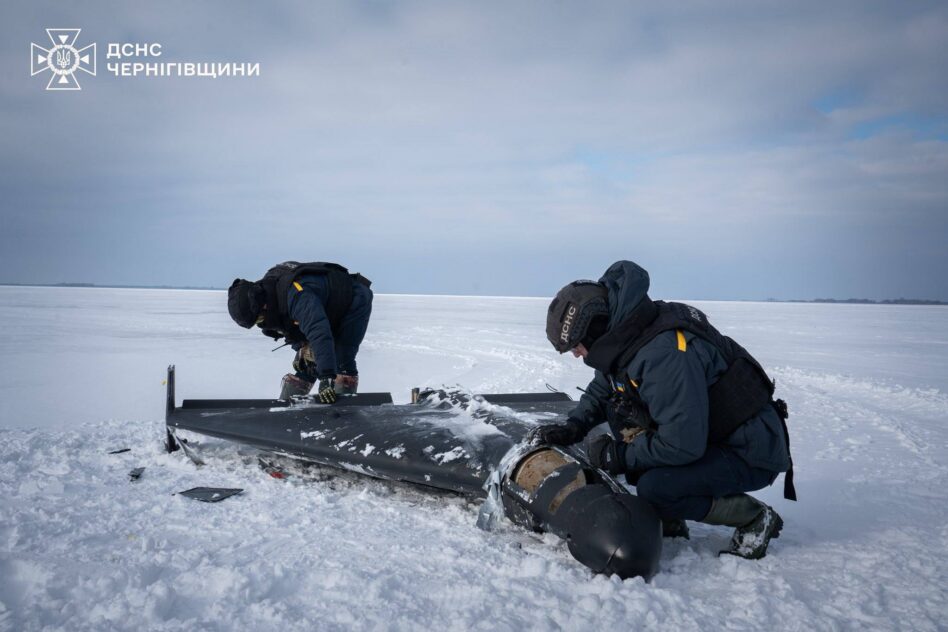
- An Iranian Shahed or Russian Geran-2 costs about $50,000, but often the things we use to take them down—like, say, Patriots, THAADs, or even fighter jets—are way, wayyy more expensive. In other words, the math ain’t mathing.
- Plus, besides being expensive, the US doesn’t actually have too many interceptors left, and the primes are pretty slow at producing them—according to CSIS (and, like, lots of other reporting), we’ve burned through the majority of our interceptors since the war in Iran kicked off earlier this year.
- This has spurred a push to find new ways of taking drones out of the sky—zapping ‘em with lasers, frying them with HPM beams, hitting them with other drones, or even catching them with nets. Plus, there are all the cheap mini-missiles (interceptors) that have flooded the market.
At the end of the day, the idea is to take the cost-per-kill for something like a Shahed out of the negative. Seems like a good idea, tbh.
Same same, but different: Miller and his team of about 20 are betting that the same design that makes the Shahed such a nasty piece of kit will make their interceptor good at taking them down.
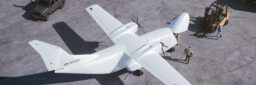
- The Hammerhead interceptor looks, well, a lot like a mini-Shahed—it’s got wings, measures about three feet long by two feet wide, and has a warhead on its nose.
- The whole thing costs a heck of a lot less than a Shahed, too—about $30K a pop (and about $15-20K a pop at full-rate production). It’s built using mostly COTS components.
- Hammerhead is designed for beyond-line-of-sight ops—the five-to 20-kilometer sweet spot.
- It’s also fully autonomous, per Miller, and uses software built in-house. “The whole thing is fire and forget,” he said. “Once it goes, it picks up [a target] with an electro-optical sensor, and then goes and attacks it autonomously.”
- Hammerhead is part of an end-to-end air defense system the company calls SmartFlak—providing “autonomous launch, sophisticated onboard autonomy, and a kinetic interceptor engineered for U.S. mass production,” per a company statement.
Big dogs: And while the company is still in the MVP-prototype phase, they’re already demo’ing for the government.
- Miller said they’re working with OUSW-R&E under the T-Rex program. They have not gotten any government dollars yet, but have demo’d the interceptor at Camp Atterbury, in Indiana, as part of the Low Cost Interceptor Challenge.
- Miller said that the interceptor did its thing (and well) during demos. “We were successful. No other company was successful,” he said. “So now we progress on to the next phase, which is Tuesday [July 28]…we’re gonna be evaluated for warhead effect.”
- In that test at Camp Atterbury back in May, per Miller, operators launched three Shahed-like target drones, and Hammerhead hit two of them. They got “very very close” on the third. “[The military operators] were like, ‘Well, if there was a warhead on that, you would have killed it,’” Miller said.
Get money: Miller said that this funding gives them about 12-14 months of runway to keep developing Hammerhead and SmartFlak while, like, making sure their team gets paid.
- Miller has assembled an all-star team, including co-founder Dr. Jeff Maas, a former DARPA program manager, as CTO, and co-founder Grant Fox, formerly with the US Navy and DIU, as COO.
- Right now, they’re working towards low-rate production with a contractor called “UAV Solutions” in Baltimore, Maryland. They’re planning to get there (about 100 drones a month) by November.
- From there, they’ll look to build their own production facility (state TBD) and get up to high-rate production (1,000 a month) by the end of 2027. They’re hoping to get some APFIT funding to do that, Miller said.
- Worth noting—the company is also relocating its HQ to West Palm Beach, FL, to be near Ondas.
Given Ondas’ many (many) roll-up moves recently, we also asked Miller whether any sort of merger or acquisition was on the table. He said that they planned to remain separate, but that there will likely be some collaboration in the future.
“I think it makes sense that some of that there’ll be this really close collaboration,” Miller said. “Maybe we use some of their production capacity, et cetera.”