Lock in, kids. We’re playing with rocks today.
Yesterday, AI-powered mining and refining company Mariana Minerals announced that it’s raised a $310M Series B led by Khosla Ventures, bringing total funding to about $400M.
- Existing investors a16z (who led their $85M Series A) and Breakthrough Energy Ventures also joined the round.
- New investors Greenoaks, Halo Fund, Pax Ventures, StepStone Group, BHP Ventures, Washington Harbour Partners, Greycroft, General Innovation Capital Partners, Mitsubishi Corporation, In-Q-Tel (IQT), and Earthshot Ventures pulled a seat up to the cap table.
Mariana CEO and co-founder Turner Caldwell told Tectonic that they’ll use the funding to scale up their current mining operations—Copper One in Utah and Lithium One in Texas—and scale the team for future projects.
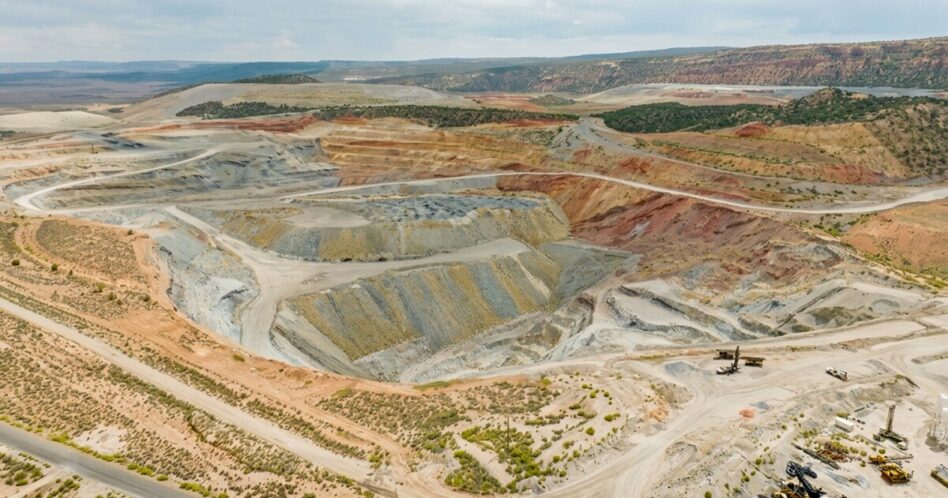
- Copper One, as the name suggests, is a revamped copper mine the company acquired late last year.
- Lithium One is under construction and will produce lithium from oil and gas produced water.
“The goal is to build 10 projects in the next 10 years,” Caldwell said. “I think an important thing that everyone should appreciate in the minerals industry is that it is capital intensive… We’ll continue to raise capital both at the topco, which is really meant for seeding projects, as well as building out the core IP of the business and building out the team.”
Rock ‘n roll: Now, a quick primer on critical minerals for those of you who didn’t pay attention in high school science class.
- According to the US Geological Survey (USGS), there are 60 critical minerals. Those include the rare earth elements (neodymium, praseodymium, dysprosium, terbium, etc.) and things like lithium, magnesium, cobalt, nickel, and gallium (among many others).
- These are the elements that make the world—especially the defense world—go round. For us defense tech nerds—they’re found in almost every advanced military system, from drones to missiles to submarines and ships.
- But here’s the problem: China’s got an extreme chokehold on the market. The country mines about 30-40 percent of the world’s supply of the minerals on the USGS list, and refines well over 60 percent.
- For rare earths (especially important for things like magnets and radars), it’s even more extreme—China mines over 70 percent and refines over 90 percent of those bad boys. Seems bad.
- The US imports most of its critical mineral supply—nearly a quarter of the 60 critical minerals are 100 percent imported, and another third are more than 50 percent imported.
Big brain: Mariana was founded back in 2024 by Caldwell and a team of mining and software engineers (what a mix) to use AI to try and solve this problem.
Their flagship software is called MarianaOS, and comprises three sub-systems:
- CapitalProjectOS: An AI-powered tool to build mines and refineries faster. Think of it as an AI-powered project management platform for billion-dollar industrial projects.
- MineOS: A tool to run autonomous mining operations. The goal is to use autonomous equipment to optimize the entire mine—everything from extraction to the routes vehicles take.
- PlantOS: A tool to optimize mineral processing and refining. The software uses reinforcement learning to adjust everything from processing temperatures to flow rates to make things faster and more efficient.
The company says the software “compresses traditional 5-to-10 year project execution timelines by roughly half and reduces commissioning timelines well below industry benchmarks.”
Dig deep: And they’re already putting this hypothesis to the test. Mariana bought up a copper mine in Utah last year that had paused mining operations and brought it back online in April using this software and “hybrid autonomous and manned operations,” per Caldwell.
- A lot of this fresh capital will go towards massively increasing production, he said. The goal is “50,000 tons of total output per year, [which will be a] combination of recycling and mining feedstock.”
- MineOS and PlantOS have both been deployed at Copper One, and the company “restarted mining operations with autonomous haulage and autonomous drilling within four months” of purchase, Caldwell said.
- They’ll rapidly deploy more autonomy in the mine, everything from “loading, dozing, grading…[to] the water truck,” he said.
“The goal by the end of the year is getting to no-human-in-the-pit operations at Copper One, and at that stage we’ll then start to ramp production really meaningfully,” Caldwell added.
Lithium One is earlier in its journey—the mine is under construction and “major pieces of equipment are arriving in the next couple of months.” Buildings are going up later this month, and the company aims to have the mine up and running in Q1 of 2027.
Pie in the sky: But things ain’t gonna stop there. Ten projects in ten years is pretty ambitious, after all.
- As they scale Copper One and Lithium One, Caldwell said they’ll also be seeding other critical minerals projects.
- Top of the list are: Magnesium, uranium, rare earths, nickel, cobalt, manganese, and aluminum, per Caldwell.
- But they won’t stop there—the way Caldwell thinks of it, they’re building an OS that can work to improve mining and refining for pretty much any critical mineral or metal.
“The reality is that on the refining side, every minerals processing plant, every minerals refinery, pulls from the same library of minerals processing unit operations—types of chemical processes,” Caldwell said. “As we’re building Lithium One and Copper One, we’re basically building up that library of models that enable us to optimize those [other] unit operations.”
And that library will come in handy at the rate they’re going.
“By the end of 2028, Copper One and Lithium One will be at full rate,” he added. “By 2030, the ambition is to have six assets operating, and then, by 2035, the ambition is to have 10 or more assets operating.”
Sounds like that $310 milly is gonna be put to good use.