Never really thought we’d be writing about mining and refining as we’re a defense publication and all, but here we are.
On Friday, the Pentagon announced two mega investments in yet more domestic critical minerals supply:
- First, they announced a $35.6M investment in Trilogy Metals (NYSE: TMQ) up in Alaska, for Copper, Cobalt, Germanium, and critical minerals. The investment gives the Pentagon a 10% stake in the company.
- Then, they announced a $100M investment in Louisiana-based Atalco, the country’s only alumina refinery. For those who were only half paying attention in high school chemistry, that’s the critical feedstock used to produce aluminum, which also has some nifty hardening and heat-resistant characteristics itself.
“To build a robust defense-industrial base, we must secure the foundational materials that enable it,” Assistant Secretary of War for Industrial Base Policy Michael Cadenazzi said in a statement.
For those keeping score at home: The Pentagon has now pumped over $5B into critical minerals, mining, and refining in the past two years. Cash money.
Rock ‘n roll: So we talk about critical minerals (fancy dirt) a lot around here, but we haven’t hit on alumina yet, so let’s start there. The compound (aluminum oxide, Al₂O₃) is not only super-duper-heat-resistant and, like, very strong, but is also the precursor to aluminum.
- Fun science-y sidebar: Bauxite is the ore/rock that actually gets pulled out of the ground and contains aluminum-bearing minerals. That then gets refined into alumina, which is then smelted into good ol’ aluminum. Atalco does the bauxite-to-alumina bit.
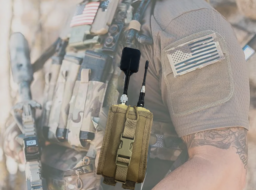
- Alumina itself is used in body-armor plates, as well as vehicle armor and aircraft armor.
- It also shows up in thermal protection, refractory components, electrical insulators, radomes, and sensor components for missiles and rockets—basically anywhere where something has to tolerate extreme heat.
- Very pure alumina can also be turned into transparent sapphire (single-crystal Al₂O₃), which is used for sensor windows, infrared/optical windows, protective covers, and other rugged optics.
Aluminum itself (we probably don’t have to tell you this) is then used to make aircraft, missiles, vehicles, ships, and even solid rocket propellant.
- Per the Pentagon, DoD requires 200,000 metric tons of metallurgical aluminum annually. Atalco currently meets about 60 percent of this demand—this investment is expected to bring that up to 142 percent by 2029.
- So far, the department has invested a whopping $400M in the refinery, and says that outside investors have now brought in an additional $350M (with another $50M expected in the next 75 days).
- Fun fact: 99%+ of the refinery’s output goes to national security. Good to have returning customers.
Up North: The Trilogy Metals investment is small—but an interesting one. In case you haven’t been paying attention, Alaska has become a bit of a hotspot for critical minerals lately—and Trilogy is a big player there.
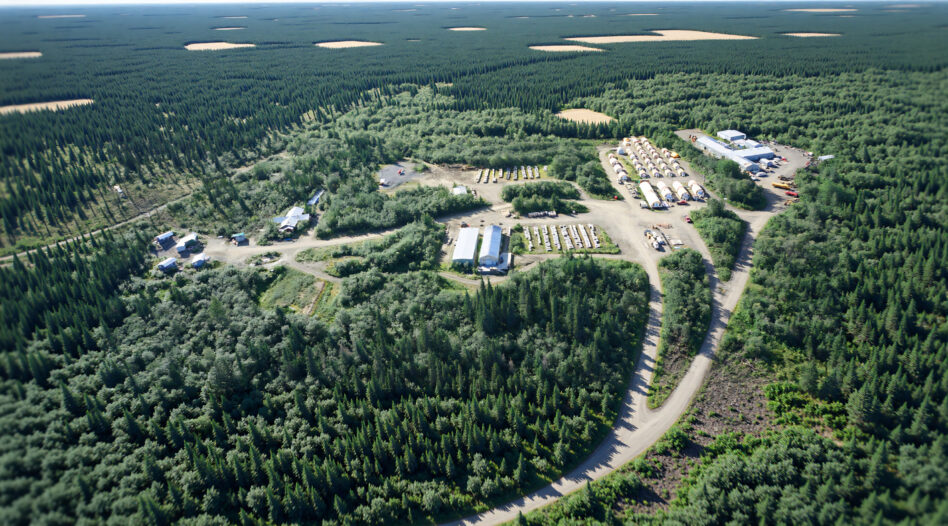
- Through a joint venture, the company co-runs the Upper Kobuk Mineral Projects (UKMP) in Northwest Alaska with a company called South32. It’s “a district-scale, under-explored land package,” absolutely chock-full of critical minerals—including one of the highest-grade undeveloped Copper deposits in the world.
- The vast majority of Trilogy’s output is Copper, which (for our purposes) is critical for electrical systems and ammunition.
- Trilogy also churns out Cobalt, which is important for high-temperature superalloys used in things like jet engines and gas turbines. It’s also used in some batteries and permanent magnets.
- The company’s most niche (but defense-critical) output is Germanium, which is, like, super-key for infrared optics, including thermal-imaging systems, night-vision and ISR sensors, missile seekers, and targeting systems.