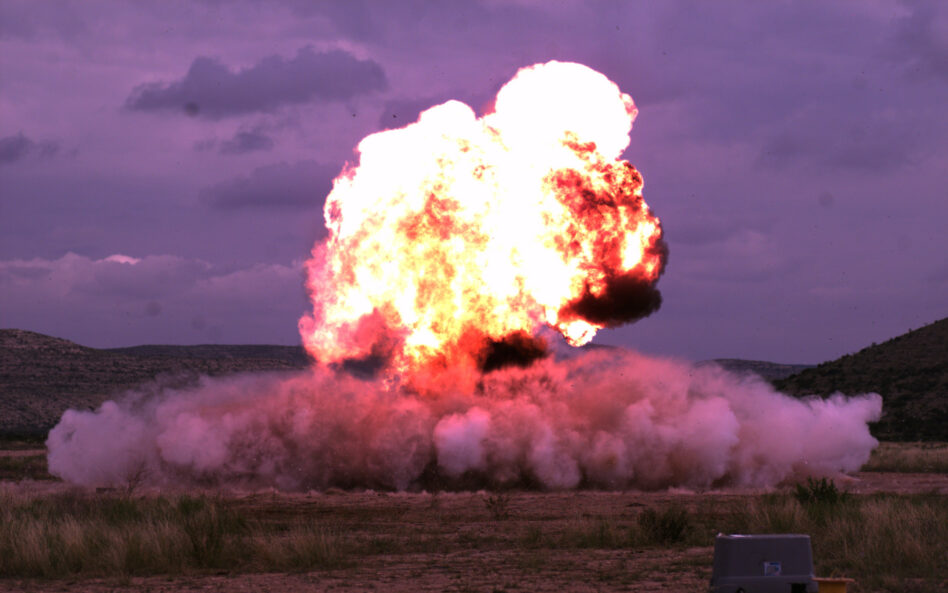
Is it just us, or is the hush-hush world of explosives and energetics suddenly, well, booming?
(Sorry—it was too easy.)
This morning, Texas-based energetics manufacturing company Critical Materials Group announced that it’s raised a $10.3M seed round led by Overmatch Ventures, with participation from Victory Six Advisors and Fulcrum Ventures.
The company says it will use the funding to “accelerate development and commissioning of CMG’s modular-energetics-production platform, expand the company’s engineering-and-operations team, and advance regulatory milestones.”
“The U.S. energetics industrial base… has been the backbone of American energetics for generations—CMG was built to add capacity to that ecosystem,” CEO and cofounder Kevin Capozzoli said in a statement. ”This funding accelerates our ability to bring modular, automation-ready production online as a complementary source that gives the industrial base the flexibility and surge capacity it needs to meet a demand signal that isn’t slowing down.”
Go boom, indeed.
Bada bing, bada boom: We first covered CMG when they emerged from stealth back in February.
Capozzoli—an Army Special Forces veteran and former Mach Industries president and CSO—founded his new company in 2025 to solve one of the thorniest problems he saw facing the military and defense industry: the bottleneck in production of military-grade energetics.
For a bit of background:
- The US has, erm, some issues producing explosive material—especially basic explosive material like C-4 and its main ingredient, RDX.
- The issue is that production is concentrated in a few aging facilities. Right now, the bulk of the Army’s C-4 and RDX is produced at a single keystone plant: The Holston Army Ammunition Plant in Tennessee, a government-owned facility operated by BAE—and the plant simply can’t keep up with demand.
- That’s kind of a problem because RDX and C-4 are needed by the military for everything from making munitions go boom, to demolition and breaching. Commercial industries like oil and gas also use the stuff to make things, well, blow up quickly.
New kids on the block: This is where CMG comes in. They are building “modular, automation-ready production platforms” for energetics that “give established manufacturers and defense primes the capacity, flexibility, and resilience needed to meet sustained production requirements without disrupting proven operations.”
- Think of what they’re building as kind of a pop-up energetics production line. It could be located close to existing facilities, or critical supply chain chokepoints, to try and help meet demand.
- The idea is to use software and modern machines to bring energetics production into the 21st century, to not only make production better, but also safer.
- While Capozzoli kept his cards close to the chest on how, exactly, they’re doing all this (fair enough when you’re building explosives), the idea is that the whole thing is “small footprint, it’s modular, you have very high control of process, and it’s automated,” he said. “Ultimately, you can go from molecule to munition in one singular step.”
“[The idea is that it’s] a network, and if you take one node out of the network, the network keeps moving,” Capozzoli added. “That is the vision for us—a distributed, highly scalable platform to meet current requirements, [that can] meet the rapid-scalability requirements in a conflict.”
End to end: While CMG kicked off their work with C-4 (basically taking third-party raw materials and turning them into the explosive material), Capozzoli said that a lot of this money will go towards building out that “molecule to munition” production line.
- Ultimately, they want to be producing granules from raw materials themselves, which they turn into explosives like RDX and C-4.
- “We’ll go from formulation to the finished article, like putting it in the warhead for different customers,” Capozzoli added. He said the “molecule to granule” portion of the production line will come online in the next 18 months.
- That means hiring a whole lot of engineers—he said they’re at 27 people now, will be up to 80 by the end of the year, and will hit 200 by the end of next year.
Make it work: And in case you had your doubts—CMG is already, like, doing the dang thing.
- Capozzoli also stayed vague about customers, but said they’re working with the “US and our allies” and selling both direct to government and to munitions producers.
- He described the customer base as “folks that are directly supporting…those allied defense requirements and U.S. requirements…[as well as] different ministries of defense.”
- Back in February, Capozzoli also told Tectonic that they’re under contract with at least one (unnamed) foreign government.