We talk about drones, laser weapons, and all sorts of next-gen sensing tech day in and day out. ICYMI: All of that relies on a handful of precious, rare critical minerals—especially germanium, used in thermal-imaging systems, night-vision and ISR sensors, missile seekers, and targeting systems.
No germanium, no party.
Unfortunately, as you might’ve guessed, China pretty much dominates the germanium game (like, 68.6 percent of the global supply). Even more unfortunately for our drone dreams, it’s been under serious export controls since 2023, when China cut the US off in retaliation for US and Dutch restrictions on advanced chips and chipmaking equipment.
- The total ban was suspended (though exports remain highly regulated) until November 27th after a trade agreement was struck in late 2025.
- Despite that, the price of germanium has skyrocketed 9 to 10 times 2023 levels, and 54 percent of US imports still come from China.
- Not good for our low-cost drone and sensing dreams.
Germophobe: So, why is germanium so dang important? We’ll be quick: it’s a big deal because it’s transparent to infrared wavelengths that ordinary glass blocks, especially the long-wave infrared (LWIR) band used by many thermal cameras.
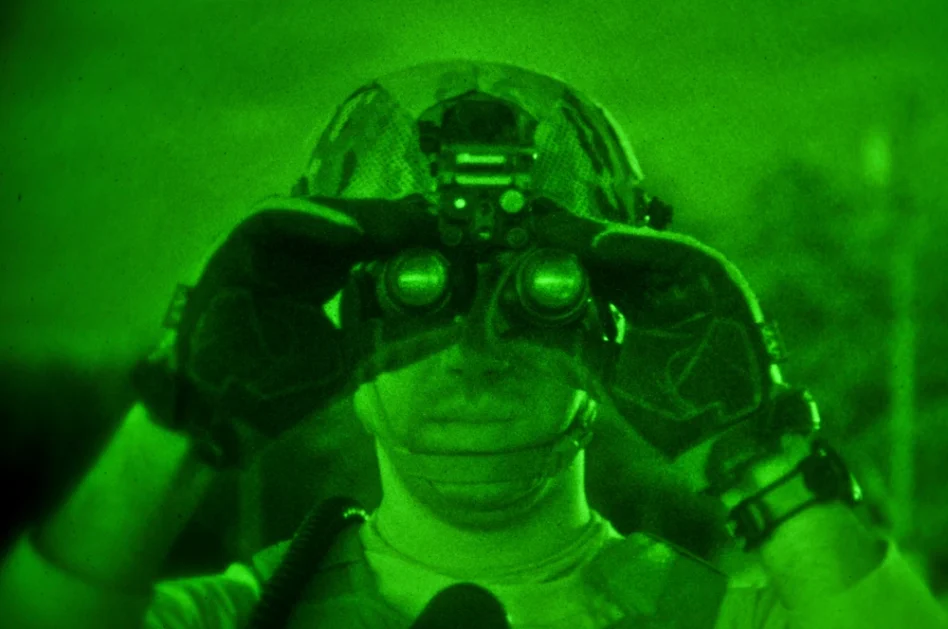
- For thermal imaging, germanium lenses can focus the heat radiation emitted by people, vehicles, engines, and terrain onto an IR detector.
- For drone and missile sensors, it’s used in EO/IR payloads, seekers, targeting systems, and surveillance cameras that need to operate at night, through smoke and haze, or without visible light.
- For optics, germanium has a high refractive index, which allows relatively compact, high-performance lens designs for thermal sights and long-range sensors. That includes optics for the laser weapons the Pentagon is so hot on.
Another path: Luckily, LightPath is working on an alternative, and if you haven’t heard of LightPath, all your favorite drone, missile, and counter-drone companies have.
- Over the past few years, LightPath has expanded from an optical component company into a vertically integrated supplier of infrared materials, precision optics, optical assemblies, thermal-imaging cores, and complete infrared camera systems.
- Their customers include Lockheed Martin, L3Harris, and many others.
- Their BlackDiamond infrared glass is their key differentiator, especially when it comes to germanium. It uses special glass (chalcogenide optical glasses) licensed exclusively from the US Naval Research Laboratory to transmit across broad portions of the infrared spectrum without using germanium.
Yesterday, LightPath announced a “funded prototype agreement” under the Pentagon’s Critical Low-risk Electro-optic Alternatives for Resilience (CLEAR) program to continue developing and “maturing” its BlackDiamond germanium-free alternative glass “for DoW applications.”
- The CLEAR program, funded by the Pentagon’s Advanced Materials Office, was set up to accelerate the development of domestic alternative optical materials (especially for germanium and gallium) for the EO/IR systems used in defense surveillance, targeting and situational awareness tech.
- The agreement’s value wasn’t disclosed, but with the export ban suspension set to lift (barring another trade agreement) on November 27th, we’d guess (and hope) the Pentagon is taking this pretty dang seriously.
“The 2026 National Defense Authorization Act added germanium to the covered materials restrictions and separately directed the DoW to eliminate its reliance on covered nations for optical glass and optical systems,” LightPath CEO Sam Rubin said. “Supplier qualification cycles span multiple years, and we expect this award to support design-in discussions across our product lines, positioning the next generation of BlackDiamond-enabled products for follow-on production.”