You know how they say that “there are some weeks where decades happen”? Well, it’s been (another) one of those for Anduril—and it’s only Tuesday.
Yesterday, the defense tech giant announced it was awarded a contract worth up to $1.8B over five years to scale Lattice across the Army’s Next-Generation Command and Control (NGC2) effort, taking it from the experimental and exercise stage to full-blown operational fielding. Big news, admittedly.
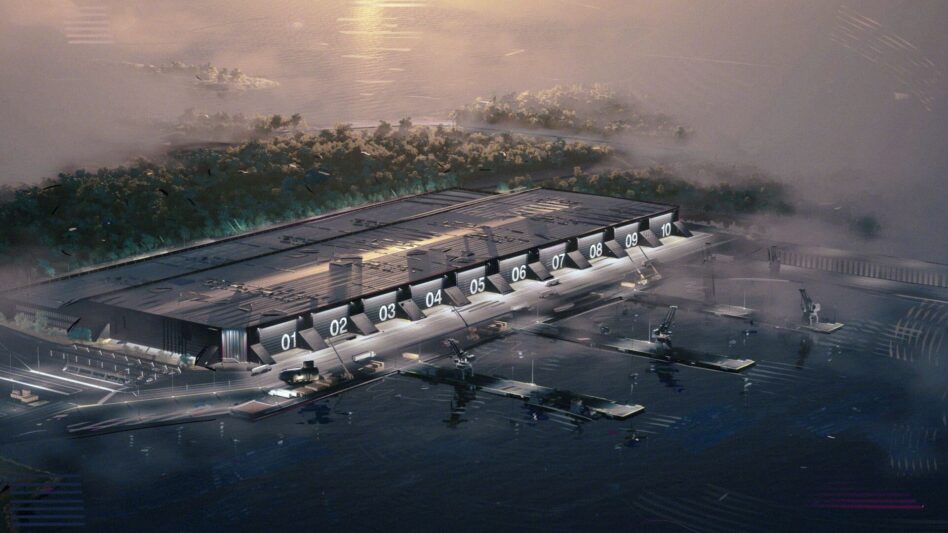
But then, this morning’s announcement was even splashier (sorry): They’re building the second of their Arsenal mega-factories in Baltimore, but this time, it’ll be shipbuilding-focused and backed by $6.6B across both private (Anduril’s putting in $3.7B) investment and up to $2.9B through a submarine production contract with the US Navy. Bigger news, depending on who you root for in the Army-Navy game.
A sub above: That’s a lot for a Tuesday morning, but we’ll kick it off with Arsenal-2. (The OG Arsenal-1, for the uninitiated, is in Ohio.)
To put it mildly, Anduril’s new “software-defined shipyard” in Baltimore will be big. Like really big.
The facility sits on 187 acres and will—when operations begin in 2030—span over 2M square feet of manufacturing space. There, the company will build “complex components and large-scale assemblies” of the Virginia-class subs, which will then be delivered to GD’s Electric Boat in Connecticut and HII’s Newport News shipyard for final assembly.
- “Adding another source of this work will allow more submarine construction to happen in parallel across the industrial base and increase the overall capacity available to the Virginia-class program,” Anduril said in a statement.
- Since it’s Anduril, this won’t be your grandfather’s shipyard. Software, particularly Anduril’s ArsenalOS factory optimization platform, will be central to how the shipyard runs, providing the digital backbone for the yard and connecting fabrication workflows, material movement, and inspection procedures under one system, similar to how it’s used at Arsenal-1.
Big bets: To build out that massive, 40 football-fields-big submarine production facility, Anduril is investing $3.7B of private capital, supported by an incentive-based contract with the Navy worth up to $2.9B and structured to tie payments “directly to demonstrated production outcomes.”
And that’s not all—alongside Arsenal-2, Anduril is also standing up a new 160,000-square-foot facility in Orange County, CA, to manufacture critical components for the Virginia-class subs.
- That bet is well-placed. In July, the Navy awarded GD and HII a $76.6B (that’s billion with a B) contract for nine Virginia-class and five Columbia-class submarines, and prior contracts for both have already seen significant delays.
- Anduril’s—and the Navy’s—goal is to ease the burden on the two primes and their shipyards by expanding the submarine manufacturing base with Arsenal-2 and the new Orange County facility.
- Once Arsenal-2 is up and running, the California site will shift to Anduril’s other maritime manufacturing efforts.
We see you, NGC2: Don’t worry, we haven’t forgotten about the other big piece of news, but we’ll try to keep it brief.
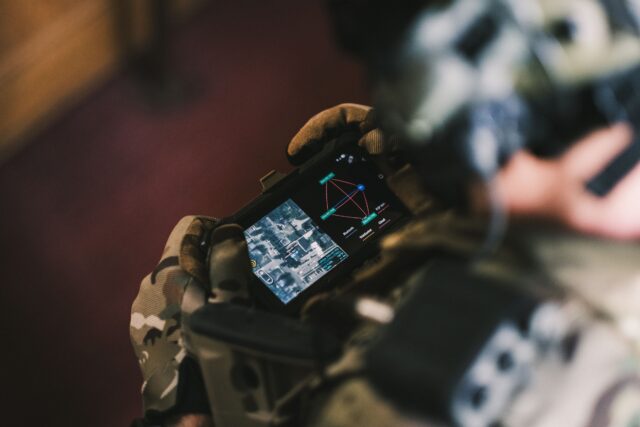
On Monday, Anduril announced that the Army is taking NGC2 into operational fielding, awarding the company a five-year contract worth up to $1.8B to expand Lattice—the data backbone for NGC2—across the Army, starting with I Corps (which counts the 11th Airborne Division, 25th Infantry Division, 4th Infantry Division, and others as subordinate units).
The contract marks the culmination of a fairly quick (by major Army program standards) rollout of the NGC2 architecture, which was thoroughly tested throughout the year at the 25th Infantry Division’s Ivy Sting and the 4th ID’s Lightning Surge exercises and, ultimately, the integration of both at the Army’s Project Convergence in July.
The five-year award funds NGC2’s expansion from division-scale prototyping to corps-scale fielding with the I Corps, “starting with a significantly harder operational problem in the Pacific,” where “units may be separated by thousands of miles and must coordinate with joint and allied forces while operating through disrupted and intermittent communications,” Anduril said.
As we said: It’s been a big week for Anduril. How, again, is it only Tuesday?