We told you 2026 was a great year to be in the interceptor game.
This morning, European defense tech darling Helsing rolled out a new AI-powered air defense system it’s calling Contra, designed to protect against “scaled drone and missile attacks.”
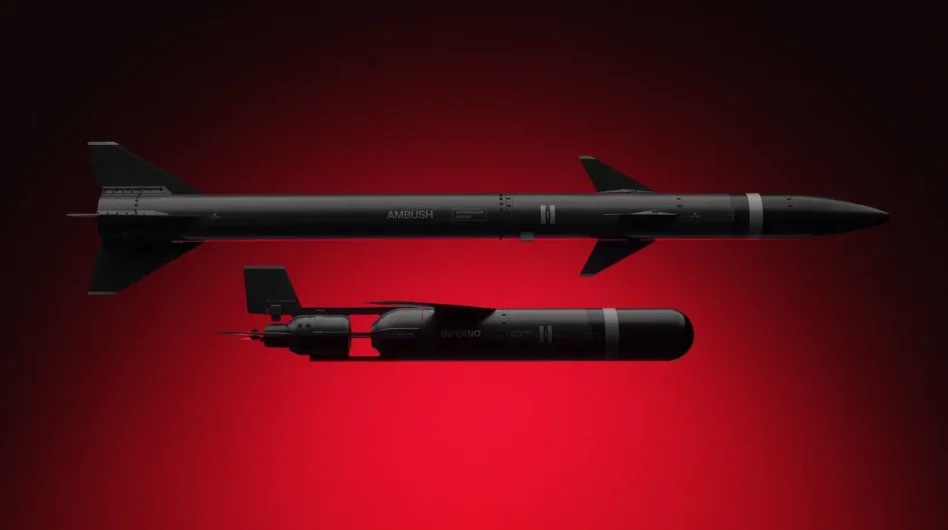
As part of the rollout, the company also unveiled two new interceptors:
- AD-1 Inferno: A jet-powered interceptor designed to fly at high-subsonic speeds
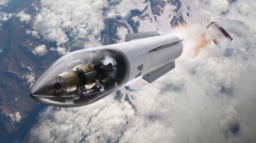
- AD-2 Ambush: A rocket-powered interceptor designed to “outmatch and outrun even the fastest jet-powered drone and cruise missile threats.”
The company says that Contra—like, the whole sensing bit—is already under contract. AD-1 and AD-2 are in testing, and the company is “working to bring both systems to market as a matter of urgency.”
Can’t come fast enough, we’d say.
Incoming: Now, in case you haven’t been paying attention (for shame!), Ukraine and Europe—and the world, for that matter—have a bit of an air defense problem.
- Traditionally, we’ve relied on super-exquisite systems like Patriots and THAADs to take down fast-moving, super-dangerous threats like ballistic and cruise missiles.
- The problem is—not only are these things super expensive to build and buy, but they’re in very short supply these days. The US (the primary producer of these systems) fired off more than half of its stockpile of Patriots and THAADs during the first 39 days of Operation Epic Fury against Iran, and stockpiles have fallen to record-low levels.
- Ukraine—which has relied on these interceptors to keep cities like Kyiv relatively safe—is pretty much out of Patriots as Russia is majorly ramping up its air war against the country in the lead-up to winter.
Speedy quick: Then, there is the jet-powered interceptor problem.
- Over the past few years, Ukraine got pretty good at shooting down earlier models of Gerans and Shaheds (Russia and Iran’s primary drones), which can travel at around 180-200 km/hr.
- But since the beginning of the summer, Russia has started using Geran 4s and 5s, which can reportedly travel up to about 500 km/hr. These are the drones that have been pounding Kyiv.
- And Russia is churning them out at mega-scale—the country can reportedly produce more than 4,000 a month, up from 3,000 earlier in the year.
- And while Ukrainian companies (and foreign companies working in Ukraine) have been speed-running development of jet-powered interceptors to take these down (with some pretty mega success), there isn’t yet a one-size-fits-all magic bullet solution that is being produced at scale.
Shoot ‘em down: Helsing’s Contra system seems pretty much designed to fill this gap. Plus, as a bonus, you don’t have to deal with all the US politicking to score some interceptors.
Here’s how the whole thing works:
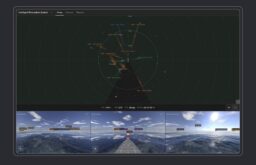
- Think of Contra as Helsing’s integrated air defense system, bringing together sensors, AI-powered command and control, and interceptors to detect, track, and engage incoming threats.
- According to the company, the system can allow “the detection and engagement of hundreds or thousands of drone and missile threats at the same time.” All of this data feeds into Altra, Helsing’s flagship C2.
Pew pew: But detecting threats isn’t particularly useful if you can’t really do anything about them. That’s where AD-1 and AD-2 come in.
- According to the company, AD-1 is a “jet-powered interceptor capable of aerial loitering, swarming, and repeated re-engagements.”
- AD-2 is a “solid-rocket-motor (SRM) missile for rapid intercepts, reaching Mach 2.5 and a range of 20km+.”
- Both interceptors, according to the company, “receive mid-course guidance from Contra radar ground stations and feature an advanced onboard radar-seeker for all-weather terminal guidance.” They’re also container-launched.
- Helsing didn’t give an exact timeline for when Contra and the interceptors would be fielded, but said in a LinkedIn post that they were in active testing. When ready, the interceptors will be produced out of the company’s “Resilience factories…with unit prices significantly undercutting those of existing missile interceptors.”
Fast friends: And while Helsing is kicking things off with its own interceptors, they say Contra can also integrate third-party hardware including “other interceptors, cUAV lasers, cUAV guns or net-based systems, in a matter of days.”
- The company says it’s already demoing these integrations for military customers.
“Contra ends the air defence dilemma: slow fair-weather drones, or million-euro missiles fired at cheap, mass-produced targets,” Niklas Köhler, co-founder and president of Helsing, said in a statement. “With jet and rocket propulsion, a low-cost all-weather radar seeker, and two independent European supply chains, they deliver autonomous fire superiority up to ten kilometres high – affordable and at industrial scale.”