There’s a seemingly endless number of new autonomous systems flooding the defense tech scene from an equally endless number of new companies, but the biggest challenge is getting all of those on the same page.
Luckily, that’s what Gambit is all about, and the one-year-old startup is getting a shot at the big leagues
This morning, the Los Angeles-based startup revealed to Tectonic that defense software contractor SMX tapped it to deliver its autonomous systems orchestration software across CENTCOM’s growing arsenal of unmanned systems under SMX’s $3.2B Long-Range Enterprise Intelligence, Surveillance and Reconnaissance (LEIA) multi-year contract with Special Operations Command Pacific (SOCPAC).
- LEIA is a broad contract vehicle, awarded to SMX in 2024, that aims to integrate ground, aerial, and space-based platforms for Command, Control, Communications, Computers, Cyber, Intelligence, Surveillance, and Reconnaissance (C6ISR) operations.
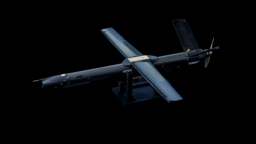
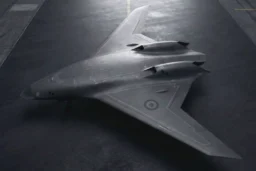
- In normal terms, Gambit’s orchestration and collaborative autonomy software will help coordinate CENTCOM’s UAS assets, mainly fixed-wing unmanned aircraft, for ISR, one-way attack, and electronic warfare missions, CEO Josh Giegel told Tectonic.
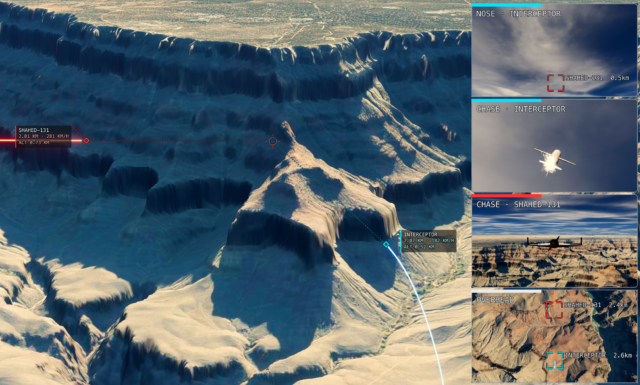
Better together: There are a number of companies in the collaborative autonomy space taking a hack at the “too many drones, too few operators” problem, but Gambit says its software’s edge is that, well, it’s built to run at the edge on all those platforms locally and, more importantly, it’s totally platform-agnostic and designed to mimic operator intent.
- In other words, it’s a software “brain” that coordinates between assets, tasks them, and adapts to changing situations independently, leaving the human operator responsible for basically just confirming the decisions it makes.
- That software is uploaded to the unmanned vehicles like an API and runs at the edge through different mesh networking and satellite connectivity systems to ensure maximum resiliency in denied environments.
Off to the races: That’s proven pretty popular since the company emerged from stealth back in January.
According to Giegel, Gambit’s orchestration software has racked up “about 14 deployments this year across various things, and some of those are new behaviors, from one-way attack to electronic warfare, spoofing and jamming capabilities, all the way to ISR.”
- The company is now on contract vehicles with a total ceiling of over $5B, counting the $3.2B LEIA one with SMX.
- “A lot of the stuff that’s going on with the SMX contract is fixed-wing [UAS], and then some vertical takeoff and landing (VTOLs) that are increasingly starting to get a number of multi-domain use cases,” he said. “As those behaviors and capabilities develop, they’re going to continue to bring those onto more platforms that they have in theater, and that just continues to grow the contract.”
Gambit’s already executed its first task order under the contract vehicle with SMX, valued in the millions, and “now we’re getting into the tens of millions of dollars of contracts that we’re executing on in billions of dollars of contract vehicles,” Giegel said.
“The fact that we went from nothing to this amount of contracts this year, and the fact that they are operational dollars, says this is a need not tomorrow, but a need today,” he added. “They’re willing to take operational dollars, put them towards these things—even if they’re nascent, developing technologies—to get out and start operating with them as fast as they possibly can.”
The rise of the robots is well and truly upon us.