When President Trump said, “If [NATO members] don’t pay, I’m not going to defend them,” earlier this year, his mind was clearly on Europe. That message got through and ignited a speedy and spendy military buildup on the Old Continent, sure, but one much bigger—and closer—NATO ally has stayed out of the defense spending spotlight until now.
We’re talkin’ aboot Canada, eh?
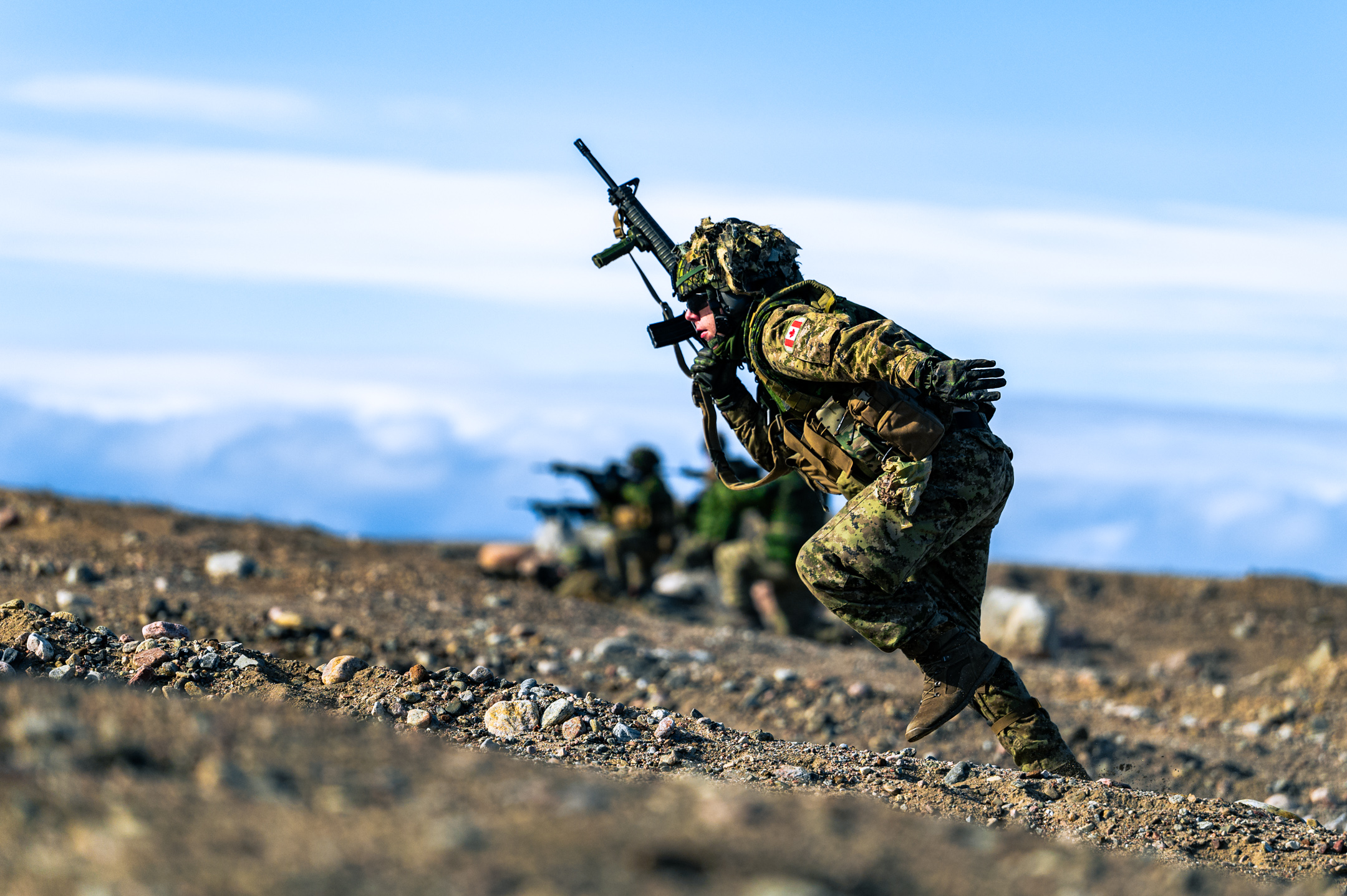
Maple money: This week, Canadian Prime Minister Mark Carney unveiled a new defense budget outlining plans for a major spending boost, with an eye on building up Canada’s (pretty much nonexistent) domestic defense industry.
The budget, pending parliamentary approval, calls for a C$82B ($58B) increase in spending for the Canadian Armed Forces over five years, which would push it over the 2 percent of GDP NATO spending requirement. Let’s take a peek at what’s inside:
- C$17.9B ($12.7B) on light utility and armored vehicles, counter-drone and long-range precision strike capabilities, and domestic ammunition production.
- C$6.6B ($4.7B) on developing Canada’s domestic defense industrial base through a new investment-focused “Defence Industrial Strategy.”
- C$6.2B ($4.4B) to “expand Canada’s defense partnerships” with allies. (Their fickle friends to the south might be left out of this, sad to say.)
Budget boon: The C$6.6B Defence Industrial Strategy, which will be released in the next few months, should give Canada’s fledgling defense tech scene a big boost. And, since the country doesn’t have a big ol’ prime contractor, it’s pretty much open season.
Starting next year, Canada’s planning to invest:
- C$1B ($4.7B) to create a new defense investment program under the government-owned Business Development Bank of Canada that will provide loans, venture capital, and advisory services to defense-focused small- and medium-sized businesses.
- C$656M ($465M) over five years to develop dual-use defense, cybersecurity, biosecurity, maritime, and AI technologies.
- C$334.3M ($237M) over five years to develop quantum technology companies and “provide pathways to technology adoption in defence-related applications and industries.”
- C$182.6M ($130M) over three years to establish a sovereign space launch capability.
New kids on the block: One Canadian defense tech startup we chatted with this week could be pretty well-positioned to benefit from Ottawa’s push for homegrown defense companies.
Dominion Dynamics emerged from stealth last month with $4M in pre-seed funding and a focus on building a persistent Arctic surveillance network integrating data from sensors across land, sea, air, and space.
“We’re building the autonomy layer for the country, and we think it’s no surprise that every neo-prime defense company is focused on autonomy, but in Canada, there’s a real need for it,” Eliot Pence, Dominion’s founder and CEO, told Tectonic. “The geography is immense, it’s harsh, the terrain is inhospitable in the extreme, and the country doesn’t have enough soldiers, so you actually have to have autonomous systems managing and doing sovereignty presence and protection.”
Arctic Anduril: Basically, Dominion’s goal is to become Canada’s Anduril. The fact that Pence led Anduril’s international business during its explosive growth from 2018 to 2022 should help on that front, and they’re moving pretty fast.
The startup is testing its sensing, autonomy, and communications technologies in the Yukon’s -30°F temperatures and says it expects to build a NORAD-on-a-budget meshed sensing network to detect vessels in the Arctic in the next year-and-a-half. And even with all that, Pence is thinking bigger.
“Every [NATO] country has, call it, one to five legitimate, large defense primes,” Pence said. “Canada is the only one that doesn’t, but now that’s politically not feasible. That’s what Dominion is focused on building—the legitimate Canadian defense prime, and being ultra-aggressive and ambitious about it.”