Y’all ever heard the one about the deep-precision-strike company that built missiles for a whole two years before emerging from stealth with a quarter of a million in funding and a cap table stacked with the biggest names in defense tech?
Yeah, we hadn’t either. At least not until today.
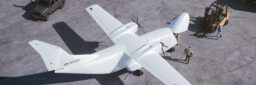
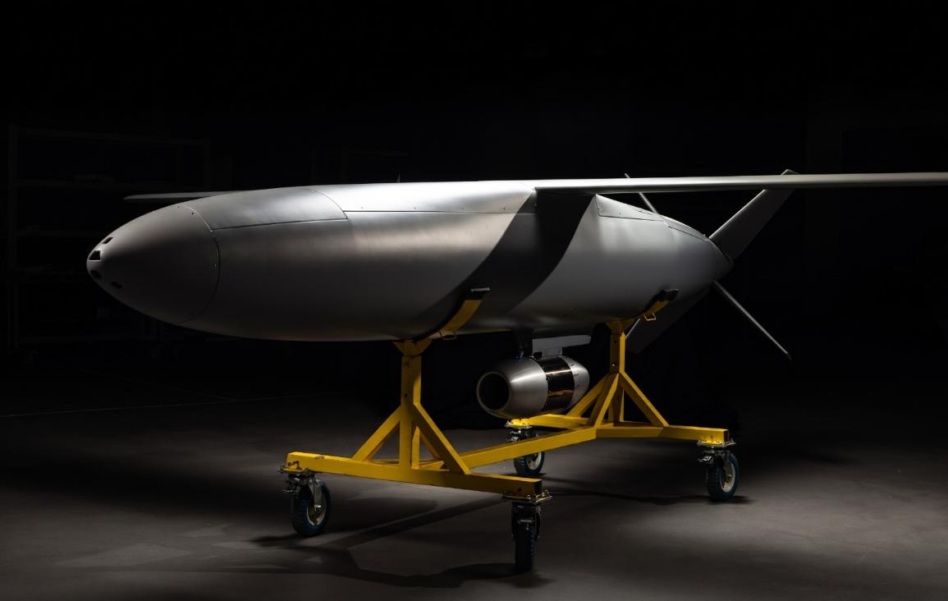
This morning, precision strike startup Covenant emerged from stealth with a “heavy-payload, long-range” Tomahawk-class missile called Anthem and a whopping $250M in funding (across three rounds) led by Andreessen Horowitz, Founders Fund, Lux Capital, 8VC, Aleph, and Lightspeed Venture Partners.
- Covenant was actually cofounded by Michael Kaufman (CEO) and Ofir Dayan (CTO) in 2024, but stayed stealthy until now.
- Anthem is already production-ready, and the company is opening up a 105,000 sq. ft. factory in Dallas, TX to churn it out at scale.
- They’ve also got signed military contracts across the US and Europe, and production lines in Germany and Israel.
“The reason we’ve stayed in stealth for so long is that we didn’t really want the distraction,” President and Chief Growth Officer Abby Denburg told Tectonic. “We have a platform today that is going through custom qualification with the US government, specifically with the US Army, in order to enable it to be assessed—and then ultimately fielded and in the hands of end users next year.”
“Where we have been over the last two years is flying,” she added. “We have had over 200 test flights of the full-scale prototype, and that has advanced us to this stage now, where we are ready to start producing.”
Man, some people really do move in silence.
On point: Now, a quick refresher on the whole deep-precision-strike issue for the uninitiated among us.
- As it pretty much says on the label, the idea behind deep-precision strike is that you want to hit a precise target from very far away, ideally with a warhead big enough to, like, destroy it.
- That poses a whole load of issues—heavy things (like big ol’ warheads) don’t tend to go very far very easily, so you’ve got to be careful to balance hundreds of pounds of payload with (potentially) thousands of miles of range.
- There’s also the whole targeting-and-navigation side of things—these weapons need pretty sophisticated sensors and seeking systems to make sure they achieve the whole “precision” side of things. Not super helpful if your missile can travel hundreds (or thousands) of miles, but can’t hit what it was meant to hit.
- They’re also (at least traditionally) super-expensive, exquisite systems—a few primes (Lockheed, RTX, Northrop) produce them in relatively small numbers at exorbitant prices (a single Tomahawk can cost up to about $5M, for example), with years-long lead times. A lot of that comes down to supply chain bottlenecks—a lot of those microelectronics, rocket motors, and the like are built by a small number of suppliers.
- And because countries like the US have traditionally only bought a few of these a year (for example, an average of 86 Tomahawks from 2016 to 2026), production has remained relatively low (less than 200 Tomahawks a year). That’s fine for peacetime, but less good when you’re at war (or multiple wars)—according to CSIS, during the war in Iran, the US has expended more than 1,000 Tomahawks and more than 1,100 JASSMs.
To be fair, the US and its allies, like, recognize that this is a problem. The EU, NATO, the UK, Germany, and, less directly, the US, have all identified that they need better solutions for deep-precision strike—a UK-led coalition of 12 European countries announced that they’d put $50B towards the problem this summer.
“The common gap across allied arsenals is the ability to hit faraway targets at an affordable price point with a payload that can execute against those targets,” Denburg said. “Across NATO and US allies, we are seeing an understanding of how critical deep-precision strike is a gap in arsenals, and we’re excited that we have been able to already bring forward a capability that can answer that.”
So, here’s what that capability actually looks like.
- Anthem has a payload of over 200 kg (441 lbs), and a range that competes with that of existing systems (we didn’t get an exact number, but the technical definition of “long-range” is 1000 to 2000 km, or ~620 to 1,240 miles).
- But here’s the thing: The missile was designed for mass production (“production in the thousands,” according to the company). Per Denburg, they’ve achieved this by “[partnering] with suppliers that understand affordability, and have met our tough thresholds on cost, and we have a very resilient and redundant supply base… we don’t have dependencies on sole-source buyers.”
- Per the company, Anthem will cost in the “mid-six figures,” and Denburg said the company will be able to produce 1,000 of the systems out of Dallas in the next year. An additional 1,000 will roll off the German line.
- And for the whole targeting thing—according to the company, they’ve built “proprietary mission-planning and command-and-control software to enable synchronized, high-density salvo launches.”
Real talk: And all this isn’t just wishful thinking. As we said, Covenant has been quietly making some major moves.
- The company has booked about $150M in orders to date, “including qualification, R&D, and multiple production contracts, with additional awards expected before year-end.”
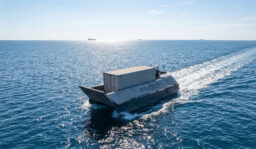
- They’ve got a prototype OTA with the US Army “for an accelerated test-and-qualification program,” and an ~$70M agreement with the US Navy’s Rapid Capabilities Office to adapt the ground-launched Anthem into a “Maritime Anthem” variant.
- Per Denburg, they are also already on a production contract in Germany, and Anthems will be rolling off the line there in Q1 2027.
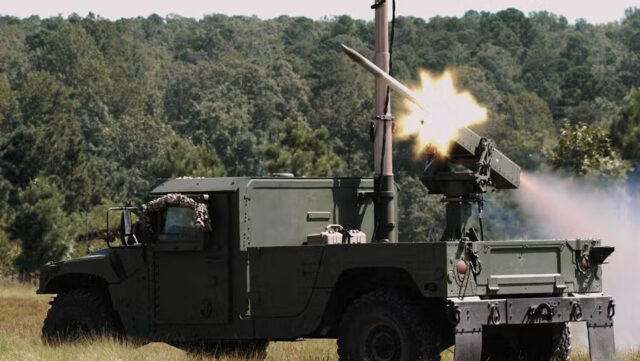
- Fun fact: The company was doing full-scale flight testing of Anthem 11 months after founding, and completed a live-fire demonstration at US Army Project Convergence Capstone 6 this summer.
Big ups: From here, Covenant’s plan is to scale—and fast—across their production lines in Dallas, Germany, and Israel.
A big part of that, per Denburg, is securing their supply chain. “We want to continue to buy down supply chain risk, and to ensure that we can meet the aggressive delivery times that we have committed to our customers,” she said.
We asked Denburg whether Covenant planned to expand beyond Anthem anytime soon. Basically, she said no (besides that maritime variant).
“We have committed to our customers to bring about the deterrent capability that they are looking for in months, not years,” she said. “As a result, we as a team remain focused on execution, and we have delivery commitments here coming out of Dallas that we want to ensure that we execute on. Then, we’ll look to tackle other strategic problem sets after.”