Told you the Europeans were getting (kind of) serious about the whole drones and autonomy thing.
Yesterday, the European Defense Agency (the EU’s joint defense capability organization) announced that it’s down-selected five companies for stage two of its Sentinel Strike Challenge for loitering munitions. Each company will get €30,000 to move on to stage two, where they’ll compete for a total of €1.8M in prizes.
The finalists are:
- Helsing (Germany)
- Destinus (Netherlands)
- C-Astral (Slovenia)
- UAVision (Portugal)
- Spirit Aeronautical Systems (Greece)
Per the EDA, the companies were selected based on “predefined administrative, technical and award criteria covering aspects such as technical maturity, operational relevance, safety and demonstration feasibility.” In other words, whether they matched what the EU is looking for on paper.
But now it’s time to get real: Each company will now move on to field testing during EU OPEX26 in Portugal, which will kick off late next month. There, military users will test “how [these drones] perform across the full mission cycle, how resilient they are under operational conditions, and how they compare when tested under the same scenarios.”
Let the games begin.
Pick ‘n mix: Now, we don’t know exactly which strike drones each of the companies will be bringing in their suitcases to Portugal, but we can make a pretty educated guess based on what the EDA is looking for:
- The agency says it wants a Class I loitering aerial munition with a maximum takeoff weight of up to 25kg and an operational range of up to 40km that “constitutes a complete, integrated loitering munition capability.”
- For Helsing, that’s likely to be the HX-2. It’s kind of tailor-made for these specs—it weighs about 12kg (depending on payload) with a max range of 100km, and is designed for these kinds of one-way strikes.
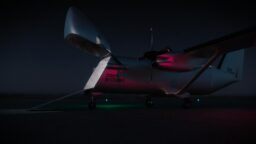
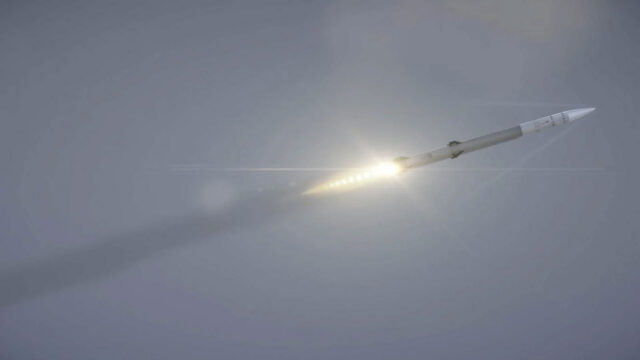
- For Destinus, it’s less clear. The company typically focuses on the missile-y side of things, but for a smaller loitering munition, they could have a) modified their smaller Hornet interceptor or b) designed something from scratch. In their announcement, they said they’d submitted a “complete loitering munition system developed and produced in Europe with operational experience in demanding environments.”
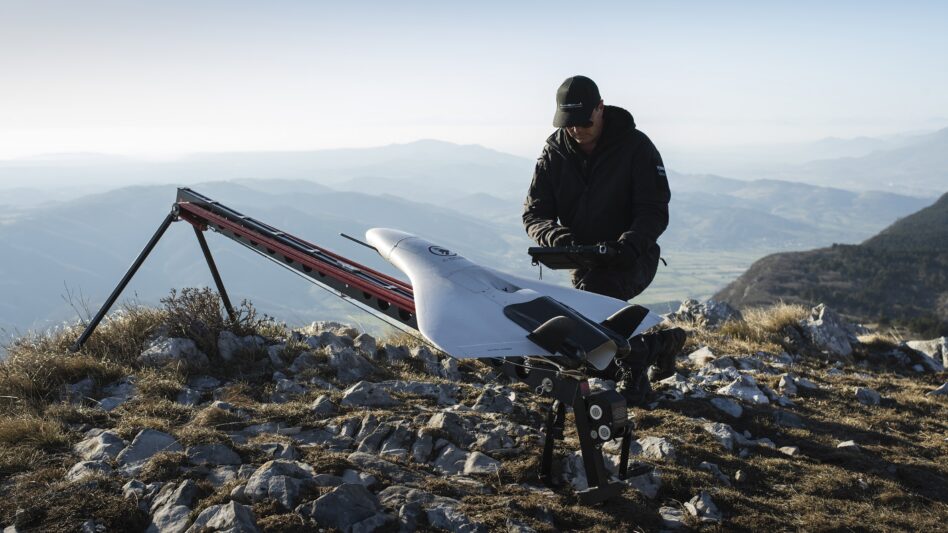
- For UAVision, it could be the ELANUS, which weighs about 8kg with a 50km range, and is electric and catapult-launched.
- For C-Astral, a likely candidate seems to be the newer (and stealthier) MWT. It’s technically marketed as a “delivery drone” but can travel at speeds of up to 300km/hr and carry a payload of up to 1.5kg. It’s also in the photo in the EDA’s announcement.
- For Spirit Aeronautical Systems, it’s a bit squishier, but could be the AIHMI AHM-1X loitering munition, which has a range of about 45km and weighs about 16kg.
Big ups: Now, these might sound like teeny-tiny prize numbers, but that’s not really the point here. The bigger thing is that these demos give the opportunity for all EU member states (inclined big spenders like Germany and France) to check out and test this kit—without having to go through the faff of testing themselves.
- The EDA announcement said that phase one of the challenge received “140 expressions of interest from organisations across Europe.”
- The testing basically validates the systems for the collective EU community—which can kick off contracting.
- Overall winners will be announced at the EDA’s annual conference in early 2027.