Every single day, we write stories about all of the new hardware and software coming onto the market and into warfighters’ hands. It’s a lot to keep up with (enough, even, for a fairly substantial daily newsletter).
All that innovation and energy is great and needed, but staying up to date with the changing technologies and tactics is no small feat for the people tasked with using them. Luckily, California-based startup Ethos is here to help—they’re building the unflashy tech that aims to make training and gauging proficiency at new tech easier, personalized, and more adaptive.
And this morning, the “human readiness” company rolled out a new training software platform that takes all the skill requirements for specific military roles, compares them with real-time assessments of people across the force, and helps commanders spot and fill training gaps.
“We can’t have a static, 1990s approach to training warfighters when the threats they’re going to face on a daily basis are changing literally week over week in a pretty profound way,” Ethos CEO Andrew Powell told Tectonic. The readiness engine is “a response to what we feel is an emerging and very important problem in the age of AI and warfare.”
“Most of the military training that most everybody goes through is kind of one-size-fits-all,” he added. “If you just put people through a one-size-fits-all training and say, ‘All right, you’ve got to get at least a 70 percent to pass,’ the gap of, say, you get a 73 percent, the 27 percent you missed is very important, and it’s high stakes—it might be life and death in certain situations.”
Training day: Ethos’ training platform—already used by over 50,000 servicemembers across the Air Force, Space Force, Army, and Navy—is broken down into three main parts:
- The first defines what’s important for each person to know based on their specific role, which is “usually handled in [Tactics, Techniques, and Procedures, or TTPs], a Rate Training Manual, or other training materials,” Powell said. “We ingest all of that and model it into…a relational database of sorts that defines all the knowledge, skills, and abilities necessary for every single warfighter tied to their role.”
- The second measures where each individual is against that baseline standard, whether through knowledge or skill assessments on the platform, “pulling in data from a live exercise, or flight or instructor feedback.”
- The third part—and this is what’s new—feeds that information into what they’re calling the “readiness engine,” which allows commanders to see exactly where people are falling short, visualize the proficiency levels across entire units, and take steps to fill the gaps.
“If you’ve played Madden, it gives you [information], like, you’re 93 percent on elusiveness and 99 percent on accuracy,” he said. “Similarly, we can give essentially [give users a] skill profile for every warfighter tied to the competencies that their commander is expecting of them, and then once we have that, we can drive personalized upskilling tied to where the gaps are.”
- That Madden reference is pretty fitting, given that the platform is also used by a handful of NFL teams. But in the military context—where the bulk of Ethos’ customers are—the training spans from “drone operators in the Army to finance professionals in the Navy” and “maintenance for F-22 squadrons.”
Ready, set, go: Ethos is gradually rolling out the readiness engine across all of their users “on a customer-by-customer basis, just to make sure that they understand all of the metrics and that it’s fine-tuned to their particular mission set,” he added.
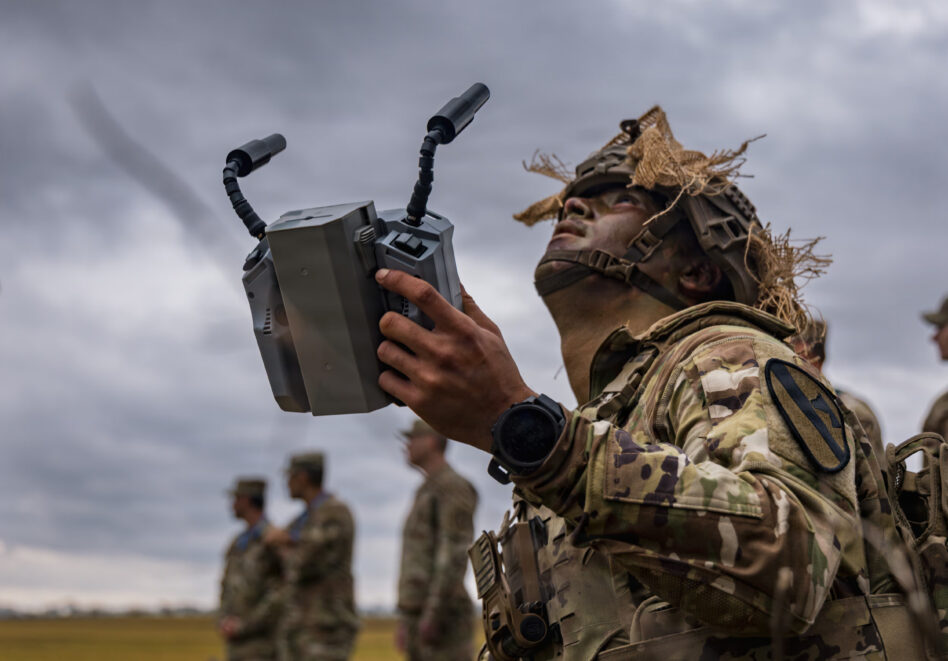
- The company piloted the readiness engine on the Army’s drone operations, since it’s “particularly useful with the fast-moving, high-paced things,” and “now we’re launching this as a general release for all of our customers.”
Ultimately, Powell’s hoping that Ethos helps lead to a kind of “pivot” in how the military thinks about training, where it “moves at the pace of the tech rather than it lagging in the way that a lot of systems do,” he said.
“Instead of just thinking about completion of training or meeting compliance requirements, it’s how do we maximize the chance of success on whatever we’re asking somebody to do and ensure that they’re as prepared as possible.”