There’s a popular saying that we know less about the ocean than space. Andrenam is on a mission to change that.
The California-based startup is building a distributed network of underwater acoustic sensors and the AI-powered software to process all of the data they collect. That fits cleanly into the whole “maritime is all the rage” thing we’ve been harping on, and investors are taking notice: The startup announced this morning that it’s raised an $18M Series A, bringing them to $30M in total funding.
- Upfront Ventures led the round, with participation from Valor Equity Partners, Also Capital, and First Round Capital.
- The company raised a $10M seed round last year, which closed in a lightning-fast 36 hours.
Deep dive: We’ve said it before, and we’ll say it again. The ocean is very large and very difficult to patrol (looking at the Pacific—2027, anyone?), and it can be hard to keep an eye on an enemy’s maritime activity, especially all the sneaky stuff happening beneath the water’s surface.
“There are a lot of unmanned systems operating [in the sea], but there’s still a fundamental intelligence gap, and that gap kind of boils down to the need for distributed wide-area search and sensing,” Andrenam co-founder, CEO, and ex-SpaceX engineer Matej Cernosek told Tectonic. “Sonar is the only thing that works for long-range detection, and we’re solving that maritime intelligence gap through our distributed hardware, as well as our software.”
The startup has two core technologies on offer:
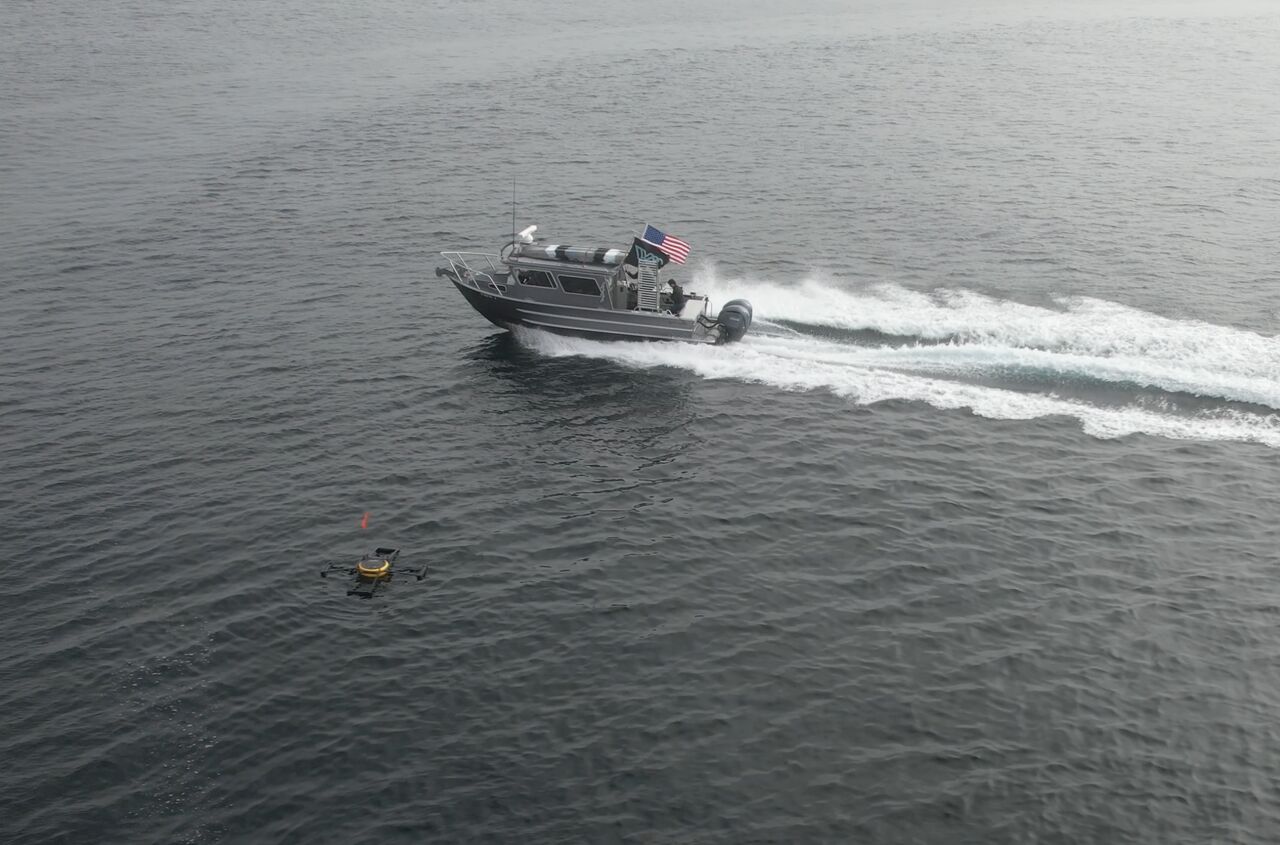
- Pearl: A distributed networked buoy with a “suspended passive sonar array” and acoustic sensors to detect all of the bumps, whirs, and rumbles under the water’s surface. Andrenam’s built 35 of them, which have logged over 4,500 in-water hours, including in long-duration deployments off the California and Washington coasts.
- Obsidian: All of the sensor data that the Pearl buoys collect is fed in real time to Obsidian, Andrenam’s AI-powered software that “detects, tracks, classifies, and displays the probabilities of types of underwater vessels to the end users,” Cernosek said. It can also be “plugged into any C2 and common operating picture that the end-user wants.”
Sea change: The ability to keep an eye (or ear) on all of the stuff happening underwater is pretty important because “peer adversaries like China are building six times the number of submarines or more per year than the US,” and “criminal organizations are starting to move underneath the waves,” Cernosek said. Building a distributed network of sensors to keep tabs on all of that is key to “staying relevant as a nation.”
- And it sounds like the Navy agrees. According to the company, they’ve recently been awarded two contracts, which will be announced in the upcoming weeks.
Coming out of the raise, Andrenam is focused on scaling up production of Pearl. They’ve built three generations of the buoy, and have seen “10x performance improvements across every single one of these generations,” but the fourth one is designed “for scaling, and that’s the reason why we raised the Series A,” he said.
“We’re at a critical deficit in underwater data as a nation, in usable information,” he added. Pearl and the “AI and machine learning in Obsidian are really going to unlock leaps and bounds of access to the ocean that we’re just starting to see because of this unmanned push, and we’re incredibly excited to be on this journey.”