The drone dollars just keep on coming.
On Monday, Easy Aerial, a Brooklyn-based manufacturer of defense-focused tethered drones, announced a $20M Series B—led by VC giant Insight Partners—to boost production and deliveries, as well as roll out new products.
In the green: Now, if you’ve been keeping up with the defense-tech world, you’ll know that the drone space is getting mighty competitive, but Easy Aerial didn’t just raise this cash to keep them alive long enough to find product-market fit.
“Easy Aerial is already profitable and growing, which puts us in a very strong position. This capital is not about funding our day-to-day operations,” CEO Shahar Abuhazira told Tectonic. “It’s about investing in the future. Demand is growing, customers want more systems, and they want them faster, and we want to stay ahead of that demand.”
- He added that Easy Aerial has contracts “across the DoW, DHS, and other US government agencies” and many “leading US defense prime contractors that integrate our systems into their ground and maritime platforms.”
- They’re also seeing a whole lot of international demand, including in Israel and the Netherlands, where they’re on contract for 118 systems. In total, they’ve deployed their drones to over 20 countries.
Most of that demand is around Easy Aerial’s two main products:
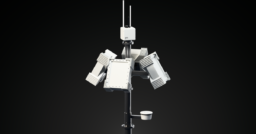
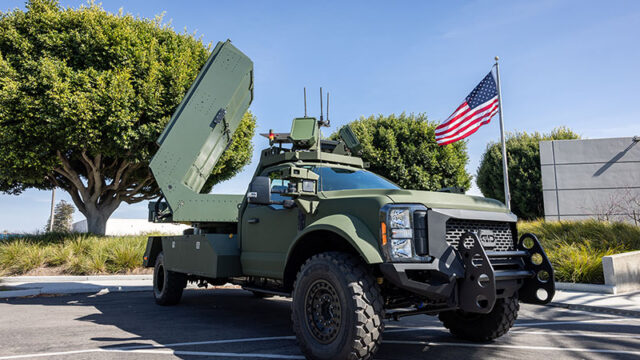
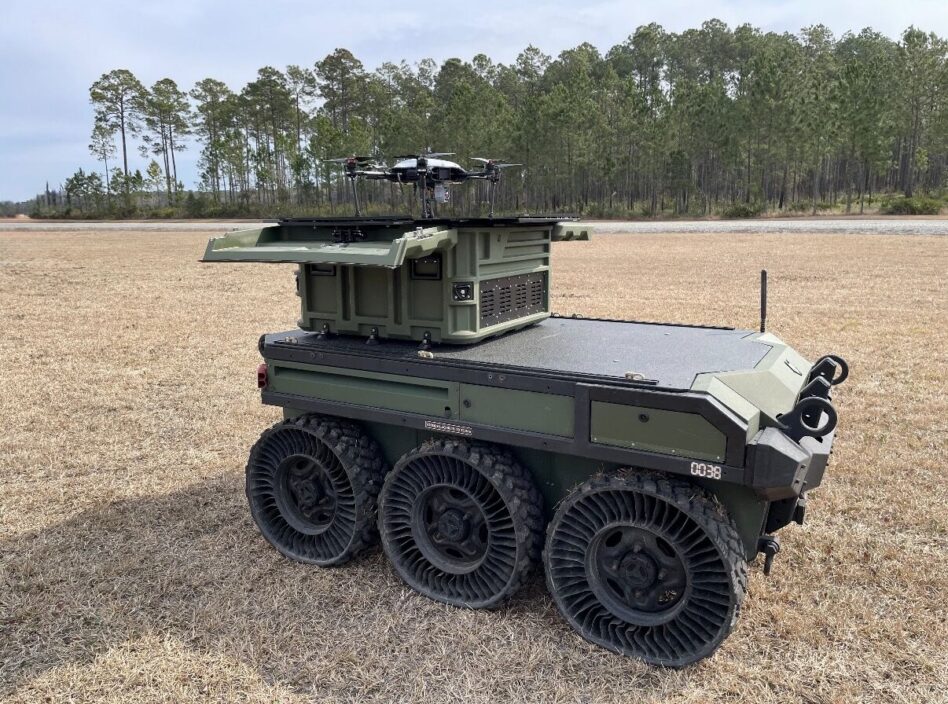
- Easy Mobile, a big-boy, 233-pound tethered “drone-in-a-box” that can be fitted onto unmanned ground vehicles (they have partnerships with a bunch of different UGV manufacturers), USVs, or fixed sites. It has practically unlimited endurance, including in “extreme weather conditions” and GPS-denied environments, with a max height of 330 feet.
- Easy Lite+, a “hybrid” drone that can be either tethered or free-flight (45 minutes of endurance). Abuhazira calls it the “only hybrid-tethered UAS of its kind on the market.”
Tie it down: The tethered variant is the one they’re going all-in on, and where they see their core differentiation.
“We believe we build the most advanced tethered UAS systems in the world. That’s our core expertise and where our focus is today, rather than competing in the increasingly crowded free-flight UAS market,” Abuhazira said. “Customers are increasingly looking for systems that can remain airborne for as long as the mission requires, without the limitations of batteries.”
Eye in the sky: According to Abuhazira, the missions with the most demand for are:
- Border and installation security, where tethered drones can provide “persistent surveillance with a much more tactical, mobile, and rapidly deployable solution.”
- Integration with other platforms, including maritime vessels, combat vehicles, and UGVs. Roughly half of Easy Aerial’s drones are integrated with other platforms, and “in these applications, our UAS effectively becomes an extension of the host platform into the sky,” especially for “elevated ISR,” he said.
- A third, more emerging mission is in the counter-UAS space. “We’re currently integrating specialized sensors and payloads onto our platforms to support cUAS missions, allowing the tethered UAS to serve not only as an ISR asset, but increasingly as an elevated node within a broader counter-UAS architecture,” he added.
Cash money: With $20M in fresh capital, the company is looking to expand capacity across its five production sites (four in the US and one in the Netherlands), bolster its supply chain, and add “new capabilities to our systems,” Abuhazira said. They’re also planning to “introduce two new platforms by the end of this year, followed by a third in early 2027.”
“We believe the tethered UAS market is still at the beginning of its growth, and our intention is to continue leading its evolution by pushing each of these capabilities further,” he added.