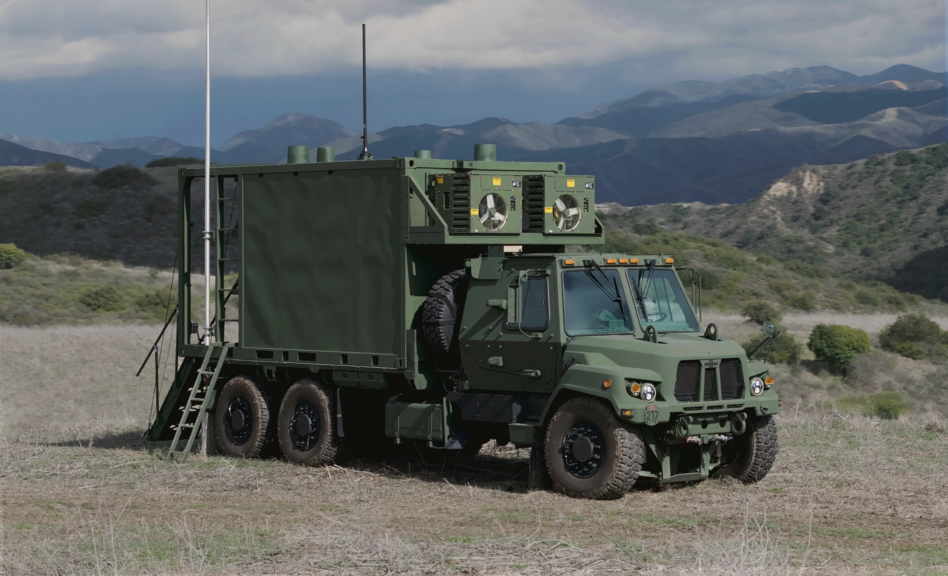
Watch out, world. The US Army’s kill chain is going mobile.
On Tuesday, the Army awarded two contracts worth a combined $192M—$127M to Palantir and $65M to Anduril—to move the Tactical Intelligence Targeting Access Node (TITAN) AI-powered mobile ground station from prototype into production.
- The order covers eight initial TITAN systems: four of the bigger, badder Advanced variant, and four of the smaller, more mobile Basic one. Those units will be delivered over the next 18 months.
- As the prime integrator, Palantir is working with Sierra Nevada Corporation, L3Harris, and others on the program. Anduril, as the “lead hardware systems architect,” is providing “hardware subsystems and mission shelters” for the program.
- The eight TITAN systems will “directly join the nine prototype units the Army currently retains for operational use,” the Army said, creating an initial fleet of at least 17 once all eight production units arrive.
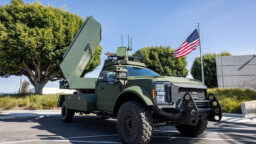
Clash of the TITANs: The TITAN program, to back things up, is basically the Army’s mobile and AI-enabled sensor data fusion, processing, and targeting hub for long-range precision fires. In other words, it’s Maven in a truck, designed to help commanders make sense of all that data from “Space, High Altitude, Aerial, and Terrestrial sensors” to provide “actionable targeting information” and condense the sensor-to-shoot gap at the edge.
- The Advanced version is built on a medium-sized tactical vehicle and offers “greater processing and integration capability,” according to Palantir.
- The Basic variant is built for “mobility and rapid deployment” and is designed to be vehicle-agnostic, but prototype TITANs have been delivered on the Joint Light Tactical Vehicle (JLTV) and the lighter Infantry Squad Vehicle-Utility (ISV-U).
Speed racer: For a new Army program, it’s also moved from prototype to production in a super speedy five years.
- Palantir and RTX were tapped for the initial software and system design in 2021, and were again selected to deliver competing prototypes the next year.
- In 2024, Palantir beat out RTX for a $178M contract to deliver five Advanced and five Basic TITAN prototypes—the first time a software company was selected to prime a major hardware program.
Anduril, meanwhile, has served as the lead hardware systems architect on TITAN since the program’s inception. Under the latest production contract (executed via their chill $20B enterprise agreement with the Army), the big-time neoprime will manufacture “ruggedized, vehicle-mounted systems” and integrate “power, thermal, control, and operator subsystems” so TITANs work wherever the Army takes ‘em.
- The Army tested TITAN at the Project Convergence-Capstone 6, the culmination of months of Next-Generation-Command-and-Control (NGC2) exercises, running sensor-fusion and targeting processes through Anduril’s Lattice C2 software (the backbone of the NGC2 program).
According to the Army, they’re not done with TITAN yet, stating that “the production order for additional TITAN systems is anticipated to be awarded in FY27.”
“TITAN was shaped by the soldiers who used it, in the conditions they used it in, against the standard they set. That is the only way a system like this earns its place in the field,” Palantir CTO and President Akash Jain said. “We are honored by the Army’s trust, grateful for a partner team that shared the same commitment, and clear-eyed about the work still ahead.”
Starting to think those Lord of the Rings-inspired names must be a good luck charm or something.