Remember when all of us here in defense tech land were just kind of a footnote when we talked about defense production and the primes?
Yeah. Things have changed.
Yesterday, new-age manufacturing company Hadrian announced that it’s signed a seven-year agreement with Lockheed Martin to “bring Hadrian’s advanced manufacturing capabilities directly into Lockheed Martin’s Missiles and Fire Control (MFC) facility in Grand Prairie, Texas.”
Think of it as a factory within a factory, equipped with Hadrian’s automated manufacturing lines.
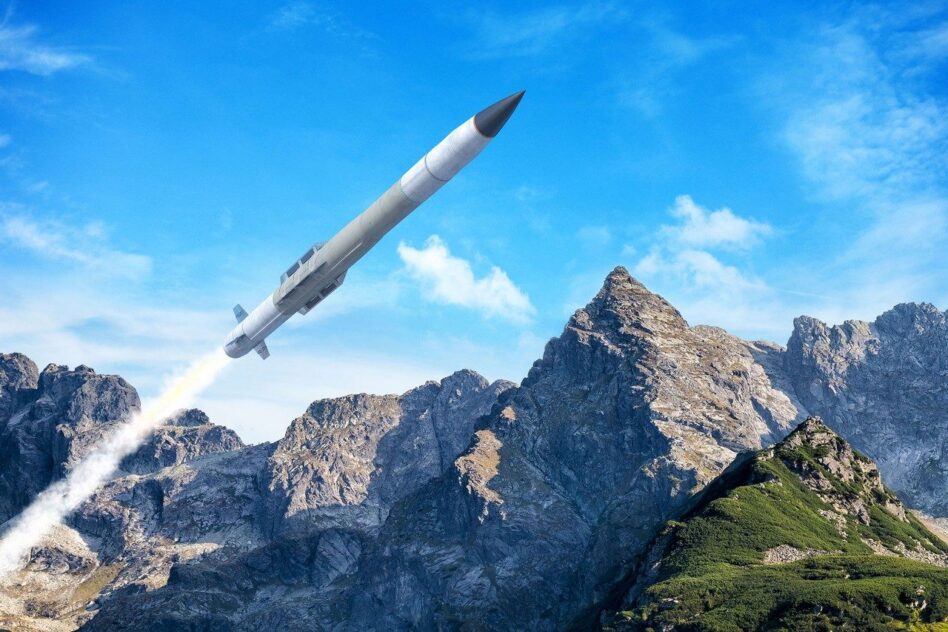
CEO Chris Power told Tectonic that his company’s setup will primarily produce components for those oh-so-precious interceptors and missiles, including PAC-3 MSE, THAAD, PrSM, and GMLRS—starting with PAC-3 and PrSM.
- This marks the agreement out of Hadrian and Lockheed’s MoU, inked last winter.
“This is the first time a defense prime has really partnered with a new, innovative manufacturing technology company like Hadrian in a service agreement,” he said. “It’s a big move for a company like Lockheed to trust us with helping them manufacture…their most important munitions classes that are desperately needed worldwide.”
And that seven-year timeline is no accident: This year, Lockheed struck deals with the Pentagon (totaling over $60B) to triple PAC-3 production (from 600 to 2,000 a year) and quadruple PrSM production. Money moves, indeed.
Build, baby, build: Now, Hadrian is one of those companies very firmly on the “reindustrializing” and “build it better” side of defense. The company was founded back in 2020 around the idea of building autonomous, software-driven “factories-as-a-service.”
- To put it (very) simply: The company produces tricky and bottleneck-causing things (like missile components) for other companies. They also produce full end-to-end products.
- Their flagship Opus advanced manufacturing software automates and optimizes production lines, and also (per the company) makes it super, duper easy to train workers.
- Hadrian already operates four dedicated facilities across the US (in California, Arizona, and Alabama), totaling about 2.85M square feet. These factories are mostly dark—meaning robots are doing the vast majority of the work.
- And the company isn’t coming at this Lockheed partnership cold—they’re already producing parts for everything from PAC-3s to PrSMs to THAADs, as well as for Virginia- and Columbia-class submarines.
Plus, investors love them—the company has raised a whopping $2.34B in funding, most recently a $1.73B Series D (yes, really) at a $7.87B valuation.
Nesting doll: Sounds like this Lockheed team-up is pretty much the perfect representation of that whole “factory-as-a-service” thing.
“It’ll be a factory within a factory, run by our software and our team [along with] Lockheed’s operators. The Grand Prairie workforce will actually be co-running the system with Hadrian’s team,” Power said.
“It’ll have all the digital connections you’d expect…utilization, uptime, the digital thread from Lockheed’s designs into Opus,” he added. “[Then there’s the] digital connections between Grand Prairie and Factory 3 in Arizona [for] co-sharing and overflow work.”
- Hadrian will set up a factory with 24 machines inside the Grand Prairie facility—Power said it will basically be the same size as their LA facility.
- Another 24 machines will run at the Arizona facility for overflow. Basically, if Lockheed needs more parts than the matryoshka doll factory in Texas can produce, they can make them in Arizona.
- Worth noting: Hadrian is already delivering these missile components out of Arizona, so they’re ready to rumble there. The production line within the Lockheed facility will be up and running by January, Power said. “It’ll be lights on 24/7 inside Lockheed Grand Prairie, and also running lights out 24/7 inside Arizona for overflow and buffer capacity.”
“Assembling a missile is difficult, but manufacturing the components at the rate and scale they need to get up to the thousands that they need to build for the Department of War is a huge lift,” he added. “[Lockheed] can adopt [Hadrian] into the production system…and meet their schedule with high amounts of throughput and [lower] costs. That’s good for the taxpayer. It’s good for Lockheed, and it’s great for us.”