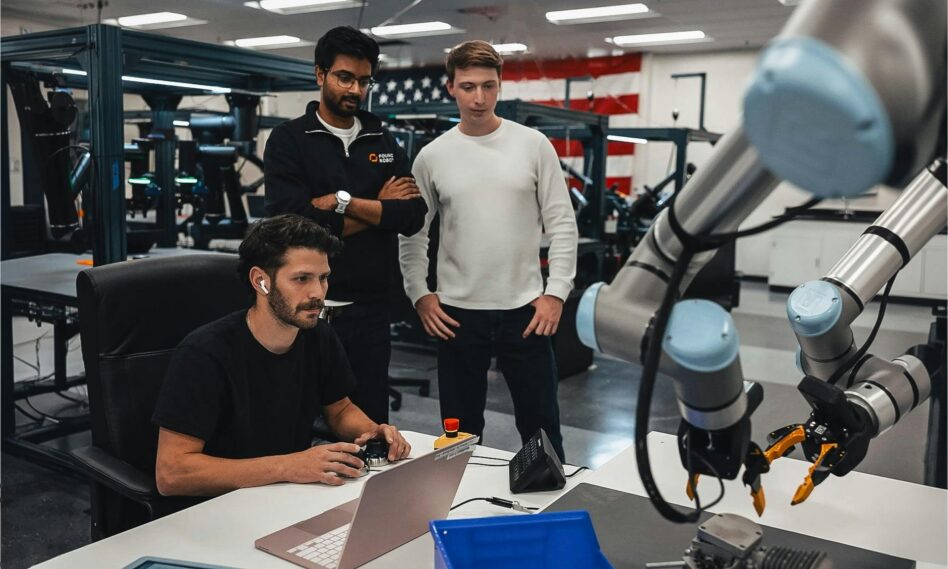
Are you feeling the reindustrialize vibes yet? Well, you should be, because investors certainly are.
California-based Foundry Robotics is the latest to hop aboard the factory-of-the-future hype train, announcing a $100M Series A led by Marlinspike to build more robotic assembly facilities “from the ground up,” CEO Adarsh Kulkarni told Tectonic.
- Early backers Khosla Ventures and Red Glass Ventures and new investors SE Ventures, Wing VC, and Axiom Ventures participated in the round.
- The company was launched last year by Kulkarni, who previously headed up AI training giant Scale AI’s robotics business, and Emmanuel Lamacchia, who led Tesla’s Model Y program. They raised a $20M seed round back in January.
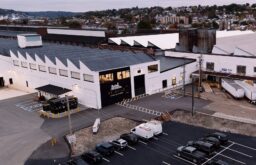
And this isn’t just a vibes-based raise (sorry). At just a year old, Foundry is already assembling everything from robotic dogs to unmanned underwater vehicles, quadcopters, and satellite subsystems out of its 130,000-square-foot facility for five paying customers—including shipbuilding giant HII.
The robo-dojo: Foundry’s pitch is simple: Instead of retrofitting old factories with robotics or selling robots to manufacturers, it builds and operates net-new factories where customers pay them to assemble their products.
- The whole shebang runs on FoundryOS, the robotic foundation model and operating system that coordinates robotic cells, production schedules, and assembly processes, allowing it to “adapt to new products, streamline changeovers, and scale production as demand changes.”
- On the hardware side, they have “deep partnerships in the robot arm space and the manipulator space, but there’s also a whole lot of what we call end effectors—the grippers and the fasteners at the end—that we build ourselves,” Kulkarni said.
- Electromechanical assembly is Foundry’s bread and butter, which includes fastening, precise placement, cabling, and a lot of other complex putting-togethering.
In the era of high-volume, commoditized component manufacturing in defense, Kulkarni says that assembly—rather than the actual manufacturing and forming of the parts—has become “more and more of the bottleneck,” but it’s also “where robots are ready to shine and where robotics foundation models are the most valuable.”
With that flexible, constantly learning and retraining foundation model, Foundry “can build drones on Monday, batteries on Tuesday, satellites on Wednesday, and that’s the whole point,” he added.
Instead of focusing on a single product and building an assembly line around it, “By leveraging the foundation models, we can be a truly generalized manufacturer.”
- That pitch was enough to sell America’s largest shipbuilder. HII, their first publicly announced customer, tapped the startup to help “scale up production on a ton of their different unmanned systems that are smaller in size,” Kulkarni said, but they’re also looking at working on subassemblies for larger vessels.
Getting shifty: HII is a big fish to land as a one-year-old startup, but Foundry’s seeing demand across the board. “We don’t really have, like, one big marquee customer who uses 80 percent of the facility,” he said. “It’s actually pretty distributed.”
The beauty of all of that is that, with AI, “for the first time in the history of civilization, the more products we build, the better we become at building all products because all of that data flows into our models and fine-tunes them,” he added.