Critical minerals really are so hot right now.
Yesterday, AI-and-autonomy-for-critical-minerals-processing startup Riven emerged from stealth with a cool $7.9 pre-seed led by Cerberus Ventures, with participation from Scout Ventures, Alumni Ventures, Lightscape Partners, CLAI, and New System Ventures.
- The company was founded by Chip Breitenkamp (an experimental chemist, now CEO) and Orion Archer Cohen (a computational chemist, now CTO).
The company says it will use the funding to majorly scale up the team and build out its “autonomous labs” for separating and refining.
“Ultimately, a lot of [the critical minerals] bottleneck that is currently in the news comes down to the very tricky chemistry of processing these minerals. The way in which we design, develop, and scale up new processing capacity in the West has really not changed in decades,” Cohen told Tectonic. “We sat down and asked ourselves, ‘What can we do in an era where information technology is fundamentally changing? Where automation is becoming dramatically more accessible, and where machine intelligence exists that can reason and act in incredible ways over diverse domains?”
Their answer? Riven.
Pink pony club: Now, we’ve really beaten the whole “we’re screwed in terms of critical minerals” thing like a dead horse, but here’s a quick refresher for those of you that haven’t been paying attention.
- According to the US Geological Survey (USGS), there are 60 critical minerals. Those include the rare earth elements (neodymium, praseodymium, dysprosium, terbium, etc.) and things like lithium, magnesium, cobalt, nickel, and gallium (among many others).
- These are the elements that make the world—especially the defense world—go round. They’re found in almost every advanced military system, from drones to missiles to submarines and ships.
- But here’s the problem: China’s got an extreme chokehold on the market. The country mines about 30-40 percent of the world’s supply of the minerals on the USGS list, and separates and refines well over 60 percent.
- For rare earths (especially important for things like magnets and radars), it’s even more extreme—China mines over 70 percent and refines over 90 percent of those bad boys. Fun fact: They also produce nearly 95 percent of the world’s permanent magnets.
- The US imports most of its critical mineral supply—nearly a quarter of the 60 critical minerals are 100 percent imported, and another third are more than 50 percent imported.
Back in stock: The argument that Cohen and Breitenkamp are making is that the US has plenty of supply—it just needs to get better at the separating and refining side of things.
“Nine months ago, amidst seemingly daily headlines about critical mineral independence and our reliance on China, we took a look at what the real issues are, and what we found out is that America and the West generally really have abundant resources. What we really lack is the ability to separate those,” Breitenkamp said.
- Riven, importantly, is not a mining company—it’s using AI and autonomy to build better tech for separating and refining these minerals.
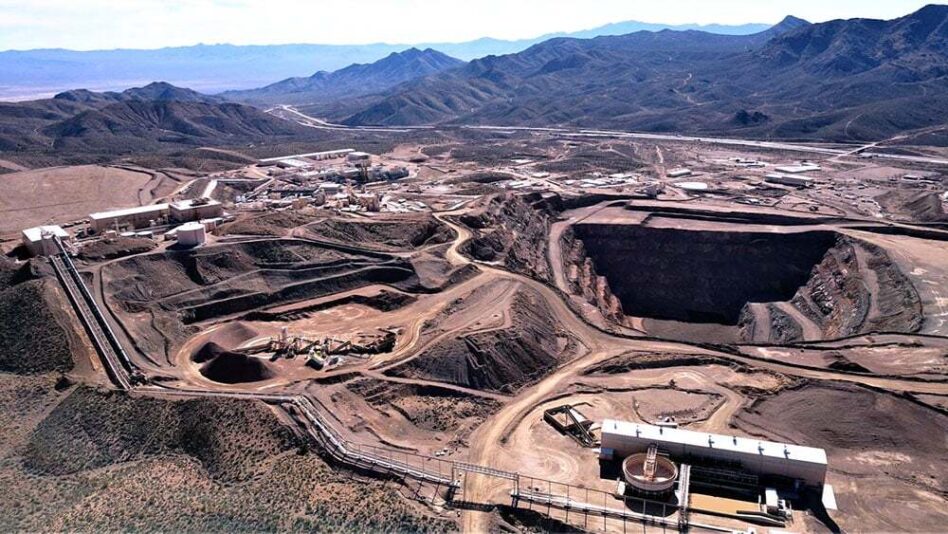
- When mines dig out, basically, a pile of dirt, they’re not extracting, say, pure neodymium. To get those minerals, they often use solvent extraction: essentially using specially designed chemicals that preferentially bind to one metal and allow it to be separated from everything else.
- But, per Breitenkamp, that’s not a particularly neat or easy process. You have to run a ton of experiments to figure out what molecule will actually work to pull the minerals out—they’re using AI to do it a lot faster in what they’re calling “autonomous labs.”
“What we’re talking about is leveraging automated tools to be able to test this chemistry [and] build out data sets so that we then can use computational tools to help us predict what an ideal chemistry might be from any ore, any waste stream, any recycled electronics,” he said. “We can run hundreds, if not thousands, of experiments per day.”
Plus, it’s fast.
“We can in a matter of days now decide what that optimal chemistry can be, and bypass years of that manual, one-off experimentation,” Breitenkamp added.
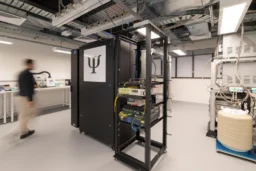
Pile of dirt: The company already has one autonomous lab set up in NYC where Cohen and Breitenkamp said they’re running tests on partners’ feedstocks (they couldn’t tell us who).
- They were also selected by the Department of Energy for a Genesis grant to find molecules that can speed up critical minerals processing. Strong start.
Going forward, they said, their work will fall into two buckets—injecting their tech into existing refining processes and building new autonomous labs from the ground up.
- The goal with existing set-ups is to make them more efficient. In Cohen’s words, the idea is “to really accurately model their plant and the chemistry within it, and then adapt the chemistry in a dynamic way to adjust to the variability of the feedstock” to make things faster and more efficient.
- With the ground-up processing facilities, they can have more fun. The goal remains efficiency, but “there’s just a lot more that we can do because the design is not fixed. We can try out more diverse chemistries. We can build more robust models based on more data. We can make sure that the processing lines are well instrumented, so that we can model and analyze and adapt them in real time,” Cohen said.
Fine wine: Plus, like most things AI, Riven’s tech will only get better with time. Over the next 12 months, they say they’ll be running more tests to build out their database and make the model better and speed up refining.
“There are plenty of mines,” Breitenkamp said. “[The question is], how do we just solve the chemistry? How do we more efficiently build those plants? And then, how do we run those plants in a way that’s most efficient? Our goal is to be able to take what could be a 30-year process and shrink that down to three. We know it can be done because China does it, and we’re leveraging AI tools to do that.”