It’s a boom time in the boom business, especially for the biggest purveyor of boom and zoom in the game.
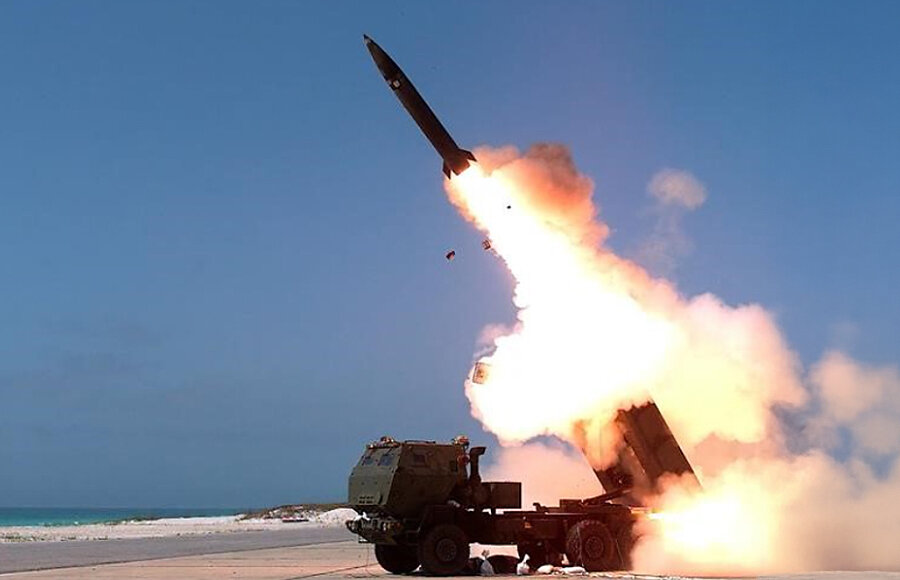
Yesterday, defense giant Lockheed Martin announced that it won a $1.2B IDIQ contract for the second increment of the Precision Strike Missiles (PrSM), which are replacing the Army Tactical Missile System (ATACMS) in the Army’s long-range strike arsenal after its debut in Iran earlier this year.
The second iteration of the missile, according to Lockheed, features a new multi-mode seeker that provides “targeting guidance and can lock on to moving, time-sensitive threats,” along with the ability to engage moving maritime targets, adding a “maritime-strike capability to the baseline missile’s land-attack mission.”
- The $1.2B-ceiling award sets Lockheed up to “scale production as the Army moves toward larger Increment 2 procurements,” the company said.
- It also follows the Army’s nearly $2B request to purchase more PrSMs in FY27.
Old dog, new tricks: For those who like to bash the primes for not innovating fast enough—watch out, because you might just get what you ask for. The PrSM’s development has moved pretty quickly by exquisite weapons-systems standards (they run about ~$1M a pop), and the Army has gone all-in on them.
- The PrSM was first fielded in 2023 and made its combat debut in March at the start of the war in Iran. The current Increment 1 variant is a surface-to-surface ballistic missile that can hit targets over 300 miles away.
- Last March, Lockheed inked a nearly $5B IDIQ to deliver additional PrSM missiles to the Army and a seven-year framework agreement to quadruple PrSM production capacity to 550 missiles annually.
- The ceiling on that IDIQ was increased by $8.4B in June to officially extend the Army’s procurement timeline from five to eight years, or through 2032.
- Despite production lines heating up for the Inc. 1 variant, Lockheed has been cooking up the next generation of the missile, successfully launching the first Inc. 2 PrSM in March and a second last month from a HIMARS mobile launcher.
- Lockheed also has a fifth-gen PrSM in the works that’s designed to hit targets beyond 600 miles from an autonomous launcher.
Supply strains: That demand isn’t for nothing. Since the missile’s debut at the start of Operation Epic Fury, the US has reportedly drained “virtually all” of its global stockpile of long-range missiles, including PrSMs and ATACMs, which the PrSM is replacing.
- According to a Pentagon inspector general report last week, the US spent $22.3B on munitions—out of $33.4B in total spending—during the first five months of the war in Iran. That expenditure, according to the report, “has resulted in strategic inventory shortfalls and revealed industrial base bottlenecks for munitions resupply.”
- While the PrSM stockpile getting used up is definitely no bueno for the US’s long-range strike capabilities, the supply was pretty low to start with (since it’s pretty new), and the US is ordering a whole lot of ‘em next year and beyond.
While America’s munitions shortfalls spell trouble for its deterrence capacity in theaters where long-range strikes are pretty critical (like, say, the Pacific), the production ramp-up and blaring demand signal is good news for Lockheed.
The IDIQs for the Inc. 1 and 2 PrSMs and the framework deal to quadruple their production add to a long list of long-term agreements the mega-prime has inked for its expansive exquisite systems offerings, including a deal to triple Patriot and quadruple THAAD interceptor production.
- That is, assuming that there’s money in the budget for all of that.
We’ve said it before, and we’ll say it again: the three certainties in life are death, taxes, and champagne popping at Lockheed Martin HQ.