Look out, world. The old guard and the new kids on the block are teaming up (again).
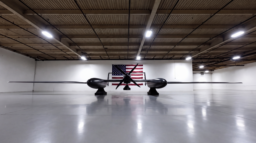
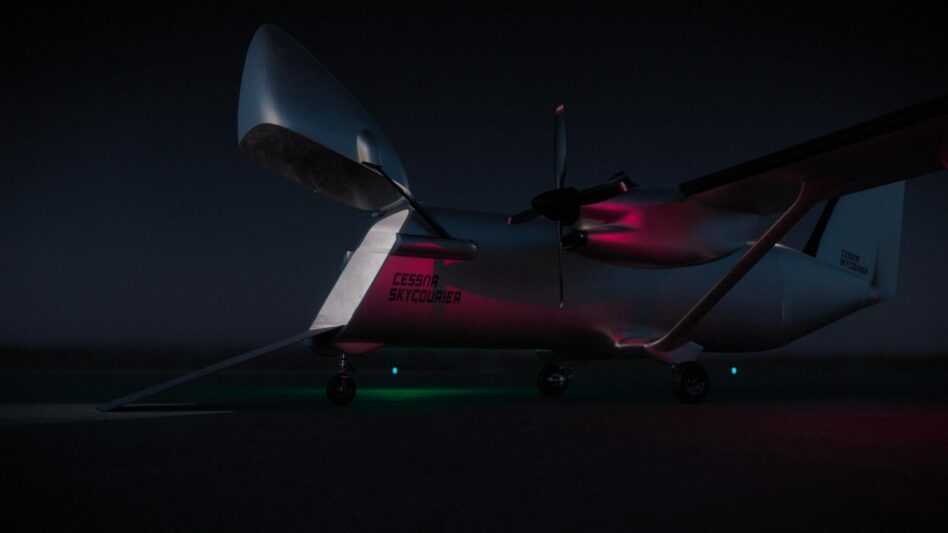
This morning, as AFA kicks off in National Harbor, flight autonomy startup Merlin announced that it’s teamed up with aviation giant Textron Aviation to build a version of the Cessna SkyCourier souped-up with Merlin’s Pilot autonomy stack called, creatively, the “Cessna SkyCourier UX.”
The two companies say the drone plane (which is still in the concept phase, to be fair) is designed as a “cost-efficient and scalable approach to contested logistics and sustaining distributed forces when traditional supply routes are constrained, vulnerable or unavailable.”
“Military planners are increasingly focused on how to sustain forces across distributed and contested operational environments,” Bob Gibbs, VP of Defense and Special Mission Sales at Textron, said in a statement. “The Cessna SkyCourier UX concept reflects our commitment to examining practical solutions to real-world mission challenges.”
Use what ya got, ya know?
Same-day delivery: Now, in case you haven’t been paying particularly close attention to Tectonic (for shame), contested logistics are very top of mind right now.
- Everyone and their mom is trying to figure out the best way to get supplies to very far-out-there places (like, say, a tiny island chain in the Indo-Pacific) without having to use very expensive, very exquisite heavy-lift platforms like the C-130 (which also require a whole dang runway).
- Contested logistics was even named as one of the Pentagon’s six Critical Technology areas last fall—the department very much wants tech that can “[overcome] the challenges of disrupted or denied logistics to ensure seamless resupply and operational continuity in contested environments.” That’s everything from AI-powered logistics software to, well, heavy-lift cargo drones.
Your package is on the way: Luckily, the SkyCourier (OG version) was actually designed for just these kinds of missions—well, sort of.
- The Cessna plane (Textron builds Cessnas, if you haven’t picked up on that yet) was actually first unveiled in 2017 as part of a collaboration with FedEx. Yes, the one that just left you a package re-delivery notice.
- The plane first flew in 2020, was approved by the FAA in 2022, and entered into service in 2023—at least on the commercial side.
- As for its military use—earlier this year, Belgium ordered five SkyCouriers for its special operations forces, and Textron is also on an up to $100M IDIQ with the US Army to supply light cargo aircraft (including the SkyCourier) to FMS customers.
Lift heavy: This ain’t Merlin’s first rodeo with logistics, either.
- The company (founded back in 2018) was tapped by USSOCOM under a five-year IDIQ with a ceiling of $105M to integrate its flagship Merlin Pilot autonomy stack onto the C-130J Super Hercules.
- Worth noting: Merlin’s whole thesis is that to get to an autonomous fleet, it’s faster to retrofit existing aircraft rather than build new stuff from the ground up.
- The autonomous C-130J hasn’t flown yet, but it passed a critical design review earlier this summer.
- Merlin has already flown a whole range of (traditionally manned) aircraft, including a Cessna 208 Caravan, a Beechcraft King Air, a de Havilland Twin Otter, and they’re working on the US Air Force KC-135 Stratotanker.
Look ma, no hands: Per Merlin and Textron, the SkyCourier UX is designed to “[transport] cargo and critical supplies across the final leg of distribution networks.”
- The aircraft will be able to take off and land without full-blown runways—good for those aforementioned littoral locations.
- The plane—at least the OG one—can carry up to 6,000 lbs of cargo, with room for three LD3 shipping containers.
- The SkyCourier UX is “designed to occupy a space between small tactical cargo drones and large military transport aircraft,” according to the companies, and could carry out missions including “hub-to-spoke distribution, sustainment of expeditionary bases, transportation of mission-critical repair parts, delivery of medical supplies and support for island and remote-airfield operations.”
- They’re also exploring some design changes that, well, not having a crew enables. Those include replacing cockpit space with more storage area and potentially enabling access to cargo through the nose of the plane.
“The future of contested logistics needs more capacity and access to places we wouldn’t risk a crew,” Matt George, CEO and founder of Merlin, said in a statement. “Merlin Pilot has already flown hundreds of autonomous flights on production aircraft. This concept pairs it with a proven platform, the SkyCourier, to explore what an aircraft looks like when it’s designed around autonomy and cargo instead of a crew.”