Last year, it was all, “Everyone loves a tiny little autonomous plane.” Now it’s all, “Everyone loves a tiny little helicopter.” What’s next?
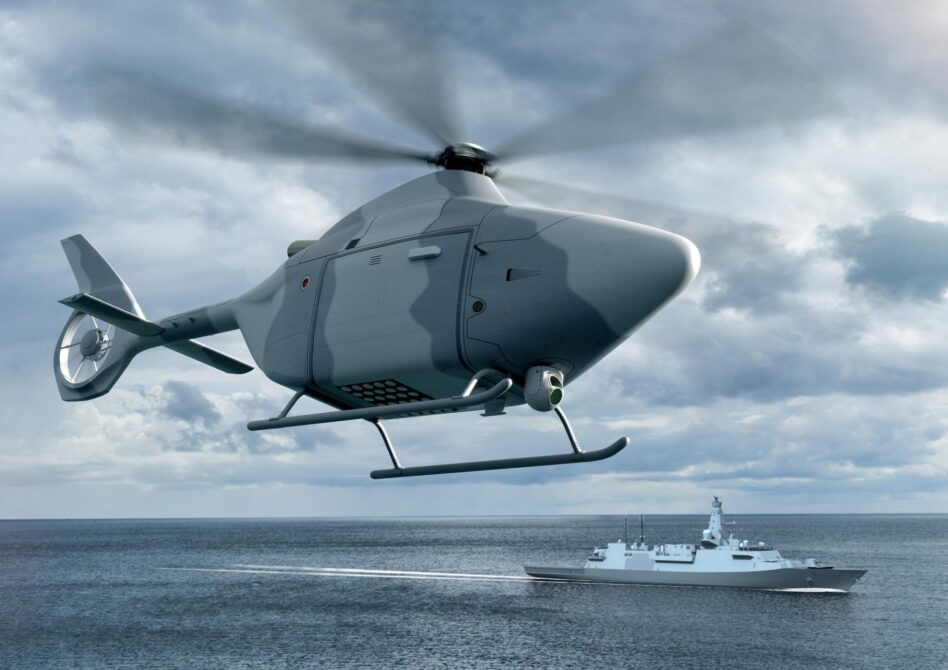
Yesterday, autonomy giant Shield AI announced that it’s inked a partnership with European prime Leonardo to integrate its flagship Hivemind autonomy stack onto Proteus, the prime’s “uncrewed rotorcraft” (read: helicopter drone).
- Sounds like there is a big emphasis here on Leonardo maintaining control over the autonomy. Shield says the “agreement expands Leonardo’s tools to build its own mission autonomy software for new and existing systems.
“Leonardo builds some of the most widely flown rotorcraft in the world, and Hivemind gives its engineers new tools to add autonomy to them,” Tom Schaefer, vice president of Hivemind engineering at Shield, said in a statement. “Autonomy software is never finished…Leonardo’s engineers can therefore tailor Hivemind software to their mission sets, and the work stays with them.”
Shield also says the partnership provides a “pathway for greater future collaboration” across Leonardo’s portfolio. Friends in high places, indeed.
Whop-whop: Now, before you sit there pretending you already knew what Proteus was, we got you.
The project—which Leonardo kicked off under a £60 million UK MoD contract back in 2022—aims to build a full-sized, three-ton-ish autonomous helicopter, aimed primarily at the Royal Navy.
- The heli-drone would be able to carry out missions including anti-submarine warfare and logistics—particularly dangerous operations that would otherwise require crewed helicopters.
- Because it’s uncrewed, the idea is it could also carry a ton of stuff—like, literally one ton of equipment, or two standard NATO pallets. (Excuse the dad joke.)
- Leonardo first unveiled a Proteus prototype at DSEI in 2023, and the heli-drone flew its maiden journey earlier this year.
One plus one: The interesting thing here is—Leonardo already had an autonomy stack on Proteus.
- Leonardo had developed its own software, which was onboard when the prototype flew back in January.
- The idea here is that Hivemind will give Proteus more advanced, mission-specific autonomy.
- And that makes sense, given that Hivemind, well, has been around the block a few times (and has the data to show for it). Shield’s autonomy has been built onto everything from F-16s (flight-tested), to MQ-20s (flight-tested), to the BGQM-177A (also flight-tested).
- They also, lest you forget, provided the autonomy brains for Anduril’s CCA prototype, the YFQ-44A Fury, and are in the running to provide autonomy for the whole CCA program.
Better together: Per Shield, they’ll work with Leonardo to “integrate the software so Leonardo engineers can develop new autonomy capabilities for rotary-wing operations, including anti-submarine warfare (ASW), intelligence, surveillance, and reconnaissance (ISR), and contested logistics helicopter operations.”
- Leonardo’s VP of development for helicopters in the UK said that his company will “be able to benefit from Shield’s software to support the development and delivery of autonomous solutions” and, potentially, also apply the software to “other programmes within [their] rotary-wing portfolio.”
The two companies did not share when the integration would be complete, or when they expect Proteus to fly with Hivemind on board.