Turns out if you’re in the business of making very fast, high-powered stuff that hits other fast, high-powered stuff (or critical targets) at speed, 2026 is your year.
This morning, defense-as-a-service (DaaS) (we’ll get to that) startup Tiberius announced that it’s raised a $85M Series A at a $1B valuation led by Lakestar and Rochefort Asset Management (Rochefort)
- New investors, including Dream Ventures and Aero X Ventures, and existing investors Blacklake, Moonshots Capital and UA1 also joined the round.
The company has designed a 155mm liquid-fueled ramjet-powered artillery round called Sceptre, which it then (essentially) licenses to partners for production.
- The company says it will use this funding to expand its “manufacturing partner network [for products like Sceptre], product certification, continued innovation and further development of its AI-powered GRAIL platform.”
- The raise comes after Tiberius announced a $500M Sceptre “technology collaboration contract” with a consortium of unnamed UK “technology partners” to produce Sceptre.
- They’re also working on bigger-boy products, including a longer, heavier-payload, longer-range, canister-launched missile called Invictus.
“The plan [with this raise] is really to continue to accelerate product development first and foremost, as we’re moving now from the RDT&E phase with Sceptre and getting it…to TRL nine as it gets fielded in combat,” Co-founder and CEO Chad Steelberg told Tectonic.
“We expect to continue to see contracts coming, so [we’ll staff] up [our] teams for combat and field support, but then also really scale up our business development and manufacturing support teams on a global basis,” he added. “We believe that manufacturing and integration actually belongs in the nation states of our partners, and so we’re setting up manufacturing partnerships around the world.”
Out of the valley: Now, the last time we covered Tiberius, we announced their initial $4.5M founders’ round—how very far we’ve come.
- The company was founded back in 2022 by Steelberg, Andy Baynes (CSO), Michael Martin (COO), and Tim Conners (Chief Engineer). The team leans heavily Silicon Valley—Baynes held senior roles at Apple and Google, while Steelberg was at Google and founded Veritone.
- The basic idea was to apply an Apple-like mentality to the production of munitions—separating R&D from production to try and get around those bottlenecks. Tiberius comes up with the design, then licenses it to production partners around the world who produce it on their own dime.
- Not only, per Tiberius, does that lead to more innovative products, but it also drives down cost—they basically charge a 25 percent IP royalty on whatever it costs a manufacturer to produce something like Sceptre. That’s the whole defense-as-a-service thing.
“I don’t care if you can make it for $5,” Steelberg said. We charge [that] royalty on the cost of which you manufacture and sell that product to your local MoD or partners. So we really are creating a competitive ecosystem to drive down the manufacturing costs.”
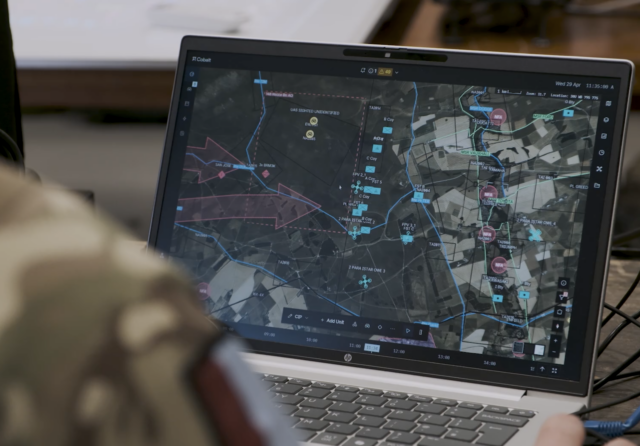
Link up: They’ve also created a product called GRAIL, which is kind of like an app store for production and procurement.
- The “AI-powered platform [connects] requirements, engineering, suppliers, compliance and manufacturing” to basically link up governments with producers (and producers to producers) to (if all goes to plan) build and field things faster, cheaper, and closer to home.
Go boom: The main way they’ve gotten there is by using liquid-fueled ramjet propulsion rather than traditional solid rocket motors, meaning their platforms can sustain high speeds over longer distances without relying on the expensive, hard-to-get solid propellants used in conventional rockets and missiles.
So far, they’ve got two main products:
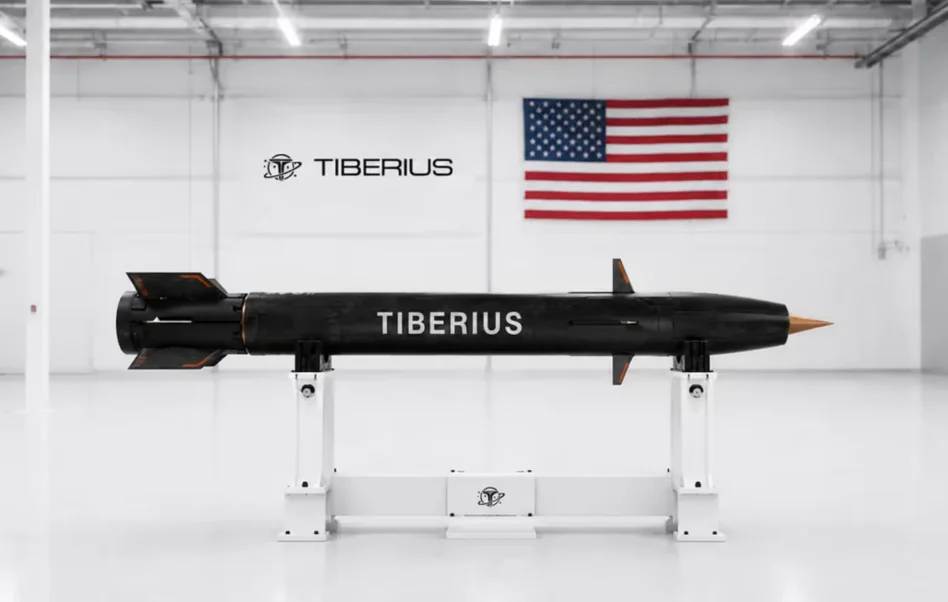
- Sceptre: A liquid-fueled, ramjet-powered 155mm artillery round that can be fired from existing NATO-standard howitzers. It’s designed to travel 150 km at speeds of Mach 3.5, with a maximum payload of 5.3 kg and targeting accuracy within 5 meters—even in super-jammy environments. Sceptre is currently at TRL 7, Steelberg said.
- Invictus: A tube-launched ramjet missile designed to be fired from vertical launch systems and autonomous platforms on land and at sea. It’s about 14 feet long, per Steelberg, has a payload of 20 pounds, and a range of 200 kilometers. Invictus kicked off testing this summer.
Worth noting: Right now, Steelberg said Sceptre costs about $50-100K to build, but he expects that will be driven down the more widely it’s produced.
Mix it up: Part of this funding, per Steelberg, will go towards building more variants of both of these platforms.
- On the Sceptre side, Steelberg said they plan to expand downwards to a 127mm version for naval guns and eventually a 105mm variant for smaller field artillery systems.
- For Invictus, Tiberius plans to branch out into both ground-to-ground and ground-to-air variants, while developing larger versions measuring 20–24 feet long, with ranges of 1,500–2,000 km and terminal speeds exceeding Mach 3.6.
And they’ll also keep pushing into more geographies (markets) around the world.
“We see ourselves as building a massive global network over the next 18 months as we scale,” Steelberg said. “We have manufacturing partners specifically for our contracts in multiple countries now, and north of 100 that are going through the certification process right now.”