If there’s one thing you’ve learned from this newsletter lately, we hope it’s that integration is one of the least sexy but most important parts of getting technology deployed (and actually working) on the battlefield.
After all, building a super-fast interceptor or the world’s best UAV is great. But if those platforms can’t connect to sensors, shooters, or, like, anything else, they’re pretty darn useless.
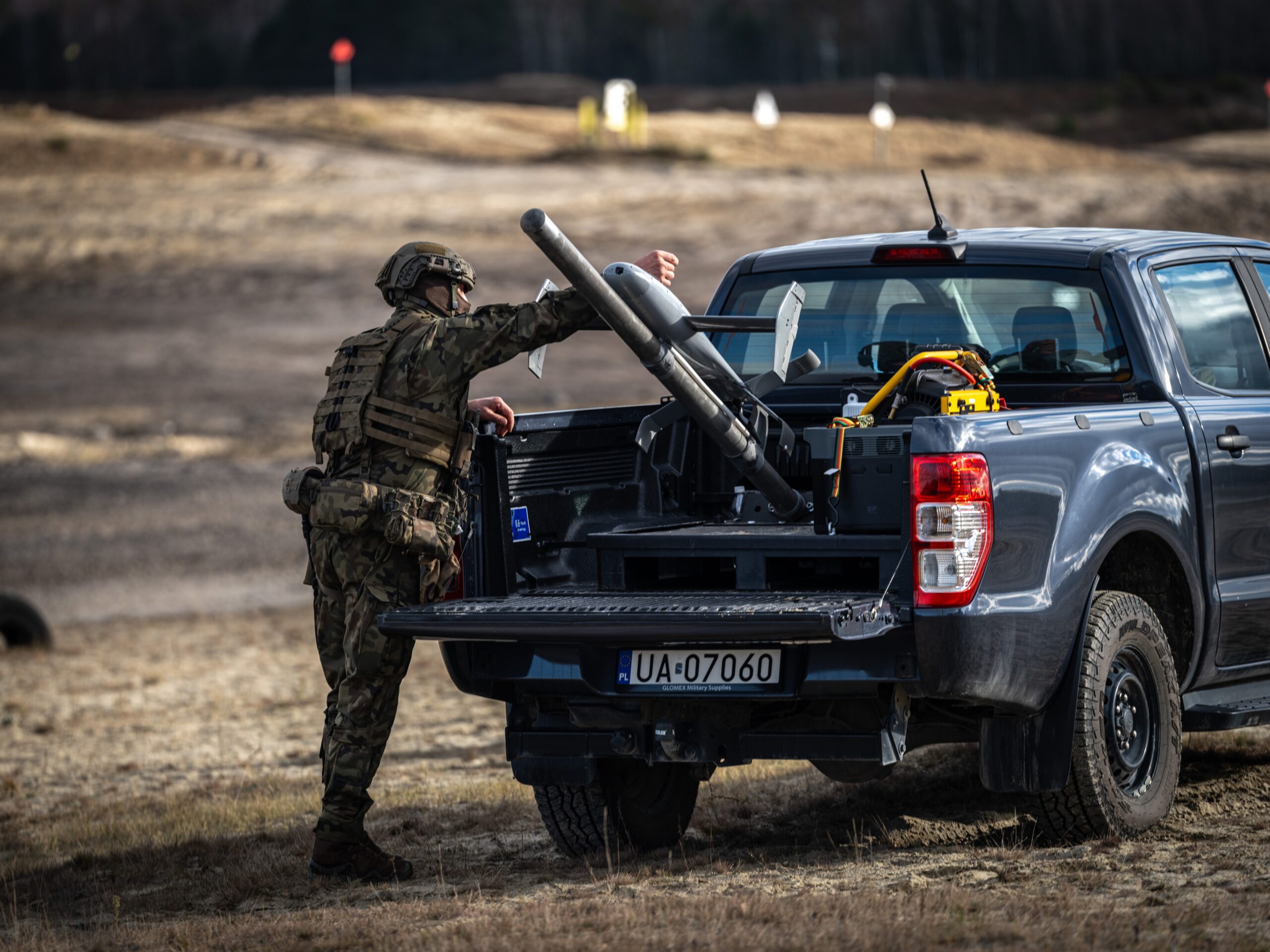
Fortunately, integration startup Picogrid has built a mini-empire around making sure everything on the battlefield plays nicely together. And now, it’s officially teaming up with one of the most exciting players in the game: Yesterday, the company revealed that its Legion software is serving as the tactical integrator for Perennial Autonomy’s Merops interceptors for US air defense in the Middle East.
While Picogrid CEO Zane Mountcastle couldn’t reveal the size of the deal, he told Tectonic that his company is a subcontractor on a contract the Pentagon’s Joint Interagency Task Force 401 (JIATF 401) awarded Perennial Autonomy, and that it’s “[Picogrid’s] largest contract by quite a margin.”
“What we’ve effectively done right is built the underlying connective infrastructure…to bring Ukraine-style interceptors into American air defense…to my knowledge [for] the first time, which is a very big deal,” he added.
He also said that Legion and Picogrid’s Expeditionary C2 Nodes (the physical hardware and edge compute infrastructure that connects different assets to Legion) are already deployed with Merops interceptors at US sites throughout the Middle East and in Ukraine.
Damn. We told you the unsexy stuff was having a moment.
Plug it in: Picogrid has been making a lot of news lately, so we’ll keep it short.
- The company was founded back in 2020 by Mountcastle, Martin Slosarik, and Dan Chirita with the goal of making all sorts of autonomous systems, sensors, and software actually, like, work together.
- Their flagship software, Legion, fuses information fed from different systems to integrate physical assets, streamline data, and connect operational tools, creating a common operating picture for users.
- They’ve built up an extremely impressive partner ecosystem that uses Legion, including CHAOS Industries, CX2, Echodyne, and some small startups like Northrop Grumman and Palantir.
- The company served as the core integration layer for the Army’s Operation Jailbreak integration exercise and has contracts with the Air Force and Army (among others).
- They’ve also raised a pretty penny for all that backend work—in May, Tectonic first reported that they raised a $45M Series A, bringing total funding to $57.15M, per PitchBook.
Super sneaky: Now, for Perennial Autonomy and that JIATF-401 contract.
- In case you didn’t know, PA is a super-secret drone startup reportedly launched by former Google CEO Eric Schmidt. The company has been known by many names—White Stork, Project Eagle, pick your poison.
- Schmidt and an all-star team of engineers from places like SpaceX, Google, and Apple worked with operators on the front lines in Ukraine to develop an AI-powered super-low-cost interceptor system designed to take down things like Shaheds. The whole family is called Merops—the most popular interceptor is called the Surveyor.
- They’ve also got a quadcopter interceptor called Bumblebee, and a long-range strike drone called Hornet.
- According to reporting by the Wall Street Journal, the company says its tech is widely deployed in Ukraine and that it’s taken down more than 4,000 drones in-country.
- The interceptors have also reportedly been deployed on NATO’s eastern flank, in CENTCOM (for which the Army bought over 10,000 after Epic Fury kicked off), and are being produced in Europe (as part of a partnership with Germany’s Twentyfour Industries).
Fast friends: It’s worth noting that Mountcastle said the two companies have actually been working together since before Operation Epic Fury—Picogrid first integrated Perennial Autonomy’s interceptors in Ukraine.
“We were already working with them ahead of this, and they really pulled us into this opportunity,” he said. “They realized very quickly that just having an interceptor is not enough to solve the problem…the integration layer is often kind of the difference between a successful system and a system that ends up sitting on the shelf.”
He said that the two companies are still working together in Ukraine.
Speed networking: Under a separate JIATF-401 contract awarded last month, PA is tasked with providing interceptors (and launch systems) to protect US installations around the world. Under a separate contract—also through JIATF-401, but specifically for Surveyors—Picogrid is providing the integration layer that will actually plug these Ukraine-proven systems into the broader air defense ecosystem—in this case, FAAD C2.
- Basically, using Legion as an integrator means that even though Merops/Surveyor is a relatively new system, it can plug into all of the radars, sensors, and air defense systems already in theatre.
- Along with Legion, Picogrid is deploying its ruggedized Helios and Portal Expeditionary C2 Nodes (ECNs) alongside Merops Surveyors. All of this “allows warfighters to establish a direct, low-latency bridge between their sensing equipment, interceptors, and other weapon systems,” per Picogrid.
- This makes the interceptors more accurate and effective and, according to the company, means “counter-UAS teams can execute automated detect-to-engage workflows with confidence, even in degraded or denied communications environments.”
“You have to link in the data sources from local sensors, you have to link in the intelligence picture from existing air defense, you have to link in the broader underlying infrastructure, and that’s where we kind of jumped in to support,” Mountcastle said. “We’re now deployed across a number of allies in the [Middle East], supporting US and allied air defense against this really thorny problem.”