Pretty much all of the counter-drone tech we cover day in and day out is designed to protect military personnel, infrastructure, and installations, but the threat of hostile drones isn’t limited to conflicts in Ukraine and the Middle East. Civilian infrastructure—everything from stadiums to airports, political rallies, and data centers—is vulnerable, too.
That’s especially true for major sporting events. During this summer’s World Cup alone, the FBI seized more than 700 illegal drones and detected another 1,600 around the 11 stadiums hosting games.
Luckily, everyone’s favorite drone holding company is on the case. This morning, Ondas subsidiary Sentrycs announced in an exclusive release to Tectonic that it’s been tapped by the Jacksonville Jaguars to deploy its drone detection and cyber takeover technology at its stadium this coming season.
The Jags are officially the first NFL team to get into the counter-drone game.
- Under the deal with the team’s stadium operator, Legends Global, Sentrycs’ tech will be operated by law enforcement partners trained at the newly established National Counter-Unmanned Aircraft Systems Training Center (NCUTC) in Huntsville, Alabama.
Taking over: Now, to make one thing crystal clear: Sentrycs is not shooting drones out of the sky. No one wants a UAV to the head while watching football on a Sunday.
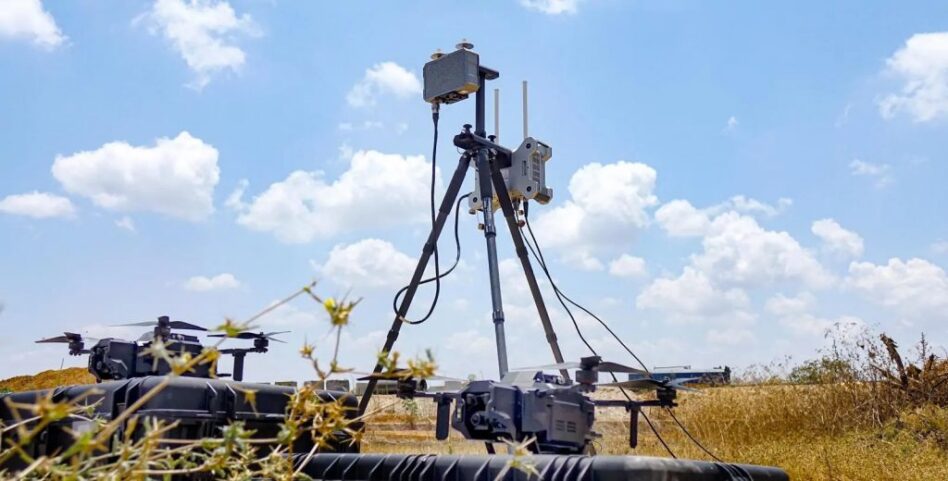
The company has built what it calls “cyber-over-RF” technology that allows operators to:
- Geofence an area (like, say, a 70,000-person stadium)
- Take over the comms links between any unauthorized drone and its controller in that area
- Then fly that drone to a safe altitude and land it in a pre-determined landing zone
Not only does that mean law enforcement has control over the airspace above something like a football field, but it also doesn’t interrupt the game. Win-win.
- The full-stack system provides passive RF tracking that allows users to keep an eye out for threats.
- It also provides data on the drone’s operator and flight path, which comes in handy for any investigations.
- And this stuff’s, like, actually been used for pretty much this exact thing: Sentrycs was one of a handful of drone companies to field its non-kinetic (for obvious reasons) counter-drone tech at stadiums during the World Cup.
“The NFL and the stadium operators have, for a number of years, been using detection technologies, anywhere from radar systems to other passive RF systems and some optical systems as well, but the NFL hasn’t been mitigating the threat,” Ondas CEO Eric Brock told Tectonic. “The Jaguars are the first to take this step, and I think it’s reasonable to believe that others will as well.”
“As drones become increasingly accessible, we recognized the importance of moving beyond detection and adding an effective mitigation capability to our security strategy,” the Jags’ events and security director added in a statement. “This investment reinforces our commitment to delivering a safe and uninterrupted game-day experience.”
Sounds good to us. NFL games have enough breaks without needing to pause for a drone delay.