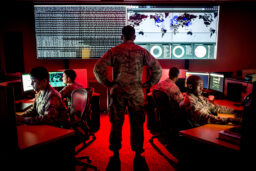
Sheesh. This week kind of feels like going back to school combined with winning the lottery combined with the early days of the defense tech hype train. And it’s only Tuesday.
Yesterday, hardware testing giant Nominal announced that it’s raised a $240M Series C at a $3B valuation led by Lightspeed Venture Partners (and co-led by Insight partners).
- Investors including Lux Capital, Sequoia, General Catalyst, Founders Fund, Avenir, Salesforce Ventures, M13, Lockheed Martin Ventures, Red Glass Ventures, PSP Growth, and Deployment Capital also joined the round.
- The new funding comes just eight months after the company raised an $80M Series B extension at a $1B valuation led by Founders Fund.
The company says it will use all this new cash money to build up its agentic AI offerings—agents that can help engineers better analyze testing data, understand problems, and build systems better (and, hopefully, faster).
The company frames this as “bringing hardware engineering into the intelligence era.”
“This Series C, and Nominal going forward, is…about what [it looks] like for agents to make contact with reality. Like, actually meaningfully improve the life of mechanical, electrical, aerospace, and chemical engineers,” Nominal co-founder Bryce Strauss told Tectonic. “But we want to do it in a way where they can trust them, and they are an actual partner in the way that they do work.”
“That takes a lot of really intentional design and infrastructure,” he added. “It’ll be a fun, interesting couple of years.”
Nuts and bolts: Now, you know Nominal—and even if you think you don’t, you probably know the stuff they’ve worked on.
The company was founded back in 2022 by Strauss (ex-Lockheed), Cameron McCord (ex-Anduril and Lux Capital), and Jason Hoch (ex-Palantir) with the goal of making software that could, essentially, make hardware testing better.
- The company’s flagship software is called Nominal Core. Testing traditionally relies on about a million different workflows, data pipelines, and interfaces-slash-programs—Core brings all of those fragmented data and testing pipelines into one central system.
- The platform lets engineering teams collect, visualize, monitor, and analyze hardware telemetry, logs, video, and test data in real time to tighten the feedback loop.
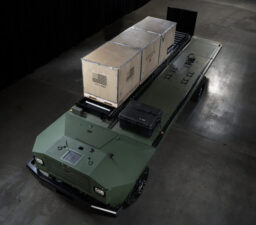
- And they’re, like, kind of everywhere. The company has inked testing deals with defense tech giants including Anduril, Shield AI, Hermeus, Antares, Aerovironment (AV), Mach Industries, and Forterra, along with most of the largest US defense primes.
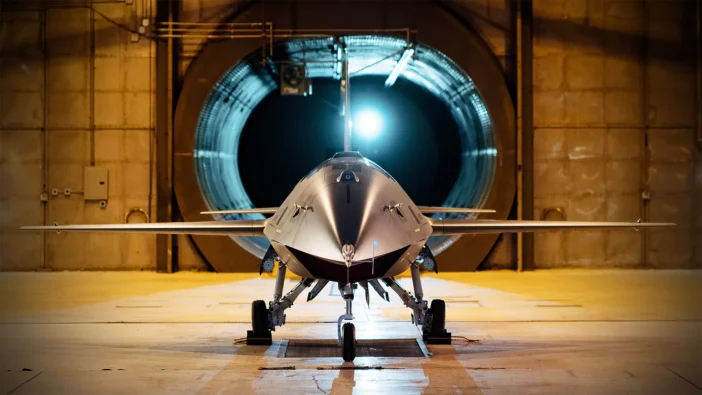
Last month, they also scored a $71.2M AFWERX STRATFI to expand testing work across the Collaborative Combat Aircraft (CCA) program (tiny little planes, etc.)
- The company had already been working with both Anduril and General Atomics on testing for the program, but as of October, they’re now kinda the tester of record.
- They also inked a $53M IDIQ with the Air Force Test Center in April to put its platform to work on CCA, the F-47, B-21 bomber, hypersonics, and other big-time next-gen programs the service has in the works.
- Worth noting: Strauss said the company has a three-pronged go-to-market strategy—direct to government, sales to newer defense tech companies and neoprimes, and sales to the big ol’ primes on legacy programs.
Work smarter, not harder: This round will allow Nominal to officially transition from analyzing testing data to actually helping engineers build stuff—put very simply.
“Agents are unbelievably good at gathering context,” Strauss said. “If you give them the right permissions and the right access, the right structure of data and files…they can actually help you build a really good pace around what might happen.”
- According to the company, the agents now deployed in Nominal’s software will “[help] teams analyze more information, surface relevant knowledge, and accelerate work that once required hours of manual investigation.”
- Those agents will “work across a machine’s lifecycle, from requirements verification and planning to scheduling and fleet health.”
- There’s a big focus here on trust—Strauss said the company is well aware they’ve got an uphill battle in terms of getting engineers to actually adopt AI. To do that, they’ll work alongside engineers to build and deploy agents on tasks and projects that will actually make their lives easier.
- The Series C will also help fund the company’s expansion into new industries and regions “including through strategic acquisitions.” They’ve already snapped up two companies— Fid Labs and Pull Systems—this year.
“[This money] is really just to pour gasoline on all the things that are working,” Strauss said. “We’ve become this critical supply chain component to these big programs, where it’s not just about, like, ‘Hey, do we serve this defense contractor and make the airplane work better?’ Now, they’re reaching up into their supply chain and saying, ‘If I’m going to buy a battery from you, that battery better be tested with Nominal.’”