The 155mm shell has been a workhorse of the US military’s artillery arsenal since World War I, but America has had a bit of a hard time, to put it lightly, ramping up production of the over-century-old munition to keep up with renewed demand from US and allied customers.
The Pentagon’s looking for some help from the startup world to get things back on track.
Yesterday, energetics and rocket motor-maker Firehawk Aerospace announced that it’s snagged a two-year, $24M contract through the Pentagon’s Industrial Base Analysis and Sustainment (IBAS) program to accelerate propellant production for 155mm shells to 740,000 pounds per year, with the capacity to pump out 3.1M pounds annually once its Oklahoma facility is fully up and running.
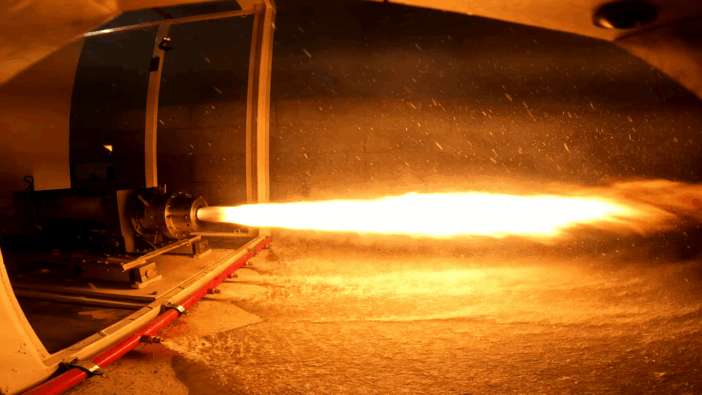
On Fire(hawk): Firehawk should be a familiar name to Tectonic readers. The Texas-based company, founded by CEO Will Edwards in 2019, is laser-focused on applying modern manufacturing techniques—like 3D printing—to propellant and motor production.
- That’s earned them contracts to build SRMs for and assemble Hydra-70 rockets, produce 3D-printed propellant, and develop propulsion systems for larger boom-and-zoom platforms with the Army, AFRL, and other customers.
- That traction has also been fueled by a lot of investor confidence. Last September, Firehawk raised $60M in a Series C funding round led by 1789 Capital, followed up by an additional “eight-figure” strategic investment from Hanwha Defense USA. There might be more to come on that front soon, too.
Bring the boom: Firehawk’s propellant is designed to fuel a range of different rocket motor sizes, but it’s “really designed for these small diameter systems,” Edwards told Tectonic. 155mm shells are a big one.
Under the $24M contract with the Pentagon’s IBAS program—set up to “expand and modernize the U.S. Defense Industrial Base (DIB)” by investing in critical technology areas and the workforce behind them—Firehawk will deliver the propellant to US government customers and the leading producer of 155mm artillery, General Dynamics Ordnance and Tactical Systems.
- Back in May, GDOTS announced a “teaming agreement” with Firehawk “designed to accelerate the development and production of next-generation 155mm base bleed motors.”
The propellant will be produced at Firehawk’s big ol’ facility in Lawton, OK, slated to come online early next year with the production capacity for millions of pounds of propellant per year. That scale will make Firehawk “the third biggest producer of propellant and the biggest artillery motor producer in the country,” according to Edwards.
- Firehawk is also investing $70M of its own capital into the facility, plus the IBAS award and $22M from Oklahoma.
Startup spice: The first customer for Firehawk’s boom-fuel is GDOTS, which, um, has run into its fair share of problems with 155mm artillery production—so much so that the Army, after awarding a contract to the defense giant worth hundreds of millions of dollars, threatened to cut its losses last year.
According to a recent ProPublica investigation, GDOTS’ Mesquite, TX, facility “never produced a single usable shell, according to a report from the Department of Defense’s inspector general in July,” and the “fiasco has cost American taxpayers $533 million.”
- The report also highlighted general chaos at the facility, robots bursting into flames and cracking shells, and a literal dumpster fire.
GDOTS has tapped startups—including manufacturing software company Deterrence—to get things back on track. There’s a good reason for that—the US can’t really afford not to have the ability to build the artillery. The Pentagon’s investment in Firehawk’s propellant production for the shells shows that they’re taking the next gen of defense companies seriously, too.
“Artillery is still the most lethal weapon on the battlefield—you don’t win wars without troops on the ground and artillery on the ground,” Edwards said. “[The contract] also shows government buy-in. $24M is a meaningful contract, and…it shows that the government is leaning in on new industries to build not just R&D products, but full-fledged manufacturing sites to produce at scale for the government.”