If you thought Anduril and General Atomics were running away in the CCA race, think again. The biggest dawg in the defense world isn’t giving up that easily.
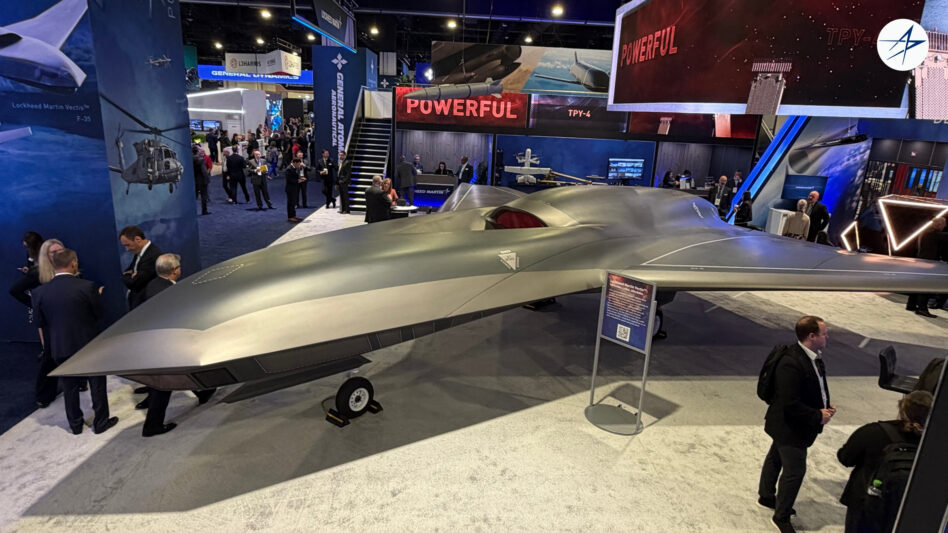
At the AFA’s Air, Space & Cyber conference yesterday, Lockheed Martin unveiled a full-scale model of its Vectis collaborative combat aircraft (CCA), along with two big announcements: the aircraft would fly by the end of next year, and its secretive research arm, Skunk Works, is building four more.
The announcement comes exactly a year after the mega-prime first threw its hat in the ring for the CCA program, the Air Force’s ambitious initiative to field large group 5 “loyal wingman” drones alongside manned fighters for a range of missions, including air-to-air and air-to-ground strikes, EW, targeting, and ISR.
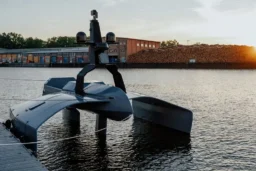
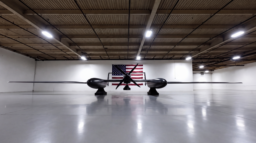
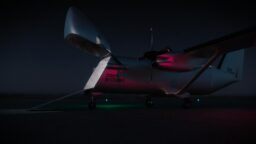
Wingmanning: So far, the CCA program has pitted Anduril and its FQ-44A Fury drone against General Atomics’ FQ-42A Vengeance drone (known as Dark Merlin until yesterday).
- The two were selected back in 2025 to build production-ready prototypes for Increment 1 of the program, beating out Boeing, Lockheed, and Northrop Grumman.
- GA’s CCA took flight last August, and Anduril’s YFQ-44A followed shortly after, making its first flight in late October. Anduril’s Fury live-fired an AMRAAM missile at a simulated target in July and has already flown in formation alongside F-35s during Air Force testing, company execs said yesterday.
- Earlier this year, the Air Force tapped Shield AI to build the autonomy stack for Anduril’s CCA and RTX subsidiary Collins Aerospace for General Atomics’ version.
Anduril and GA-ASI already have CCAs coming off the line, but the Air Force is keeping things open in Increment 2, awarding nine vendors contracts for the next stage of the program late last year. Lockheed is going all-in on that competition.
- Lest we forget, Northrop Grumman is also still in the mix, with their Talon Blue CCA officially designated as YFQ-48A by the Air Force and expected to fly this year.
Primetime: In true Skunk Works style, details about Lockheed’s Vectis CCA have thus far been kept pretty hush-hush, but if there were ever a time for an update, it’s AFA.
That update came in visual form with the Vectis model—34 feet long with a 38-foot wingspan—making a statement on the conference floor, especially with its design differences from other models.
- The aircraft features a submerged engine inlet, meant to help bolster its survivability and ability to stay undetected, and a tailless design—the first such design among CCA manufacturers.
“It’s designed, as you can likely see, to be both survivable and affordable and flexible across the range of missions that our customers need, have needed, and continue to need into the future,” Skunk Works General Manager Ron Fehlen said. “The technical specs…are designed to meet and, in some cases, exceed the customer sets that we are working with and their requirements and their mission needs.”
But they’re also looking to deliver the Air Force bang for their buck (and keep things under the roughly $20M a pop price tag the Air Force is looking for).
“From an affordability standpoint, we’re always looking at and, of course, are targeting to be the CCA competitive price,” Fehlen said. “We’re very cognizant of it and make trades associated with that.”
Fehlen added that Lockheed’s still on track to fly Vectis by “the end of 2027” and that Skunk Works has four additional aircraft in production.
Strength in numbers: That rush and internal investment isn’t for nothing. The CCA program was always gonna be big, but the Air Force wants to make it even bigger. During his keynote address at AFA yesterday, Air Force Secretary Troy Meink said that the service intends to have “at least 500 of these in service by 2032”—a jump from previous estimates.
At that $20M-each price tag, that could be a big payday for the winner. We’d be rushing too.