Shield AI’s first trip to Ukraine in 2022 was an “epic disaster.” Its second one two years later almost was, too.
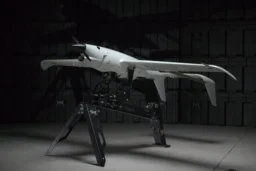
In 2024, the company’s engineers operating alongside Ukrainian forces launched a V-BAT reconnaissance drone expecting it to keep GPS until 100 feet. It made it a solid two feet before losing navigation, flying in the wrong direction and disappearing behind jammed communications.
A Shield AI team and its Ukrainian counterparts had to drive as far as 100 kilometers across the countryside with a laptop hanging out of a van before recovering it beside a sunflower field.
Engineers redesigned the system to operate without GPS, then tried again two days later. This time, Shield AI President and co-founder Ryan Tseng said, the V-BAT spotted a Russian S-400 air defense system and passed coordinates that enabled Ukrainian forces to destroy it with a ballistic missile. Shield AI now keeps 30 people in Ukraine and has conducted hundreds of operations there, he said.
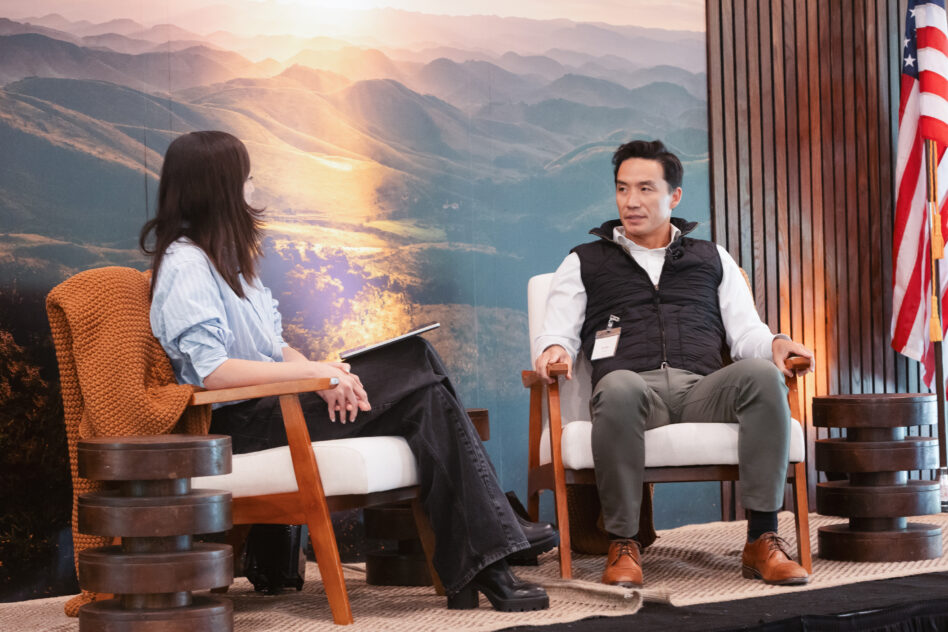
Down in the desert: This wild story captured the central theme at Brave Frontier, a private defense tech retreat, field demo, and summit that brought together defense investors, Pentagon officials, and startup founders outside Austin last week. Tectonic, the only media outlet present, got an inside look at the conversations in the room.
- On stage were DIU Deputy Director Maj. Gen. Joe Kunkel, Tseng, Hermeus founder AJ Piplica, Hanwha’s US COO Mike Smith, former CIA Deputy Director of Operations David Marlowe, BAE FAST Labs head Tim Grayson, and, last but certainly not least, everyone’s favorite Navy SEAL-doctor-naval aviator-NASA astronaut Jonny Kim.
Smarter, not harder: It might sound familiar by now, but the day’s recurring refrain was that rebuilding the defense industrial base isn’t about doing things the old way at a bigger scale—the key is building a fundamentally different industrial base that moves and learns as quickly as demand, technology, and threats change.
“The major change that we need to accomplish is the adaptation cycle of bringing on new capabilities, new technology, new ways of thinking, and then scaling those things,” Kunkel said to kick off the day. “These cycles of move, counter-move are happening much more quickly than they did in the past, so the ability to adapt is gonna be the key to success or failure.”
The challenge: Needless to say, that’s a whole lot easier said than done.
“There are all kinds of people in the Department of War that have opinions on what we should buy,” Kunkel later said. “There are a select few that actually have money, and you need to be talking to the folks that have money… I think most of the time, those faulty demand signals will lead you right into the valley of death.”
For startups, those misaligned demand signals can be fatal when you’re self-funding infrastructure build-outs, R&D, and all sorts of other expensive things, but self-financing capacity before contracts materialize is dangerous for the big guys, too.
“At some point you’d ask the question, ‘Well, who’s willing to pay for this? … Are they willing to put money against it?’” Hanwha’s Mike Smith added. “Without stable demand signals, multiyear funding or regular order in Congress, it’s really a gutsy move to invest ahead of need. But that’s what we’re doing, and we’re making smart bets.”
Jumping the gun: Increasingly, though—as any regular Tectonic reader will know—those self-funded bets on what the Pentagon will want before it knows it wants it are paying off. The startups making those bets tend to move a whole lot faster, too. Hermeus is one example.
“When I talk to groups about Hermeus, they’re doing stuff that is unheard of in the aviation industry. On their first flight, they flew with the gear down—yeah, that makes sense. On the second flight, they put the gear up. That doesn’t make sense on the second flight. On the third flight, they went Mach 1.2. On the fourth flight, they went Mach 1.6. On the fifth flight, they dropped a weapon,” Kunkel said. “These things are all completely unheard of, but I think they’re the benefits of doing your own research and development and using private capital to fund that.”
- Hermeus has a contract with DIU to develop its hypersonic Quarterhorse uncrewed aircraft worth up to $219M. Kunkel said DIU and Hermeus are “in contract negotiations right now for more.”
Go fast: The fast-paced, iterative nature of the modern battlefield is also becoming a catalyst for fielding privately funded technologies.
“The Department, generals, and admirals, we like big stuff—big airplanes, big ships, big submarines, big tanks, all that stuff,” Kunkel said. “The reality is if it’s something big, you can’t adapt it and change it that easily, so you’re finding the highest adaptation rates are in these small [platforms], which is really interesting because it results in this ability to bring new entrants into the markets.”
- “We’re realizing now that the commercial markets are moving so much faster than the defense markets are, and commercial technology is better than what you’re getting out of defense,” he added. “That’s the major change we’re seeing: where there’s an operational problem that can be solved by a commercial solution, we’re gonna buy it, and we’re gonna buy it in mass.”
Hand in hand: Billions in private capital have funded new factories, sustained years of R&D, and helped cash-flush startups like Anduril, Shield AI, Saronic, and Castelion reach the field, but investors at the summit cautioned they can’t go at it alone forever.
“It’s really a partnership where the government can’t just stand back and expect private capital to do it all,” Brave Capital partner Joe Addiego said. “They have to be hand-in-hand working with the company, providing capital and providing those demand signals that will then draw in the private capital.”
- That partnership only works, he added, if investors can see an identifiable market.
Iron bubble: All that private capital flowing into defense tech has made the “when is the bubble gonna pop” question top of mind for many people in the industry. But Kunkel, at least, isn’t worried.
“I’m not worried about a bubble—in fact, I’m worried about the opposite, that there’s not enough. I think it’s absolutely necessary to have private capital and that it’s gonna be one of our enduring strengths,” Kunkel said. “One of the things that makes America strong is our private capital markets, and the integration of those into defense space is just gonna make us better, and it’s gonna help us adapt more quickly.”
Bottom line: Money is pouring in, technology is moving, and the Pentagon is signaling that it wants to buy differently. The harder task is getting all three to move on the same clock while there’s still time.